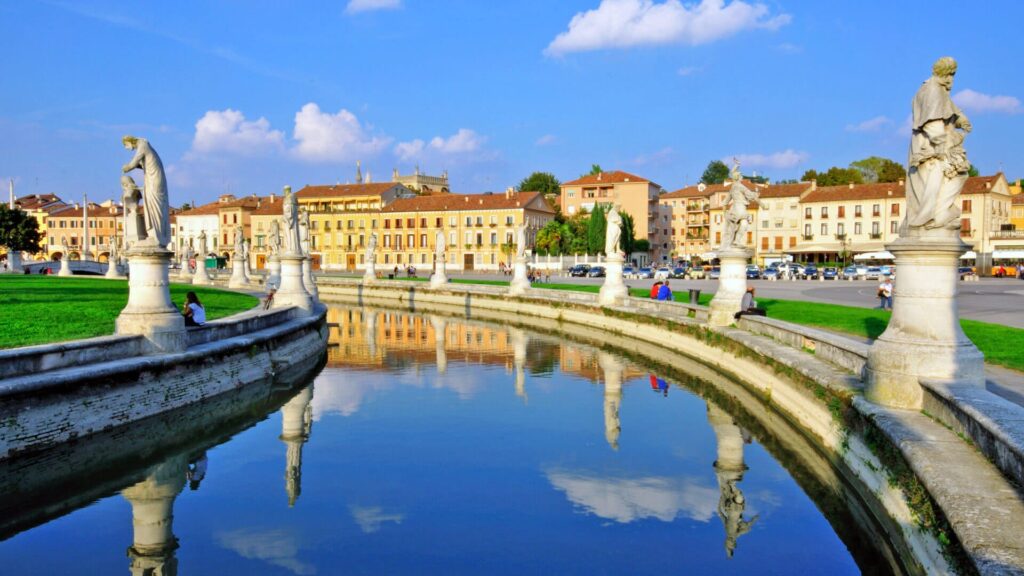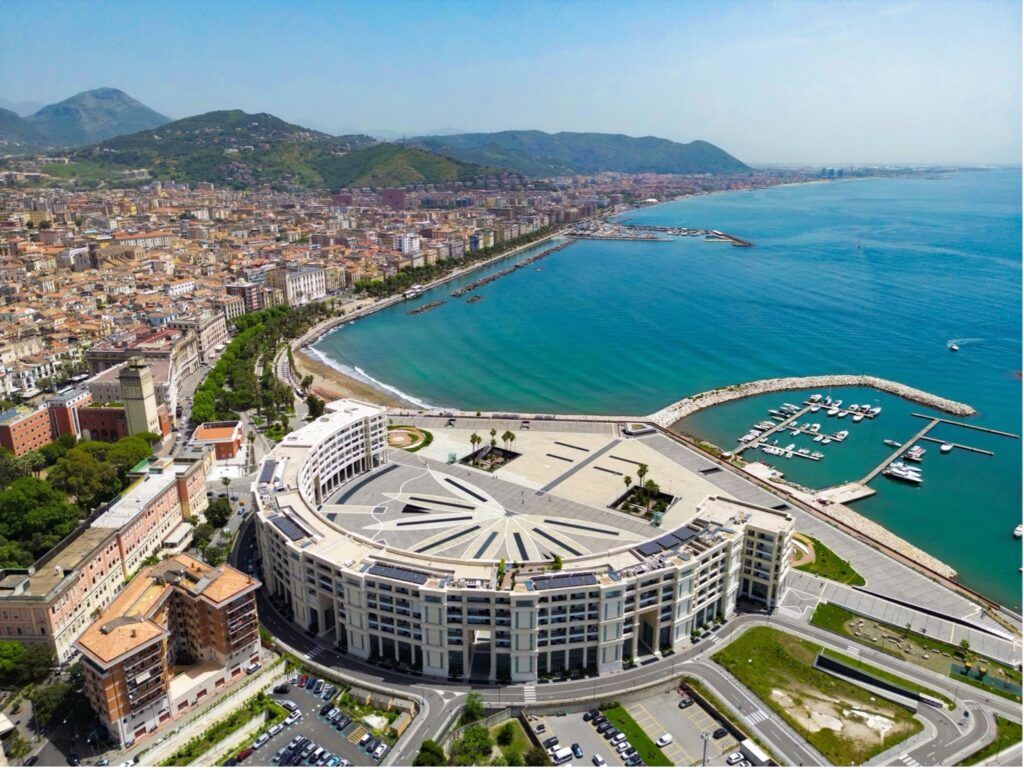
Italy’s history is not confined to museums. Roman roads cross modern cities, medieval towers still shape skylines, and Renaissance art remains inside the buildings for which it was created.
The best UNESCO sites in Italy range from entire historic centres to archaeological parks, cultural landscapes, cave settlements, churches, and groups of monuments spread across several towns. Choosing between them is often harder than finding places worth visiting.
Italy currently has 61 properties on the UNESCO World Heritage List. Of these, 55 are cultural and six are natural. This guide focuses on 15 outstanding cultural sites that offer the strongest combination of history, visitor experience, accessibility, and itinerary value.
It is a curated cultural trip planner, not a complete list. It explains what makes each place important, how long to spend, where to stay, how to travel between sites, and which tickets should be booked ahead.
Explore This Guide
ToggleQuick Planning Summary
For a first cultural trip, Rome, Florence, Venice, and Pompeii provide the clearest introduction to ancient, medieval, Renaissance, and maritime Italy.
For Roman history, prioritise Rome, Pompeii, Herculaneum, and the Valley of the Temples in Agrigento.
Florence, Siena, and San Gimignano form one of the strongest clusters of UNESCO sites in Tuscany. Ravenna and Padua are better choices for mosaics and frescoes, while Palermo reveals the cultural connections between Norman, Arab, Byzantine, and Mediterranean traditions.
Matera and Alberobello are the most distinctive choices in southern mainland Italy. Both work particularly well on a Puglia and Basilicata road trip.
The easiest UNESCO sites in Italy by public transport include Rome, Florence, Venice, Naples, Bologna, Padua, Ravenna, and Cefalù. A car becomes more useful for rural Tuscany, the Valle d’Itria, inland Sicily, Sardinia, and cultural landscapes outside major cities.
Spring and autumn offer the best overall conditions. Summer works well for combining heritage with beaches, but exposed archaeological sites can be extremely hot.
Where Are Italy’s Main Cultural UNESCO Sites?
The principal Italian UNESCO sites are spread across the country rather than concentrated in one region.
Northern Italy includes Venice, Padua, Vicenza, Verona, Bologna, Ravenna, Ferrara, Mantua, and Milan’s Santa Maria delle Grazie.
Central Italy contains Rome, Florence, Siena, San Gimignano, Pienza, Urbino, Assisi, and several important Etruscan and Roman sites.
Southern mainland Italy is home to Naples, Pompeii, Herculaneum, Caserta, Matera, Alberobello, Castel del Monte, Paestum, and the Amalfi Coast.
Sicily has major archaeological and architectural properties in Palermo, Cefalù, Monreale, Agrigento, Syracuse, and the Val di Noto. Sardinia’s UNESCO heritage includes Su Nuraxi at Barumini and the prehistoric Domus de Janas.
This geographical spread makes regional planning more practical than trying to visit sites from every part of the country in one journey.
Is an Italy UNESCO Trip Worth It?
A heritage-focused trip is particularly rewarding for travellers who want more than a checklist of famous landmarks.
The strongest Italian UNESCO properties connect architecture, art, religion, politics, food, and daily life. Rome is not only a collection of ruins. Venice is not only canals. Matera is not simply a group of photogenic caves.
Each property represents a wider cultural story and often includes neighbourhoods, landscapes, or several monuments.
These journeys suit:
- First-time visitors who want a clear introduction to Italian history
- Couples looking for atmospheric historic centres and cultural stays
- Families combining museums with open-air archaeological sites
- Independent travellers using trains between major cities
- Road-trippers exploring smaller towns and rural landscapes
- Slow travellers who prefer fewer bases and longer stays
- Beach travellers adding Palermo, Cefalù, Naples, Puglia, or Venice to a coastal holiday
They are less suitable for travellers who want to change cities every day. Many of the best cultural places in Italy deserve an evening or overnight stay rather than a rushed visit.
How Long Should You Spend?
A three- or four-day trip is enough for one major base such as Rome, Florence, Venice, Naples, or Bologna with one nearby excursion.
One week works well for three major cities connected by high-speed train. It can also cover one compact regional route, such as Venice, Padua, Bologna, and Ravenna.
Two weeks allow a more balanced Italy history and culture itinerary. Travellers can combine northern or central cities with Campania, Puglia, Basilicata, or Sicily.
Visiting all 61 World Heritage properties is a long-term travel project, not a realistic holiday itinerary. A better approach is to select sites that share a period, region, or transport route.
The Top Cultural UNESCO Sites to Visit
1. Historic Centre of Rome
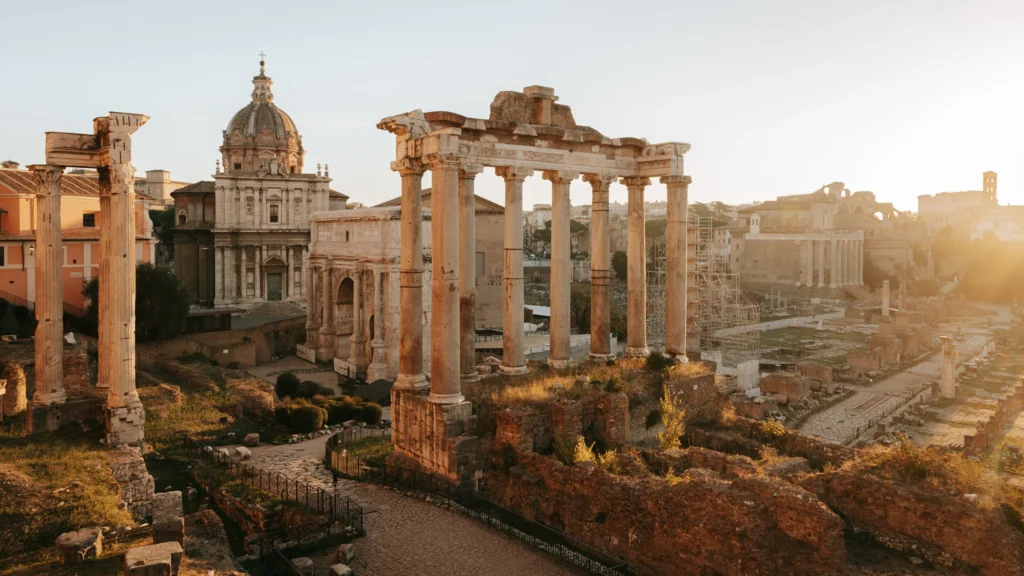
Rome’s UNESCO property covers much of the historic centre, together with important properties of the Holy See in the city and the Basilica of San Paolo Fuori le Mura.
The area brings together almost three millennia of history. The Colosseum, Roman Forum, Palatine Hill, Pantheon, imperial monuments, early Christian basilicas, Renaissance palaces, and Baroque squares all contribute to the protected urban landscape.
This is the strongest choice for first-time visitors and anyone interested in Roman civilisation. However, the UNESCO designation does not mean that every monument shares one ticket. The historic streets and squares are freely accessible, while major archaeological sites and museums have separate booking systems.
Reserve the Colosseum and other priority attractions before arrival. The Pantheon, Vatican Museums, Borghese Gallery, and some archaeological experiences also require separate planning, even when they are not all part of the same UNESCO property.
Best base: Rome’s historic centre, Monti, Prati, or an area with direct metro access – 🔍Check stays in Rome
Suggested time: At least three full days
Best for: First-time visitors, families, couples, ancient history, art
Access: Excellent rail and air connections; avoid driving into the centre
2. Historic Centre of Florence
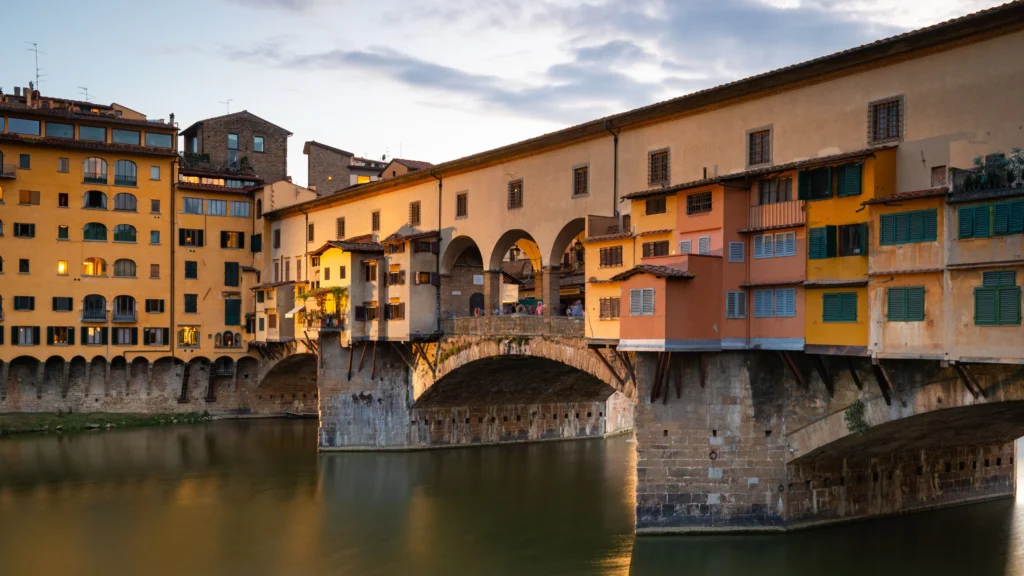
Florence is one of Europe’s defining Renaissance cities. Its UNESCO-listed centre includes the Cathedral of Santa Maria del Fiore, Giotto’s Bell Tower, the Baptistery, Palazzo Vecchio, Santa Croce, Ponte Vecchio, the Uffizi Galleries, and other works connected with the Medici era.
The centre is compact, but the quantity of art makes a short visit difficult. A day can cover the main outdoor landmarks, while two or three days allow time for museums and neighbourhoods beyond Piazza del Duomo.
The Uffizi, Accademia Gallery, and Brunelleschi’s Dome should be planned separately. Named tickets and timed reservations may apply. Check current conditions before visiting.
Florence is also the most practical base for a Tuscany UNESCO sites itinerary. Siena, San Gimignano, Pisa, Pienza, and the Medici villas can all be added, although not all are equally convenient by train.
Best base: Historic centre or near Firenze Santa Maria Novella station – 🔍Check stays in Florence
Suggested time: Two or three full days
Best for: Renaissance art, architecture, first-time visitors, couples
Access: High-speed trains connect Florence with Rome, Bologna, Milan, Naples, and Venice
3. Venice and Its Lagoon
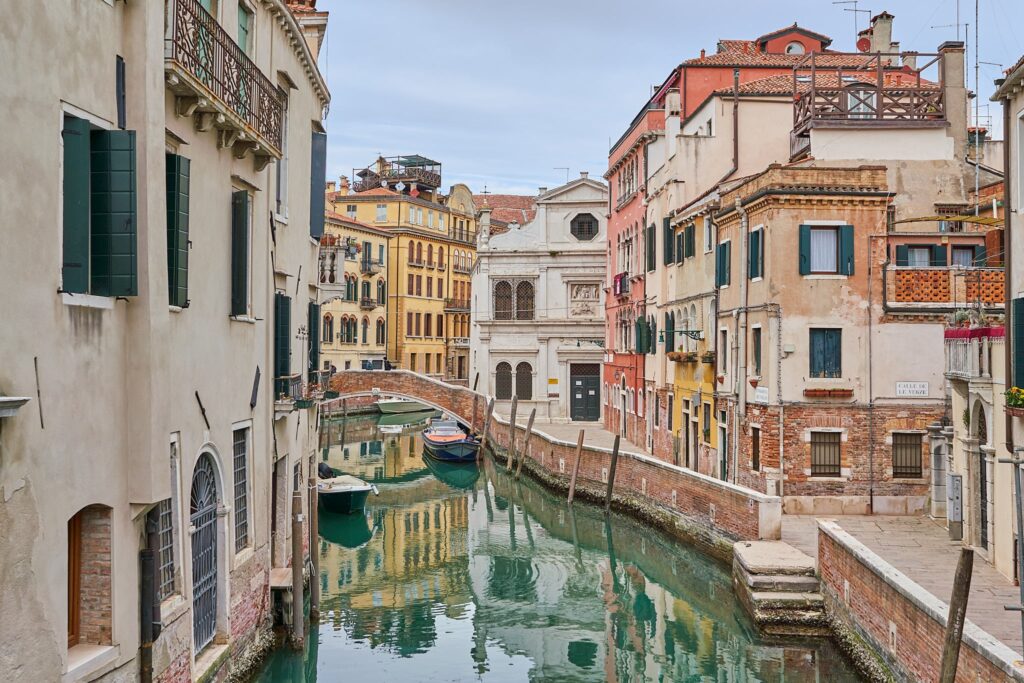
Venice and its Lagoon form a cultural property rather than a single monument. The protected area includes the historic city, its waterways, lagoon environment, and islands with centuries of maritime history.
Piazza San Marco, Basilica di San Marco, Palazzo Ducale, the Grand Canal, major churches, and the quieter districts of Cannaregio, Castello, and Dorsoduro reveal different parts of the city’s story.
A day trip shows the famous landmarks, but staying for two nights creates a much better experience. Early mornings and evenings are calmer, and there is time to visit Torcello, Murano, or other parts of the lagoon.
Day visitors may need to pay the Venice Access Fee on selected dates and during specified hours. Overnight guests are generally exempt, but registration or proof of exemption may still be required. Check the latest rules before arrival.
Best base: Venice historic centre for atmosphere; Mestre for lower prices and transport access – 🔍Check stays in Venice
Suggested time: Two full days, plus another day for lagoon islands
Best for: Couples, architecture, slow travel, car-free trips
Access: Arrive at Venezia Santa Lucia by train; use walking routes and vaporetti within the lagoon
4. Pompeii, Herculaneum and Torre Annunziata
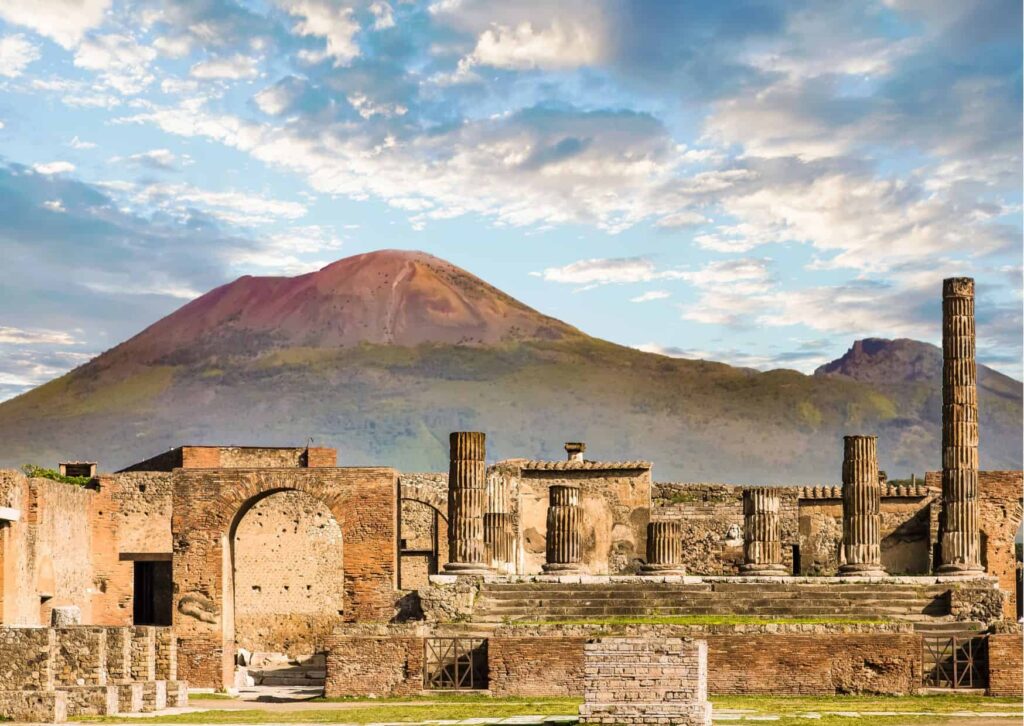
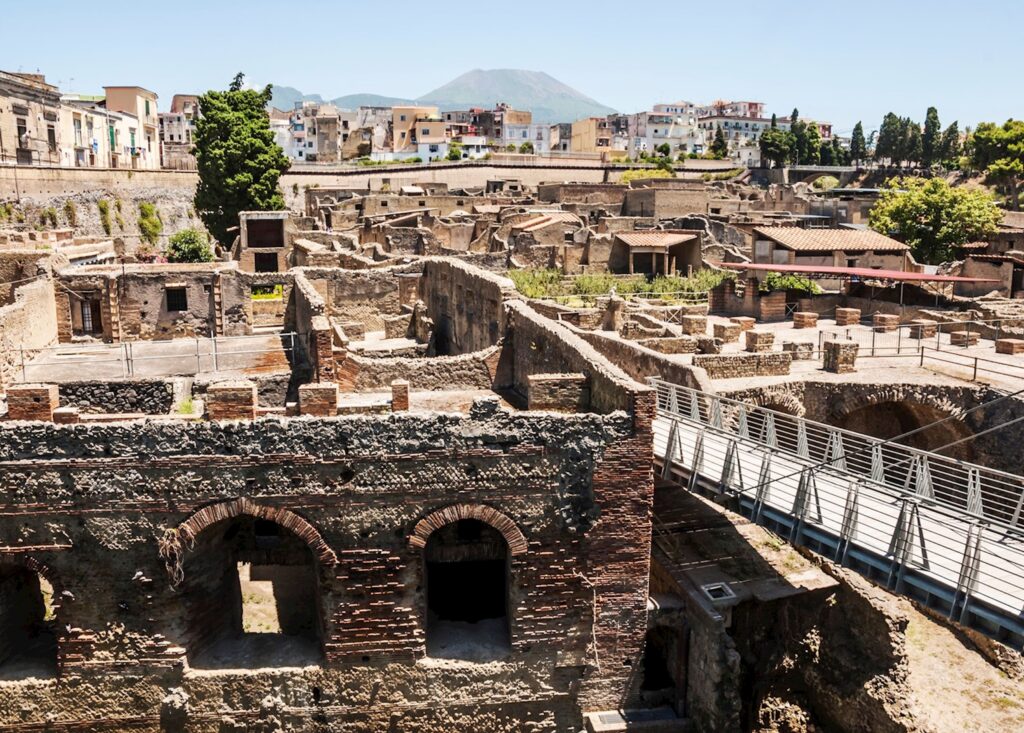
The official UNESCO property combines Pompeii, Herculaneum, and the Roman villas at Torre Annunziata. These are related sites, but each offers a different experience.
Pompeii is the largest and requires the most walking. Streets, houses, baths, temples, theatres, workshops, political inscriptions, and domestic spaces create an unusually complete picture of Roman urban life.
Herculaneum is smaller but preserves upper floors, wood, food, and domestic details that did not survive in the same way at Pompeii. Oplontis at Torre Annunziata is known for the Villa of Poppaea and its Roman wall paintings.
A Pompeii and Herculaneum day trip is possible, but it can be tiring. Travellers with a strong interest in archaeology should divide the sites across two days.
Pompeii uses named tickets and may apply timed entry or visitor limits. Opening areas can also change because of conservation work. Check current times, entrances, and ticket rules before visiting.
Best base: Naples for transport and city life; Pompeii for early access – 🔍Check stays in Naples
Suggested time: A full day for Pompeii; another half or full day for Herculaneum and Oplontis
Best for: Families with older children, archaeology lovers, Roman history
Access: Local EAV rail services connect Naples with the Vesuvian sites; check current schedules
5. The Sassi and Rupestrian Churches of Matera
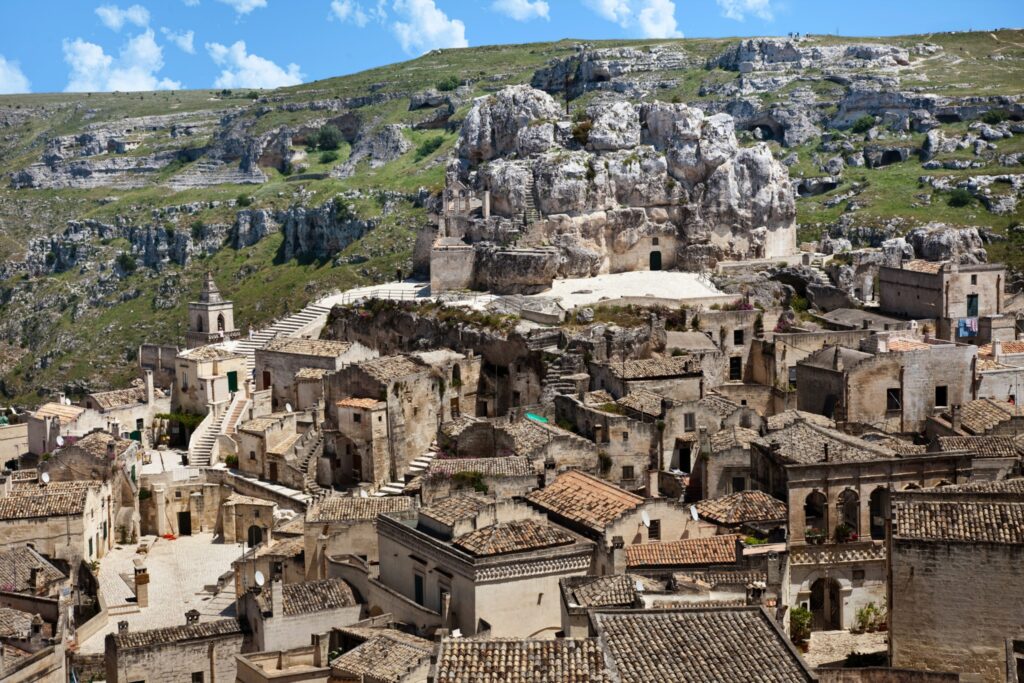
Matera’s UNESCO property combines the Sassi districts with the surrounding park of rock-cut churches. Houses, cisterns, churches, passages, and courtyards were adapted to the natural stone over many centuries.
The two best-known districts are Sasso Caveoso and Sasso Barisano. The wider property extends across the ravine into Parco della Murgia Materana, where viewpoints and rupestrian churches reveal the relationship between settlement and landscape.
Walking through the Sassi is free, but cave houses, churches, museums, and guided experiences have separate tickets. Steep lanes and polished stone can be difficult for visitors with limited mobility.
Matera deserves an overnight stay. The lighting and atmosphere change after day visitors leave, while an extra morning allows time for the park or a guided underground visit.
Best base: The Sassi for atmosphere; the newer town for easier access and parking – 🔍Check stays in Sassi di Matera
Suggested time: One full day and one night
Best for: Couples, slow travellers, architecture, cultural landscapes
Access: Bus, local rail from Bari, private transfer, or car; Matera is not on the main high-speed rail network
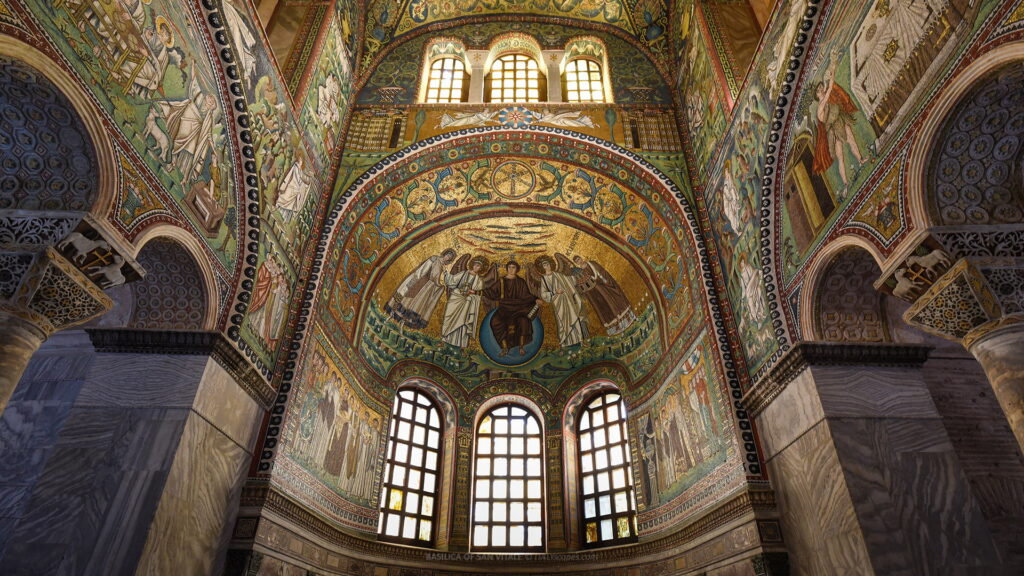
6. Early Christian Monuments of Ravenna
Ravenna’s UNESCO property consists of eight monuments from the fifth and sixth centuries. Together, they preserve some of Europe’s most important early Christian and Byzantine mosaics.
Highlights include the Basilica of San Vitale, Mausoleum of Galla Placidia, Basilica of Sant’Apollinare Nuovo, Neonian Baptistery, Arian Baptistery, Archiepiscopal Chapel, Mausoleum of Theodoric, and Sant’Apollinare in Classe.
Most central monuments can be visited on foot. Sant’Apollinare in Classe lies outside the centre and requires a separate local connection.
Some of the main monuments use combined tickets, while the Mausoleum of Galla Placidia and other sensitive spaces may require timed admission. Check current ticket combinations before arrival.
A Ravenna UNESCO mosaics day trip from Bologna is possible, but an overnight stay provides more time for the complete group and the city’s mosaic workshops.
Best base: Central Ravenna; Bologna for a day trip – 🔍Check stays in Ravenna
Suggested time: One full day or an overnight stay
Best for: Art lovers, religious history, couples, quieter cultural trips
Access: Regional trains connect Ravenna with Bologna and other Emilia-Romagna cities
7. Historic Centre of Siena
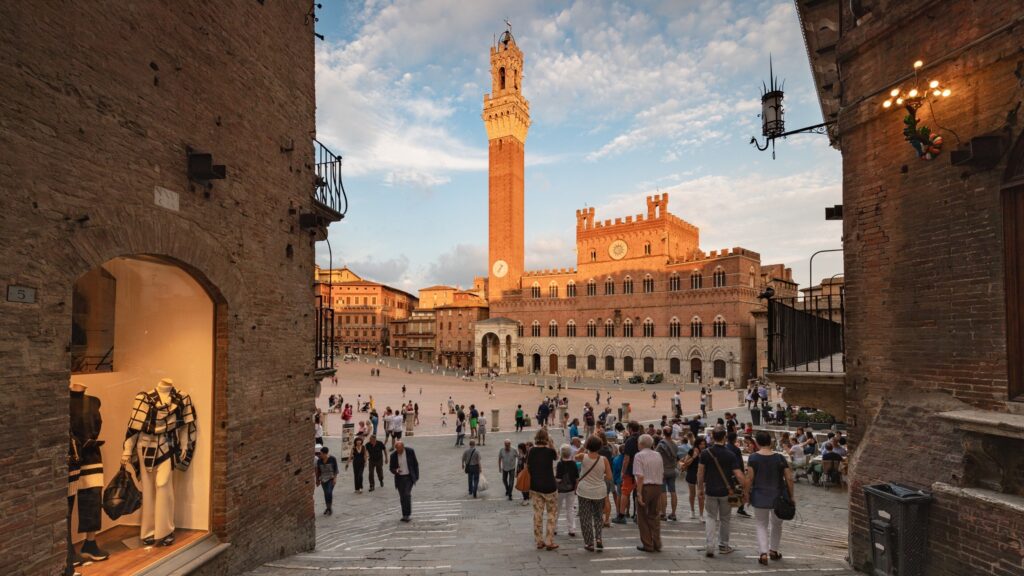
Siena’s historic centre preserves the form and character of a medieval city built around steep streets and brick architecture.
Piazza del Campo is its civic centre, overlooked by Palazzo Pubblico and Torre del Mangia. The cathedral complex adds a different layer of Gothic art, sculpture, marble decoration, and religious history.
Siena can be visited from Florence, but it is more rewarding after the day-trip groups leave. An overnight stay also makes it easier to explore smaller streets and viewpoints without rushing.
The train station is outside and below the historic centre. Direct buses from Florence can be more convenient, depending on the current timetable. Drivers should leave vehicles outside the ZTL and walk or use local transport.
Best base: Inside the walls for atmosphere; outside the ZTL for parking – 🔍Check stays in Siena
Suggested time: One full day and preferably one night
Best for: Couples, medieval history, food, slow travel
Access: Bus, regional train, guided day trip, or car with parking outside the centre
8. Historic Centre of San Gimignano
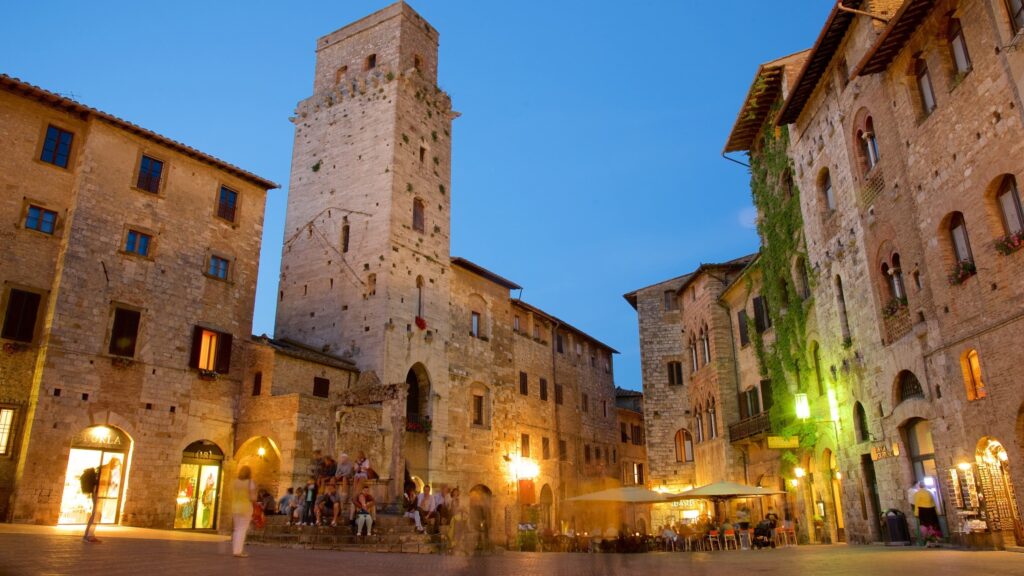
San Gimignano is one of the best-preserved medieval towns in Tuscany. Its surviving towers, stone houses, public buildings, and compact street plan explain why it became a World Heritage property.
Piazza della Cisterna and Piazza del Duomo form the centre of the visit. Torre Grossa, Palazzo Comunale, and the Collegiata add views, civic history, and medieval frescoes.
The town becomes busiest in the middle of the day. Staying overnight or arriving early provides a more relaxed experience.
San Gimignano does not have a mainline railway station. Public transport normally involves a connection through Poggibonsi, while a car is useful for combining the town with the Tuscan countryside. Park outside the historic walls.
Best base: San Gimignano for an overnight stay; Siena or Florence for a day trip – 🔍Check stays in San Gimignano
Suggested time: Half a day to one full day
Best for: Couples, road-trippers, medieval architecture, first-time Tuscany trips
Access: Bus, guided excursion, or car
9. Assisi, the Basilica of San Francesco and Franciscan Sites
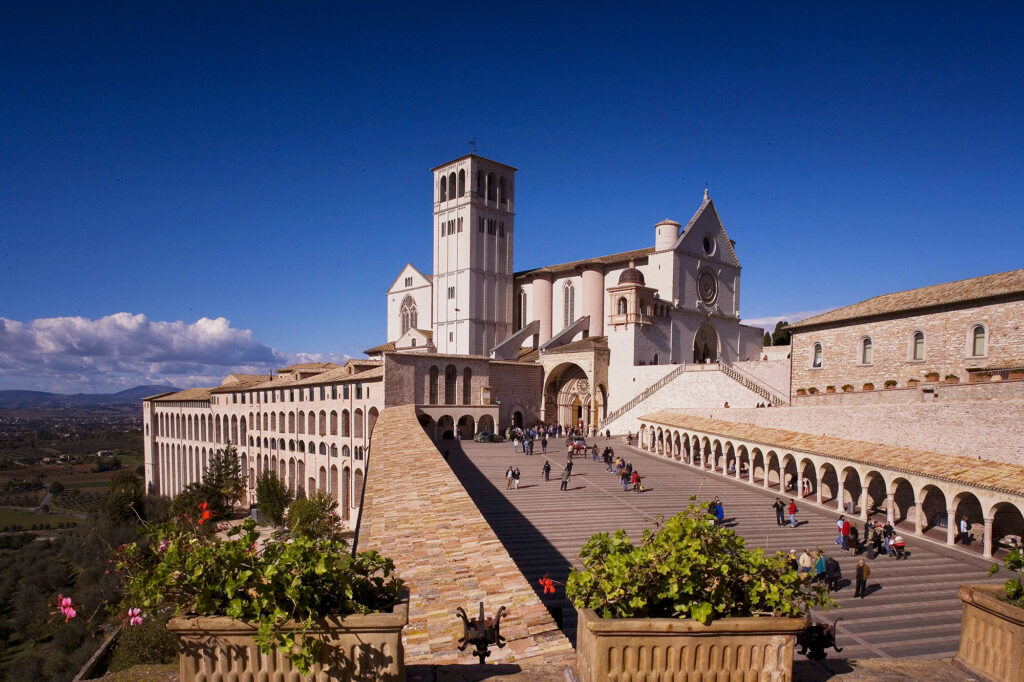
Assisi’s UNESCO property extends beyond one church. It includes the town, the Basilica of San Francesco, and other places connected with the Franciscan movement.
The basilica’s upper and lower churches contain major medieval fresco cycles. Elsewhere, stone streets, Roman remains, churches, and views across the Umbrian landscape create a wider cultural experience.
Religious services can affect access, and respectful clothing is required. Opening times for individual sites may differ, so check before visiting.
Assisi’s railway station is at Santa Maria degli Angeli below the hill town. Visitors continue by local bus or taxi. Staying in the historic centre avoids repeating this transfer and allows an early or evening walk.
Best base: Assisi historic centre; Perugia for a wider Umbria itinerary – 🔍Check stays in Assisi
Suggested time: One full day or an overnight stay
Best for: Religious heritage, medieval art, couples, slow travellers
Access: Regional train followed by local transport, or car parked outside the centre
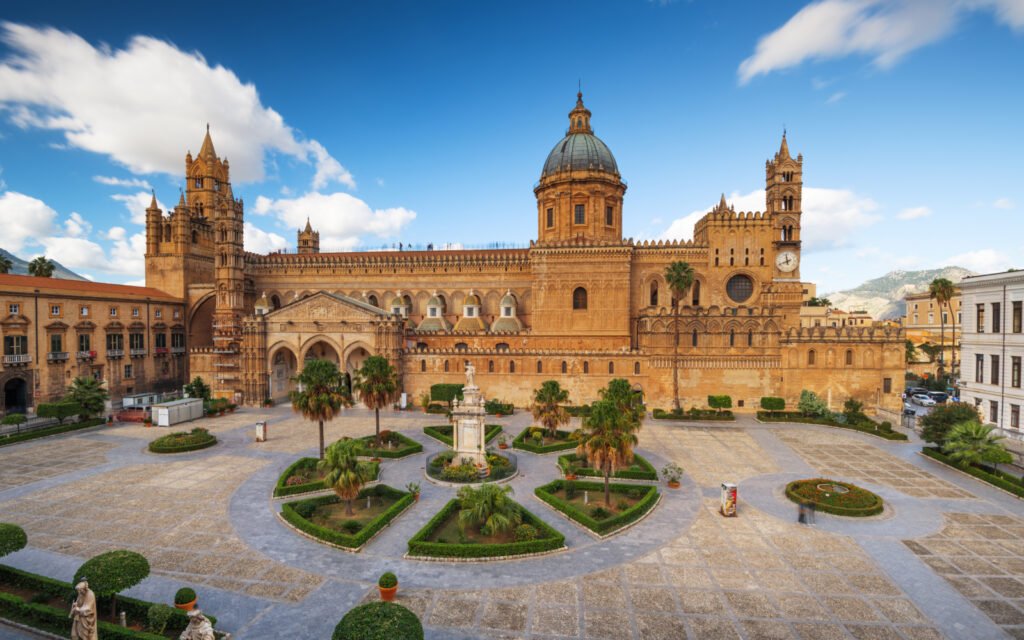
10. Arab-Norman Palermo, Cefalù and Monreale
This serial UNESCO property consists of nine monuments across Palermo, Monreale, and Cefalù. It represents a distinctive fusion of Western, Islamic, and Byzantine artistic traditions.
In Palermo, principal sites include the Palazzo dei Normanni and Cappella Palatina, Palermo Cathedral, La Martorana, San Cataldo, San Giovanni degli Eremiti, Palazzo della Zisa, and Ponte dell’Ammiraglio.
Monreale Cathedral is celebrated for its mosaics, while Cefalù Cathedral adds a coastal setting and an attractive historic centre.
Do not try to cover all three places in a few hours. Palermo needs at least two days, followed by separate time for Monreale and Cefalù. Church services, dress codes, and individual ticket arrangements apply.
Best base: Central Palermo; Cefalù for a culture-and-beach stay – 🔍Check stays in Palermo
Suggested time: Two or three days
Best for: Architecture, mosaics, food, couples, beach travellers
Access: Palermo is the main transport base; Cefalù has a railway station, while Monreale requires road transport
11. Archaeological Area of Agrigento
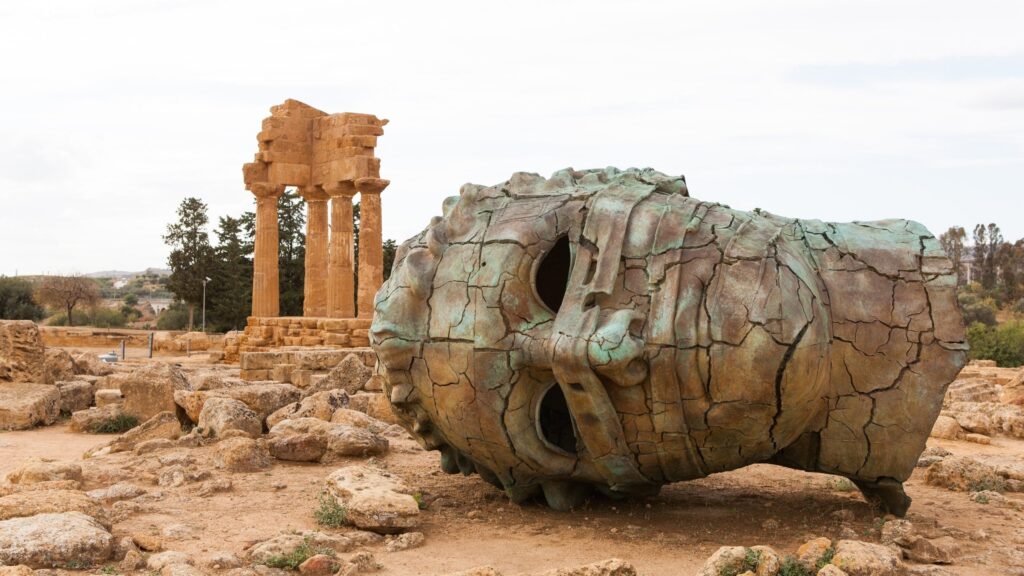
The Valley of the Temples preserves the remains of the ancient Greek city of Akragas. It is one of the most important archaeological sites in Italy and a central stop on a Sicily cultural itinerary.
The Temple of Concordia is the best-known structure, but the protected area includes several temples, sanctuaries, defensive remains, necropolises, and parts of the ancient urban plan.
The park is extensive and exposed. Summer visits are best planned for early morning or later afternoon. Comfortable shoes, water, and sun protection are essential.
Agrigento town, the archaeological park, and the museum are separate areas. Local buses and taxis connect them, while a car provides more flexibility for a wider southern Sicily route.
Best base: Agrigento for an early visit; Palermo for an organised day trip – 🔍Check stays in Agrigento
Suggested time: At least half a day, preferably a full day with the museum
Best for: Greek history, archaeology, families with older children, road trips
Access: Regional transport, guided excursion, or car
12. The Trulli of Alberobello
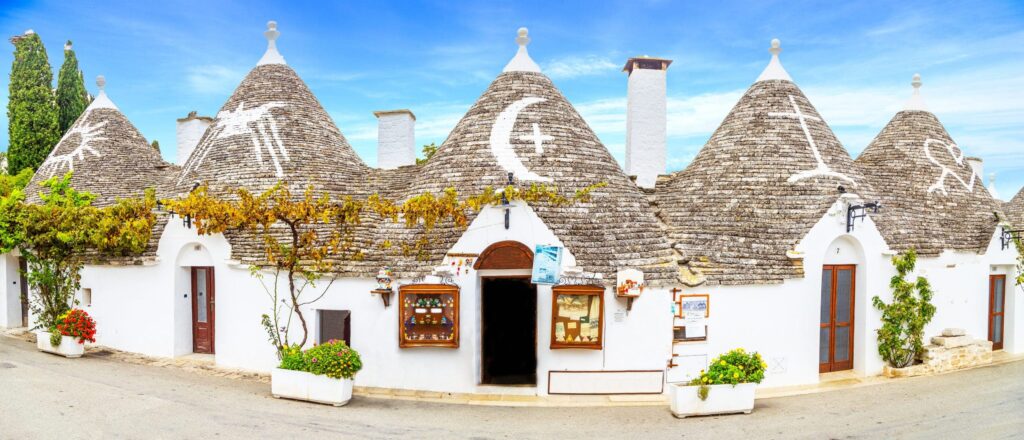
Alberobello’s UNESCO property protects groups of trulli, the dry-stone buildings with conical roofs associated with this part of Puglia.
Rione Monti contains the largest concentration and most visitor services. Aia Piccola is quieter and remains more residential. The town is compact, so the main areas can be explored in half a day.
Alberobello works particularly well with Locorotondo, Martina Franca, Ostuni, Monopoli, or Matera. Public transport is possible, but a car offers greater freedom across the Valle d’Itria.
Road signs, pedestrian restrictions, and parking arrangements can change seasonally. Leave the car outside the most visited central streets and check current local rules.
Best base: Alberobello for a trullo stay; Monopoli or Bari for a wider Puglia trip – 🔍Check stays in Alberobello
Suggested time: Half a day or an overnight stay
Best for: Families, couples, architecture, road-trippers
Access: Regional rail or bus services, guided day trip, or car
13. The Porticoes of Bologna
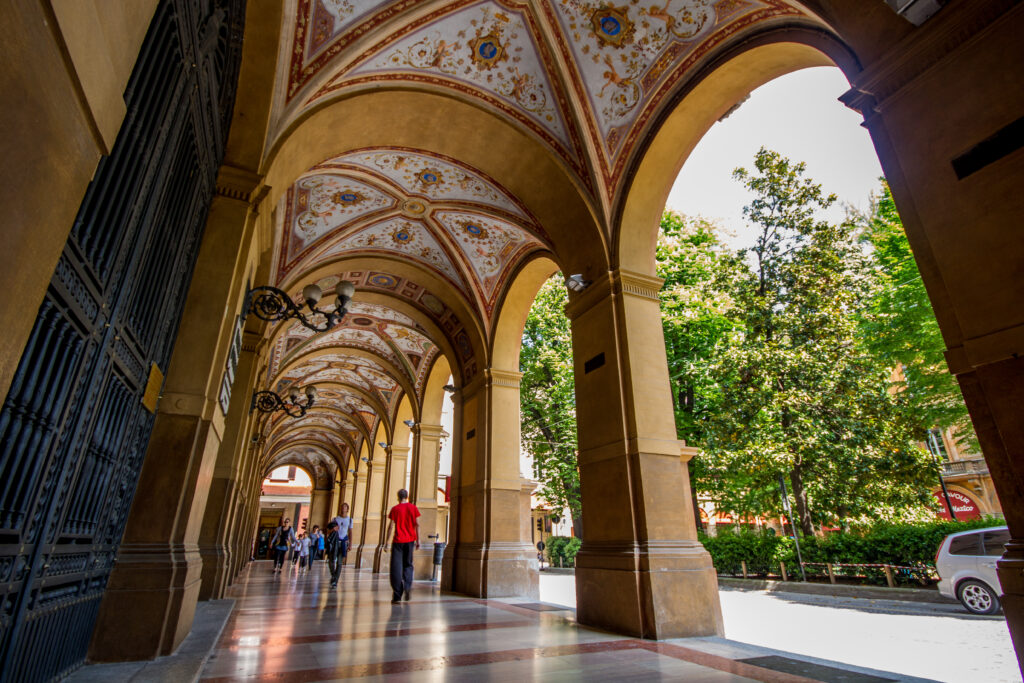
Bologna’s UNESCO property consists of selected groups of porticoes that represent different periods, materials, and urban functions.
The covered walkways are part of daily city life rather than an isolated attraction. They connect streets, shops, historic buildings, religious sites, and residential areas.
One of the most memorable routes follows the portico towards the Sanctuary of San Luca. The walk is long and rises towards the sanctuary, so local transport can be useful for some visitors.
Bologna is also one of the best bases for visiting UNESCO sites by train in Italy. Ravenna, Modena, Ferrara, Florence, and Padua can be combined with the city.
Best base: Historic centre or near Bologna Centrale – 🔍Check stays in Bologna
Suggested time: One or two full days
Best for: Food, architecture, train travel, families, short city breaks
Access: Major high-speed and regional railway hub
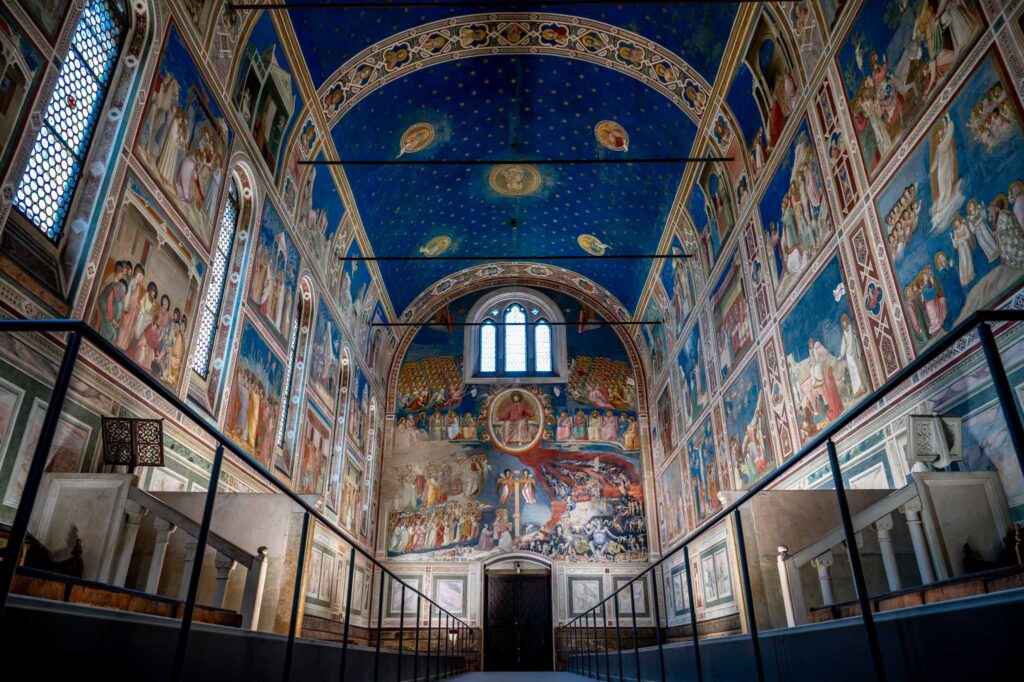
14. Padua’s Fourteenth-Century Fresco Cycles
Padua’s UNESCO property is a serial group of eight building complexes containing important fourteenth-century fresco cycles.
The Scrovegni Chapel is the best-known component. Giotto’s frescoes transformed the representation of space, emotion, and narrative in Western art.
Other parts of the property expand the story beyond one chapel. They include frescoed religious and civic spaces around the historic centre.
Admission to the Scrovegni Chapel is carefully controlled. Advance reservation is essential, and visitors must arrive before their assigned entry. The Padova Urbs Picta Card and other ticket combinations can change, so check current inclusions.
Padua is an easy cultural addition to Venice. It also works as a less expensive base for exploring parts of Veneto by train.
Best base: Padua historic centre or near the railway station – 🔍Check stays in Padua
Suggested time: One full day
Best for: Art history, couples, train travellers, Venice extensions
Access: Frequent regional and long-distance rail connections
15. Historic Centre of Naples
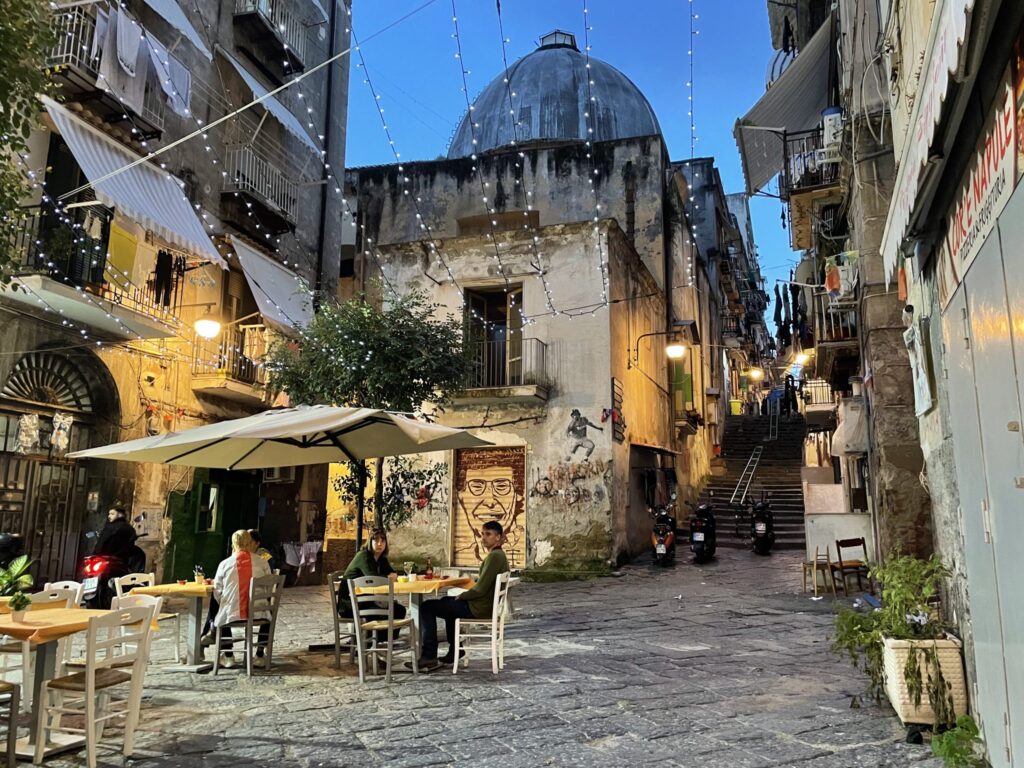
Naples has one of Italy’s largest and most layered historic centres. Greek and Roman foundations, medieval churches, Baroque interiors, narrow streets, palaces, workshops, and underground remains coexist within a living city.
Spaccanapoli, Via dei Tribunali, the cathedral, Santa Chiara, Sansevero Chapel, and the underground archaeological layers reveal different parts of its history. Individual monuments have their own opening times and ticket systems.
Naples also provides the best base for Pompeii, Herculaneum, Caserta, and several Campania UNESCO sites. It is particularly suitable for travellers who want archaeology, architecture, street life, and food in the same itinerary.
The historic centre is best explored on foot and by public transport. Driving offers little advantage, and central parking can be difficult.
Best base: Historic centre, Chiaia, or near a useful metro station – 🔍Check stays in Naples
Suggested time: Two or three full days
Best for: Food, archaeology, living culture, day trips, budget-conscious travellers
Access: Major rail hub with an international airport and regional connections
Other UNESCO Sites Worth Adding
Via Appia – Regina Viarum
The Appian Way became a World Heritage property in 2024. Its serial components follow the ancient Roman route from Rome towards southern Italy.
The sections around Rome work well as a cycling, walking, or guided archaeology experience. Check access and bicycle rules for the particular section you intend to visit.
Santa Maria delle Grazie and The Last Supper
Leonardo da Vinci’s Last Supper in Milan belongs to a separate UNESCO property with the church and Dominican convent of Santa Maria delle Grazie.
Reservations are compulsory and tickets are released in scheduled sales periods. This is one of the first cultural visits to book.
Royal Palace of Caserta
The UNESCO property includes the palace, park, aqueduct, and San Leucio complex. It is an easy addition to a Campania itinerary based in Naples.
The palace and grounds require substantial walking, so avoid treating Caserta as a brief photo stop.
Historic Centre of Urbino
Urbino is an important Renaissance city associated with the court of Federico da Montefeltro. Palazzo Ducale is the central cultural attraction.
Public transport takes more planning than for Florence or Bologna, making Urbino especially suitable for a central Italy road trip.
Late Baroque Towns of the Val di Noto
This serial property includes eight towns in south-eastern Sicily, including Noto, Ragusa, Modica, and Scicli.
A car makes it easier to combine several towns, although individual destinations can be reached by public transport. The route suits architecture, food, couples, and slow travellers.
Domus de Janas in Sardinia
The prehistoric Domus de Janas became Italy’s newest World Heritage property in 2025. The serial site includes rock-cut tombs and necropolises across Sardinia.
Because the components are widely distributed, access, opening arrangements, and road conditions must be researched for each location. A rental car is usually the most practical option.
Suggested Italy UNESCO Itineraries
Classic One-Week Route by Train
A first Italy UNESCO itinerary can connect Rome, Florence, and Venice.
Allow the most time for Rome, followed by Florence and Venice. High-speed trains make the route straightforward, while central accommodation reduces daily transport.
This itinerary works well for first-time visitors but leaves little room for day trips. Add Siena, Padua, or Pompeii only if the trip is extended.
Northern Culture Route
Use Venice, Bologna, and Ravenna as the principal bases.
Padua can be visited between Venice and Bologna. Ravenna works as a full-day excursion or overnight stay from Bologna.
This route combines maritime history, frescoes, porticoes, Byzantine mosaics, food, and excellent rail connections.
Tuscany Cultural Route
Base part of the trip in Florence and part in Siena.
Visit San Gimignano by bus, guided day trip, or car. Pienza and smaller countryside sites are easier to add on a road trip.
Avoid trying to combine Siena, San Gimignano, and several wineries in one short day.
Campania UNESCO Route
Stay in Naples and allocate separate days to the historic centre and the Vesuvian archaeological sites.
Choose Pompeii for scale and a broad picture of Roman urban life. Choose Herculaneum for a smaller site with exceptional domestic preservation. Add Caserta if palaces and gardens are a priority.
Puglia and Basilicata Road Trip
Combine Bari or Monopoli with Alberobello and an overnight stay in Matera.
A rental car makes it easier to add Locorotondo, Martina Franca, Ostuni, and Castel del Monte. Choose accommodation outside restricted centres when parking is important.
Sicily Culture and Beach Route
Use Palermo as the base for the Arab-Norman monuments and Monreale. Continue to Cefalù for a combination of heritage and beach time.
Agrigento deserves a separate stop rather than a rushed extension. Travellers with more time can continue to the Baroque towns of south-eastern Sicily.
Two-Week Italy History and Culture Itinerary
A balanced two-week trip can combine Venice, Bologna, Florence, Rome, and Naples.
Use Bologna for Ravenna or Padua, Florence for one Tuscan day trip, and Naples for Pompeii or Herculaneum.
This route is possible without a car. It provides more variety than spending the entire journey in the three most famous cities.
How to Travel Between UNESCO Sites
By Train
High-speed trains are best for journeys between Rome, Florence, Bologna, Venice, Milan, and Naples.
Regional trains are useful for Padua, Ravenna, Cefalù, Assisi, and many other destinations. Some hill towns require a bus or taxi from the station.
Book high-speed tickets earlier for better choice. Regional schedules can change, so check current departure and return times before visiting.
By Car
A car is most useful for:
- Rural Tuscany
- San Gimignano and Pienza
- Alberobello and the Valle d’Itria
- Matera combined with smaller Puglian towns
- The Val di Noto
- Agrigento and inland Sicily
- Sardinia’s archaeological sites
- Vineyard and cultural landscapes
A car is unnecessary in central Rome, Florence, Venice, Bologna, or Naples. Parking costs, ZTL fines, and difficult access can outweigh any benefit.
By Bus
Buses are essential for destinations without central railway stations. Siena, San Gimignano, Monreale, Matera, and several smaller heritage towns may require bus connections.
Do not rely only on the outward journey. Check the final practical return service before departure.
By Boat
Venice uses vaporetti to connect parts of the city and lagoon islands. Tickets and passes are separate from admission to museums and monuments.
Ferries also matter when combining mainland Italy with Sicily or Sardinia. Routes and frequencies vary by season, so check current schedules.
Parking and ZTL Tips
Many historic cities use camera-controlled limited-traffic zones.
Entering an active ZTL without authorisation can lead to a fine, even when following a navigation app. Signs may display “varco attivo” when restrictions are active.
Before driving:
- Check the municipality’s current ZTL rules
- Ask the accommodation whether vehicle registration is possible
- Reserve parking outside the restricted centre
- Do not assume rental cars are automatically exempt
- Check whether access changes during events or summer periods
- Save the parking location before entering pedestrian streets
Venice has no road access beyond Piazzale Roma and Tronchetto. Cars must be left before entering the pedestrian and lagoon transport network.
Tickets, Opening Times and Museum Passes
There is no nationwide pass covering all Italy UNESCO World Heritage Sites.
Each city, museum, archaeological park, church, or monument manages its own admission. A freely accessible historic centre may contain several separately ticketed attractions.
Book these priority visits early:
- Colosseum and Roman Forum
- Uffizi Galleries and major Florence museums
- Brunelleschi’s Dome
- Basilica di San Marco and Palazzo Ducale
- Pompeii during high-demand periods
- Scrovegni Chapel
- The Last Supper in Milan
- Timed monuments in Ravenna
City cards and combined tickets can be useful, but inclusions change. Some passes still require a separate timed reservation.
Free museum days can attract large crowds, and priority entry may not operate. Check current rules before building an itinerary around free admission.
Churches can close for worship, ceremonies, or religious holidays. Dress respectfully and verify the latest opening times before visiting.
Best Time to Visit
Spring
April and May provide some of the best conditions for an Italy cultural trip.
Temperatures are usually comfortable for walking, archaeological parks, and hill towns. Easter and public holidays can create high demand, so accommodation and major tickets should be booked early.
Summer
Summer brings long days, full tourism services, and easy beach combinations.
However, Rome, Pompeii, Agrigento, Matera, and Alberobello can be extremely hot. Visit exposed sites early, carry water, and avoid building an itinerary around midday walking.
Venice, Florence, and San Gimignano are particularly busy in peak season.
Autumn
September and October combine cultural sightseeing with more comfortable temperatures.
This is an excellent season for couples, road-trippers, and food-focused travel. Later autumn brings more rain, shorter daylight, and the possibility of high water in Venice.
Winter
Winter works well for museum-based trips to Rome, Florence, Naples, Bologna, Padua, Ravenna, and Palermo.
Accommodation can cost less outside Christmas, New Year, Carnival, and major events. Rural transport may be reduced, and some smaller attractions operate shorter hours.
Easy Day Trips and Nearby UNESCO Pairings
Useful cultural pairings include:
- Rome with Tivoli or the Appian Way
- Florence with Siena
- Siena with San Gimignano
- Venice with Padua
- Bologna with Ravenna
- Naples with Pompeii or Herculaneum
- Naples with Caserta
- Bari with Alberobello
- Alberobello with Matera
- Palermo with Monreale
- Palermo with Cefalù
- Agrigento with the southern Sicilian coast
Choose one major focus per day. Combining two large archaeological parks or several museum-heavy cities usually reduces the quality of the visit.
Tours, Tickets and Cultural Experiences
Guided tours are most valuable where interpretation changes the experience.
An archaeologist-led tour can make Pompeii, Herculaneum, Rome, or Agrigento easier to understand. Art historians add context in Florence, Ravenna, Padua, and Palermo.
Walking tours work well in Bologna, Naples, Siena, and Venice. Food tours also connect historic centres with living culture rather than treating them as open-air museums.
Private transfers are useful between Bari and Matera or for longer Sicilian day trips. A rental car makes more sense for multi-day regional routes than for isolated city visits.
Browse guided cultural tours after securing any compulsory timed-entry reservation.
Food and Living Culture
World Heritage cities are not preserved stage sets. Their food traditions remain part of daily life.
Rome is associated with dishes such as carbonara, amatriciana, and cacio e pepe. Florence adds ribollita and Tuscan meat dishes, while Bologna is known for fresh pasta, tortellini, and tagliatelle.
Naples combines monumental history with pizza, pastries, markets, and neighbourhood food culture. Matera is closely associated with local bread and southern rural cooking.
Palermo’s markets introduce panelle, arancine, sfincione, and other Sicilian street foods. Cefalù and coastal Sicily add fish and seafood to the cultural route.
Food tours fit most naturally into longer stays. They should complement the monuments rather than replace time needed for the UNESCO property itself.
Practical Tips and Mistakes to Avoid
Do not treat every UNESCO property as one building. Many contain several monuments, districts, or towns.
Use official property names when researching tickets. A famous attraction may represent only one component.
Book conservation-sensitive sites first. The Last Supper and Scrovegni Chapel can determine the rest of the itinerary.
Avoid exposed ruins at midday in summer. Pompeii and Agrigento require more walking and shade planning than many visitors expect.
Do not drive into a historic centre without checking the ZTL. Navigation apps do not guarantee legal access.
Keep regional routes realistic. Rome, Florence, Venice, Pompeii, Matera, and Palermo do not belong in one short week.
Allow time for security, station transfers, and walking from transport stops.
Check accessibility before booking a stay in Matera, Siena, San Gimignano, Assisi, or a historic building without a lift.
Do not confuse UNESCO World Heritage with Intangible Cultural Heritage, Creative Cities, Biosphere Reserves, or properties on the tentative list.
FAQs
Is it worth planning a trip around Italy’s UNESCO sites?
Yes. The sites create a clear route through Roman, medieval, Renaissance, Byzantine, Baroque, and modern Italian history. Regional planning makes the trip more enjoyable than collecting unrelated landmarks.
How many UNESCO World Heritage Sites are in Italy?
Italy currently has 61 World Heritage properties. Fifty-five are cultural and six are natural. Check the latest total before publication or travel because new properties may be added.
Which UNESCO sites are best for a first visit to Italy?
Rome, Florence, Venice, and Pompeii provide the strongest introduction. Bologna, Ravenna, Siena, and Padua are excellent additions for travellers with more time.
How long is needed for an Italy UNESCO itinerary?
One week is enough for three main bases or one compact region. Two weeks allow a more balanced route with day trips and fewer rushed transfers.
Can the main UNESCO sites be visited by train?
Rome, Florence, Venice, Naples, Bologna, Padua, Ravenna, and Cefalù are practical by train. San Gimignano, Monreale, Matera, and some rural properties require an additional bus, transfer, or car.
Do you need a car for an Italy heritage trip?
Not for a classic city itinerary. A car becomes useful in rural Tuscany, the Valle d’Itria, Basilicata, inland Sicily, Sardinia, and vineyard landscapes.
Which UNESCO attractions require advance tickets?
Priority reservations include the Colosseum, Uffizi, major Florence attractions, Scrovegni Chapel, The Last Supper, and sensitive timed-entry monuments in Ravenna. Rules can change, so check before visiting.
Are Italy’s UNESCO sites suitable for families?
Many are, especially Rome, Pompeii, Bologna, Ravenna, and Alberobello. Consider heat, walking distance, stairs, cobbles, toilets, and whether children need reserved free tickets.
Which UNESCO destinations are best for couples?
Venice, Siena, Matera, San Gimignano, Assisi, and Cefalù are particularly atmospheric for an overnight stay. Florence and Palermo suit couples who prefer art, food, and city life.
What is the best season for a cultural trip?
Spring and autumn offer the best balance of weather and walking conditions. Winter suits museum-based cities, while summer works best with early visits and a culture-and-beach itinerary.
Where should you stay for a train-based UNESCO itinerary?
Rome, Florence, Bologna, Venice, and Naples are the strongest railway bases. Choose accommodation near the historic centre or a useful station rather than changing hotels for every day trip.
Is Vatican City counted as an Italian UNESCO site?
No. Vatican City is a separate sovereign state with its own UNESCO property. Rome’s World Heritage property is transnational and includes certain Holy See properties located in Rome.
Choosing the Right UNESCO Sites for Your Trip
The strongest cultural route is not the one with the largest number of stops. It is the one that connects places through history, geography, and practical transport.
First-time visitors can begin with Rome, Florence, Venice, and Pompeii. Art-focused travellers can add Ravenna and Padua. Road-trippers should consider Matera, Alberobello, Tuscany, Sicily, or Sardinia.
Choose fewer bases, reserve priority tickets early, and leave time for historic centres after museums close. Italy’s World Heritage is most rewarding when it feels like a connected journey rather than a list of monuments.
Disclosure: This page may contain affiliate links. This means that we get a small commission from any purchase you make, at no additional cost to you!