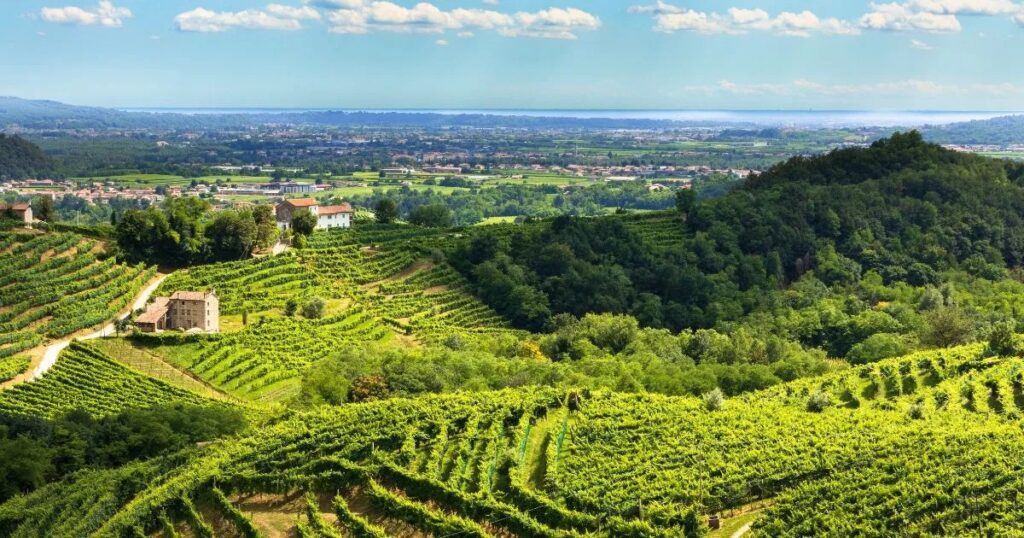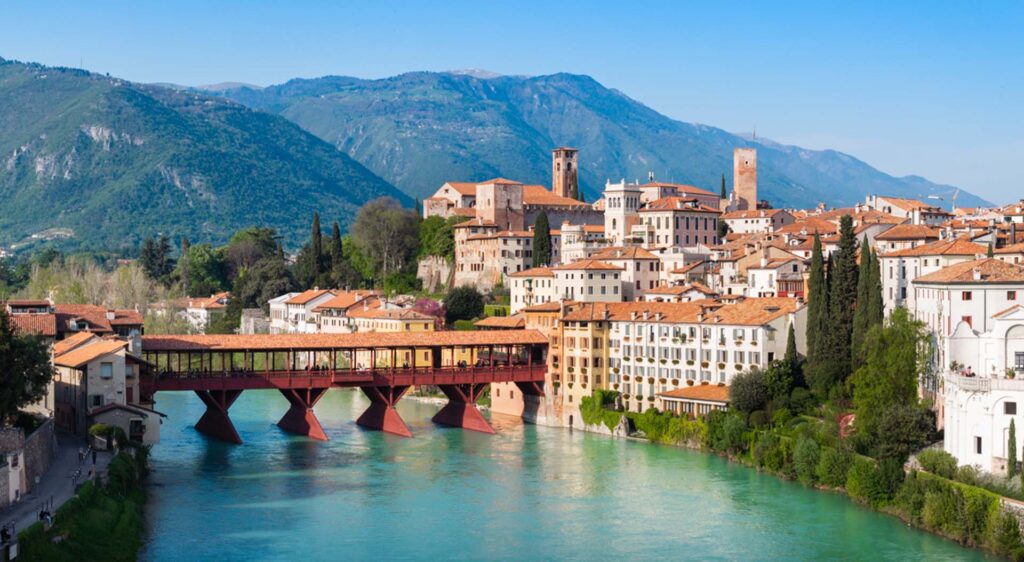
Lake Garda changes considerably from one end to the other. Around Sirmione and Peschiera, the water opens towards low hills, historic towns and vineyards. Further north, mountains rise above Malcesine, Limone and Riva del Garda, where sailing, windsurfing and walking become a bigger part of the holiday.
The most useful decision is choosing a base that matches the places you want to visit. Italy’s largest lake stretches for roughly 52 km, and travelling between its southern towns and northern mountains takes a meaningful part of the day. A well-chosen base leaves more time for the lake itself.

Quick Planning Answer
- How long to stay: Allow four or five nights for a first visit focused on one part of the lake. A week gives more room for swimming, excursions and slower days.
- Best starting point without a car: Peschiera del Garda or Desenzano del Garda, both with railway stations.
- For mountains and outdoor activities: Consider Riva del Garda, Torbole or Malcesine.
- For waterfront evenings and wine: Look at Bardolino and neighbouring eastern-shore towns.
- Best general timing: Late spring and September offer a useful balance for sightseeing and outdoor activities. Summer suits swimming and brings the widest seasonal transport choice.
- Main planning issue: Ferries, buses and road journeys need to be considered together. A town that looks close across the water may be inconvenient to reach on your dates.
Understanding the Different Shores
Lake Garda, also called Lago di Garda or Benaco, spans Lombardy, Veneto and Trentino. These regional boundaries matter less to a visitor than the contrast between the broad southern basin and the narrower, mountainous north.
The south is the easiest gateway for many first-time visitors. Peschiera and Desenzano have rail connections, while Sirmione occupies a long peninsula between them. This area works well for combining historic sights, swimming and excursions towards Verona.
The eastern shore runs through Lazise, Bardolino and Garda town towards Torri del Benaco and Malcesine. Its lower section combines waterfront promenades with wine-growing countryside; further north, Monte Baldo becomes a dominant feature.
The western shore includes Salò, Gardone Riviera, Toscolano Maderno, Gargnano and Limone. Cultural attractions and lakefront towns give way to increasingly steep scenery towards the north.
The northern end, around Riva del Garda and Torbole, has the strongest connection with mountain activities and wind sports. There are beaches here too, so choosing the north does not mean giving up time beside the water.
Garda town is one specific destination on the eastern shore. When searching for accommodation or transport, distinguish it from the wider lake.
Where to Stay on Lake Garda
Choose accommodation around the journeys you expect to make most often. Being able to walk to dinner, a beach or a departure pier can matter more than having a room overlooking the water.
Peschiera and Desenzano for Convenient Arrivals
Peschiera del Garda is a practical choice for a holiday combining rail travel, the lake and family attractions. Its fortified centre and canals give it a distinct character, while the railway station makes arrival easier than in towns requiring a further lakeside transfer.
It is particularly useful when Gardaland or trips towards Verona form part of the plan. Check the distance between your accommodation, the station and the centre: a property described as being in Peschiera may still involve substantial walking with luggage.
Desenzano del Garda is another strong option for travellers arriving by train. It suits a stay built around a town centre, waterfront restaurants and excursions around the southern lake.
The station is uphill from the waterfront, so allow for that final journey when comparing accommodation. Neither town places the northern mountains on your doorstep, but both reduce the complexity of arriving and leaving.
Sirmione for a Stay on the Peninsula
Sirmione makes sense when its castle, Roman remains and thermal experiences are central to the holiday. Staying in the historic centre allows you to spend evenings on the peninsula after a day of sightseeing.
The trade-off is access. The old town has a controlled traffic zone, and the peninsula’s geography concentrates arrivals along a limited approach. Confirm parking and any authorised vehicle access directly with your accommodation before driving towards the centre.
Colombare and Lugana, nearer the mainland end, offer a different arrangement. They can suit visitors prioritising accommodation access and nearby lakefront areas, although reaching the historic sights becomes a separate outing.
Bardolino, Garda and Lazise for Lakefront Holidays
These eastern-shore towns suit travellers who want a holiday organised around waterfront walks, meals, swimming and occasional excursions.
Bardolino is a good fit when wine is part of the appeal.
Garda town provides another established lakefront base,
while Lazise combines a historic centre with access to the southeastern part of the lake.
For a stay without a car, choose somewhere within a comfortable walk of the centre and relevant bus stops. An apartment among the vineyards may be attractive, but its location creates a different holiday from one beside the promenade.
Malcesine for Monte Baldo and a Historic Centre
Malcesine combines a castle above the lake, an old town and access to the Monte Baldo cable car. It is a strong choice for travellers who want mountain excursions alongside restaurants and waterfront time.
Its position suits exploring the upper eastern shore. However, it requires an onward transfer from a railway station, and a cable-car outing depends on operating conditions.
Check the walking route from any hillside accommodation. A lake view does not necessarily mean an easy walk back from dinner.
Riva del Garda and Torbole for Active Days
Riva del Garda suits a holiday combining a substantial town centre, beaches and access to walking and cycling routes.
Torbole has a particularly strong association with sailing and windsurfing.
These are sensible bases when outdoor activities are the main reason for visiting. They are less convenient for repeatedly travelling to southern attractions.
Car-free stays are possible, but accommodation location matters. Staying close to the waterfront and bus connections simplifies both arrival and day-to-day movement.
Salò and Gardone Riviera for the Western Shore
Salò offers a waterfront town base for exploring the western side.
Nearby Gardone Riviera is especially appealing when the Vittoriale degli Italiani and gardens feature prominently in your plans.
Neither has a railway station, so compare the onward bus journey, transfer or driving route before booking. For a road trip, confirmed parking can be more useful than a central address with uncertain access.
Limone, further north, offers a different setting beneath steep slopes. It suits visitors drawn to its historic lanes, lemon-growing heritage and upper-lake scenery, but accommodation above the centre may involve slopes or steps.
Things to Do Beyond the Waterfront
The strongest itinerary combines a few contrasting experiences. There is little benefit in rushing through several towns that offer similar waterfront walks while missing the attraction that brought you to this part of the lake.
Explore Sirmione from the Castle to the Roman Villa
Sirmione’s historic centre begins beside the Castello Scaligero, whose fortified harbour gives the entrance to town its distinctive appearance. Visiting the castle adds a different perspective on the peninsula, although its towers and elevated routes involve stairs.
Continue through the centre towards the Grotte di Catullo at the far end of the peninsula. Despite the name, these are the remains of a Roman villa rather than natural caves.
The archaeological site provides a reason to walk beyond the busiest central streets. Allow time for the ruins and their setting instead of treating them as a brief stop before returning to the castle.
Jamaica Beach lies below this end of the peninsula. Its access and rocky shoreline make it a separate decision, particularly for visitors with limited mobility or young children.
Take the Cable Car Above Malcesine
The Malcesine–Monte Baldo cable car connects the lakeside town with mountain terrain above it. The experience can be a scenic ascent followed by a short visit near the upper station, or the starting point for a properly planned walk.
Those options require different preparation. Reaching the mountain by cable car does not make every onward trail suitable for casual footwear or an unplanned afternoon outing.
Choose a clear-weather opportunity and bring an extra layer. Conditions above the lake can differ considerably from those at the waterfront, and seasonal maintenance affects operation.
Back in Malcesine, the Castello Scaligero provides a cultural alternative or addition. Its museum rooms and tower make it more than a viewpoint, although climbing is part of the visit.
Walk Part of the Ponale Route from Riva
The old Ponale road climbs above the lake from Riva del Garda, passing through tunnels and sections cut into the mountainside. It offers a closer encounter with the northern landscape than a waterfront stroll.
Choose your turnaround point according to your fitness and the conditions. A walk to a viewpoint and back is a different undertaking from continuing towards the Ledro valley.
This is a shared outdoor route with exposed sections, uneven ground and rockfall considerations. Wear suitable shoes, follow the designated lanes and check its current status before setting out. It is not recommended for pushchairs.
Visit Limone for Its Lemon-Growing Heritage
Limone’s historic centre is worth exploring beyond the first waterfront photograph. Its lanes and the Limonaia del Castèl connect the town with the structures once used to cultivate citrus beside the lake.
The elevated cycling and walking path near Capo Reamol offers another perspective on the shoreline. Treat it as a specific excursion: the photographed section is beyond the old centre.
Do not assume that this path provides a complete, uninterrupted route around the lake. Check the intended section and its onward connections before hiring bicycles.
Spend Time at the Vittoriale in Gardone Riviera
The Vittoriale degli Italiani was the home of writer Gabriele d’Annunzio and is now an extensive complex of buildings, gardens, monuments and museum spaces.
Its hillside setting means that a visit involves more movement than a conventional indoor museum. Allow enough time to explore the grounds without rushing between the different areas.
The Prioria, d’Annunzio’s house, requires a guided visit at a designated time. Choose a ticket that includes it if the interiors are important to you; admission to the park alone is a different experience.
Make Gardaland a Separate Day
Gardaland is near the southeastern lake and is most conveniently approached from that area. Peschiera railway station has an official park shuttle on operating days, making a visit possible without hiring a car.
Give the park its own day rather than combining it with an ambitious lake itinerary. Check the operating calendar and relevant ride requirements before purchasing tickets, particularly outside the main holiday season.
Choosing a Beach That Fits Your Day
Many shores combine pebbles, gravel, rock and grassy areas. Beach photographs do not always reveal how comfortable it is to enter the water or how far you must walk from parking.
Jamaica Beach in Sirmione is distinctive for its pale rock slabs beneath the Roman ruins. Access includes a steep, unpaved descent, and the rocky surface requires care. It suits a scenic stop better than an expectation of a broad sandy beach with straightforward access.
Spiaggia Sabbioni in Riva del Garda combines gravel with grassy park areas and provides an alternative for visitors wanting space to spend part of the day beside the lake. Nearby Spiaggia dei Pini also has a mix of stones, gravel and green space, with a designated windsurfing area.
For a longer holiday, investigate the beach nearest your accommodation before choosing a distant one from a photograph. A convenient local swimming area can be more useful than repeatedly travelling along the shore.
Water shoes can help on stony entries. Follow local bathing notices and remain within appropriate swimming areas, particularly near harbours and water-sports zones.
Getting There and Travelling Between Towns
Arriving by Train or Plane
The principal railway gateways on the southern shore are Peschiera del Garda and Desenzano del Garda–Sirmione. The latter name can cause confusion: the station is in Desenzano, so reaching Sirmione requires an onward journey.
For the northern lake, Rovereto is a useful rail gateway, followed by a bus or transfer towards Riva del Garda and Torbole.
Verona Airport is a relevant option for many arrivals, while Bergamo may suit some western-shore itineraries. Compare the complete journey to your accommodation before choosing flights. A convenient airfare can become less attractive when paired with a complicated final transfer.
Using Passenger Boats
A boat journey can be an enjoyable part of the day and a practical way to visit another shore. Navigazione Laghi operates the public network, with ordinary and faster services shown separately in its timetables.
Choose the destination and return sailing together. Not every boat serves every town, and a long journey with several intermediate stops can leave less sightseeing time than expected.
For an excursion across the lake, check:
- Whether the service operates on your travel date.
- Which pier it uses.
- Whether the journey requires a change.
- The return options and a workable alternative.
Passenger services are substantially seasonal. A timetable labelled for winter may cover only selected periods, rather than continuous sailings throughout the colder months.
Taking a Vehicle Across the Water
The Maderno–Torri del Benaco ferry is the key published crossing for taking a vehicle between the western and eastern shores.
Passenger boats and vehicle ferries serve different purposes. Check that your intended departure accepts your vehicle category before driving to the terminal, and allow for embarkation queues.
Using Buses
Buses connect towns along the shores and link them with railway gateways. ATV serves important eastern-shore routes, while other operators cover western and northern connections.
Check the relevant operator’s timetable for your actual dates. A route shown on a tourism map does not establish its frequency, evening availability or Sunday service.
A day trip along one shore is generally easier to organise than an itinerary requiring several bus changes and a boat crossing.
Driving and Parking
A car is useful for countryside accommodation, wineries and excursions away from the main waterfront towns. It is less useful when every outing involves finding parking in another historic centre.
The Gardesana roads follow the lake through towns, tunnels and constrained stretches. Avoid planning a daily circuit of distant attractions, especially during busy holiday periods.
Check municipal parking arrangements and ZTL restrictions before entering historic centres. In Sirmione, obtain clear instructions from your accommodation if authorised access is needed; a hotel booking does not by itself establish permission to drive through a controlled entrance.
A Realistic Four-Day First Visit
For a first stay based around the southern or southeastern lake, this itinerary provides variety without attempting the entire shoreline.
Day One: Settle into Your Base
Explore Peschiera or Desenzano, depending on where you are staying. Leave time for the waterfront and identify your departure pier or bus stop before the following day.
Keeping arrival day local also gives you flexibility if your train or flight is delayed.
Day Two: Explore Sirmione
Spend the day on the peninsula, combining the historic centre with the castle or Roman villa. Add Jamaica Beach only if its access and conditions suit your group.
Choose your return transport before setting out, particularly if arriving by boat.
Day Three: Visit Bardolino or Lazise
Choose one town as the main outing. In Bardolino, you could combine the waterfront with a prearranged wine experience; in Lazise, focus on the historic centre and lakeside.
Add a second stop only when the connections leave enough time to enjoy both.
Day Four: Choose One Different Experience
Families may prefer Gardaland, while other travellers could choose a beach day, a countryside excursion or a longer lunch and walk in their base town.
For a mountain-focused holiday, build the stay around Malcesine or Riva instead. With a week available, dividing the trip between a southern and northern base can be more comfortable than repeatedly travelling between them.
Best Time to Visit
Late spring and September are useful choices for combining sightseeing, waterfront walks and outdoor activities. Swimming depends on conditions and personal preference, while mountain weather can still affect excursions.
July and August suit holidays centred on swimming and a lively resort atmosphere. Accommodation demand, road traffic and parking pressure make advance planning more valuable, particularly when travelling during school holidays.
Later autumn and winter require a different approach. Choose a town you would enjoy staying in even without boat excursions, then check the specific attractions that matter to you. Passenger navigation can pause, some accommodation and restaurants close seasonally, and the Monte Baldo cable car has maintenance periods.
A winter stay can work well for local walks and cultural visits. It should not rely on a summer itinerary with fewer visitors.
Food and Wine Around the Lake
The lake’s wine areas give an outing a clear geographical focus. Bardolino is associated with the eastern shore, Lugana with the southern lake, and Valtènesi with the southwestern hills.
Choose a tasting near your base rather than crossing the lake solely to reach a winery. Book ahead when a particular producer matters, and arrange transport if everyone intends to taste.
On restaurant menus, look for lake fish and local olive oil alongside the wider cooking traditions of Lombardy, Veneto and Trentino. There is no need to organise every meal around a speciality; one well-chosen tasting or regional dinner can add context to the places you visit.
Frequently Asked Questions
Is Lake Garda the same place as Garda town?
No. Lake Garda is the whole lake, while Garda is a town on its eastern shore. Use the full town name when checking accommodation and transport.
Is there a railway around the lake?
No. The main lakeside rail gateways are on the southern shore at Peschiera and Desenzano. Most other towns require an onward bus, boat or road transfer.
Can you walk or cycle all the way around the shoreline?
Do not assume there is a continuous, separated route. Some sections have dedicated paths, while others involve roads or incomplete connections. Plan a specific route appropriate to your ability.
Can you visit both ends on a day trip?
It is possible to travel between the south and north, but the journey can dominate a short visit. Choose one area for a day trip and save the other end for a longer stay.