Chianti Tuscany is one of the best places in Italy for a slow countryside trip, with vineyard roads, hilltop villages, long lunches, and relaxed agriturismo stays.
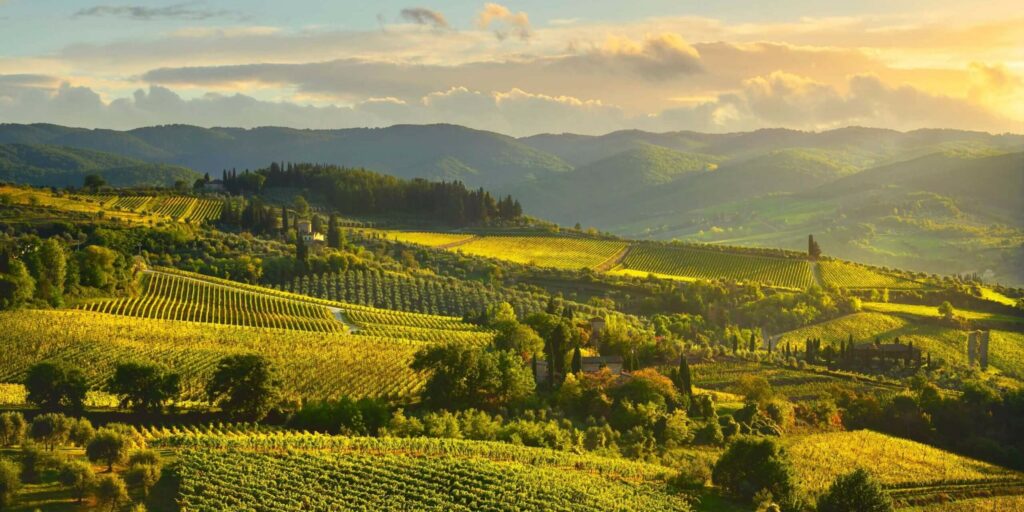
It sits between Florence and Siena. The landscape is full of vineyards, olive groves, small roads, stone farmhouses, and medieval hill towns.
Many travelers come for wine. That is part of the appeal, but Chianti is not only about tastings. You also come here for scenic drives, quiet villages, long lunches, castle views, and relaxed evenings in an agriturismo.
If you are planning a Tuscany trip, Chianti works well as a day trip. It works even better as a short base for two to four nights. That gives you time to enjoy the region without rushing from stop to stop.
Explore This Guide
ToggleWhere is Chianti in Tuscany?
Chianti is the hilly countryside between Florence and Siena. The historic heart of the area includes towns like Radda in Chianti, Castellina in Chianti, and Gaiole in Chianti. Many travelers also include Greve in Chianti and Panzano in Chianti in the same trip.
You will also see the term Chianti Classico. This refers to the historic wine-producing core of the area, linked to the black rooster symbol. For tourists, the practical point is simple. Most trips focus on the central Chianti landscape between Florence and Siena, but Chianti Classico is the historic core rather than a perfect synonym for the whole region.
Is Chianti worth visiting?
Yes, especially if you want a slower Tuscany experience.
Chianti is a good fit for:
couples looking for a romantic countryside stay
first-time Tuscany visitors who want classic vineyard scenery
food and wine travelers
road trip travelers moving between Florence and Siena
families who want space, a pool, and a quieter base
It is less ideal if you want a city break, museums all day, or easy train-based travel. Chianti is more about villages, driving, views, and slow meals than major urban sightseeing.
Best things to do and villages to visit in Chianti
Drive the Chiantigiana road
The SR222, often called the Chiantigiana, is one of the classic drives in Tuscany. It links Florence and Siena through Chianti villages and vineyard landscapes.
This is not a route to rush. Plan short stops, viewpoints, and at least one village lunch. The drive feels best when you leave space for detours.
Explore Greve in Chianti
Greve is often the easiest first stop in Chianti. It has a broad main square, shops, wine bars, and a practical small-town feel.
It is not the most dramatic village in the region. Still, it is one of the most convenient. That makes it a strong base for first-time visitors.
Visit Montefioralle
Montefioralle sits just above Greve. It is tiny, quiet, and very photogenic.
This is the kind of place you visit for a short walk, stone lanes, and classic Tuscan views. It works well combined with Greve on the same morning or afternoon. It is better as a scenic stop than a base, since it is very small and has fewer practical services than Greve.
Stop in Panzano in Chianti
Panzano is a good stop for food and views. The village overlooks the Conca d’Oro landscape, one of the best-known vineyard settings in the area.
It is a smart lunch stop if you want a food-focused day. Panzano also works well between Greve and Castellina.
Walk through Castellina in Chianti
Castellina is one of the best villages in Chianti for a relaxed stroll. Its historic center is compact and easy to explore. The covered street called Via delle Volte is one of the town’s highlights.
You can also head to the Rocca area for views over the surrounding hills. Castellina suits travelers who want a pretty village that still feels practical.
Enjoy Radda in Chianti
Radda feels more classic and more atmospheric than Greve. It sits on a hill and is surrounded by vineyards. The center is small, walkable, and a little more romantic.
For many travelers, Radda is one of the best places to stay in Chianti. It feels scenic and special, while still giving you restaurants and easy access to other villages.
See Gaiole in Chianti and its castles
Gaiole itself is more of a base than a major sightseeing stop. The real appeal is the countryside around it.
This side of Chianti is great for castle roads, winery visits, and scenic drives. Castello di Brolio is one of the best-known names in the area.
Add art at Chianti Sculpture Park
If you want a break from wine tasting, Chianti Sculpture Park is a strong choice. It mixes contemporary art with woodland scenery.
This is a nice option for couples, repeat visitors, and families who want something different. It also adds variety to a longer stay.
Do a simple walk through vineyards and hills
Chianti is not only for drivers. There are walking routes around several villages. Some are easy village-to-viewpoint walks. Others are longer countryside routes.
A simple rule helps here. Choose one village-based walk and one scenic drive in the same day. That keeps the day balanced.
Where to stay in Chianti
Where you stay changes the whole trip. Some travelers want a village with restaurants in walking distance. Others want a vineyard estate with a pool and sunset views. In simple terms, village-center stays are better for walkability and easy dinners, while countryside estates are better for views, space, and a slower feel.
Stay in Greve if you want convenience
Greve is a smart base if this is your first Chianti trip. It is practical, lively enough, and easier to fit into a route from Florence.
Choose Greve if you want:
a simple base for one to three nights
village services close by
easier logistics without too much rural driving
a mix of town stay and nearby winery visits
Stay in Radda if you want atmosphere
Radda is one of the best places to stay in Chianti for couples. It feels more elevated, more intimate, and more scenic.
Choose Radda if you want:
a romantic base
hilltop views
a classic Chianti feel
easy access to Castellina and Gaiole
Stay in Castellina if you want balance
Castellina works well for travelers who want a central base. It has charm, good road connections, and a compact center.
Choose Castellina if you want:
a good all-round base
village atmosphere without feeling isolated
an easy mix of village time and countryside drives
Stay near Gaiole for vineyard estates and castles
This area suits travelers who want space and a rural setting. It is a strong pick for agriturismo stays, wine resorts, and longer countryside breaks.
Choose this area if you want:
a pool and vineyard views
a luxury or romantic countryside stay
castle roads and winery visits
a slower pace
Village center or countryside stay?
A village center stay is better if you want to walk to dinner. A countryside stay is better if the pool, views, and quiet matter more.
Look for these details before booking:
parking included
air conditioning in summer
on-site restaurant or breakfast
pool opening season
how far the stay is from the nearest village
Chianti day trip or overnight stay?
A Chianti day trip works best from Florence or Siena if you have a car. You can see two or three villages, stop at a winery, and have lunch.
Still, Chianti is better with at least one overnight stay. The region feels most rewarding in the late afternoon and evening, when day trippers leave and the villages slow down.
Chianti day trip outline
A simple day trip can look like this:
start from Florence or Siena
drive to Greve in Chianti
continue to Montefioralle or Panzano
stop in Castellina or Radda
add one winery visit or long lunch
return in the evening
This works well if you want a taste of the region. It is not enough if you want a deep wine or village-focused trip.
Chianti 2-day itinerary
Day 1:
arrive from Florence
explore Greve and Montefioralle
lunch in Panzano
scenic drive to Radda
sleep in Radda or Castellina
Day 2:
morning in Castellina
winery or olive oil tasting
afternoon drive toward Gaiole
castle stop if open
continue to Siena or stay one more night
Chianti 3-day itinerary
Day 1:
Greve, Montefioralle, Panzano
Day 2:
Castellina, vineyard walk, wine tasting
Day 3:
Radda, Gaiole, castle road, sculpture park or slow lunch
With three days, Chianti starts to feel relaxed instead of rushed.
Chianti for couples, families, and budget travelers
Chianti for couples
Chianti is one of the best romantic areas in Tuscany. Hilltop villages, vineyard sunsets, and small hotels suit couples very well.
The best bases are usually Radda, Castellina, or a countryside estate near Gaiole.
Chianti for families
Families often do best in an agriturismo with space and a pool. A countryside property can be more comfortable than a small village hotel.
Choose family stays with:
parking
outdoor space
flexible room types
pool access in warm months
short drive times between stops
Chianti is more about calm family time than busy attractions. That works well if children are happy with pools, easy walks, and open space.
Chianti on a budget
Chianti is not the cheapest part of Tuscany. Still, you can lower costs by staying just outside the main villages, traveling outside peak summer, and choosing a simple agriturismo rather than a luxury wine resort.
A few easy budget tips:
travel in spring or autumn
book early for weekends
compare village hotels with countryside stays
avoid changing base every night
choose lunch as your main restaurant meal
Food and wine in Chianti
Wine is central to the region, but food matters just as much. You will regularly see local products like olive oil, salumi, pecorino, and seasonal Tuscan dishes. Look out for classics such as bistecca alla fiorentina, ribollita, and simple olive oil tastings at wineries or local estates.
Useful local words include:
agriturismo
enoteca
cantina
degustazione vini
borgo
centro storico
parcheggio
A few simple tips help:
reserve winery visits in advance when possible
do not assume every winery accepts walk-ins
keep tastings light if you are driving
build time for lunch, not only wine stops
Practical travel tips for Chianti
Do you need a car?
A car is the easiest way to explore Chianti. Public buses do connect some villages, but they are better for simple point-to-point travel than for flexible sightseeing days.
If you do not want to drive, stay in one village and keep expectations simple. Greve is often one of the easier choices in that case.
Is parking difficult?
Parking is usually manageable if you use village parking areas outside the oldest cores. In high season, arrive earlier in the day.
Do not assume you can park directly in the historic center. Always check access rules before arrival.
Are there beaches in Chianti?
No. Chianti is inland. If you want water, focus on a stay with a pool rather than looking for beach time.
When is the best time to visit?
Late spring and early autumn are often the most comfortable periods for scenic drives, village walks, and countryside stays.
Summer is beautiful but hotter and busier. Winter can be peaceful, but opening days and hours can be more variable, so it helps to check ahead.
Final thoughts on visiting Chianti
Chianti Tuscany is best for travelers who enjoy a slower trip. It is not about rushing through a checklist. It is about choosing a good base, driving a few beautiful roads, and giving yourself time for villages, meals, and views.
If you only have one day, focus on two or three stops. If you have longer, stay overnight. That is when Chianti feels at its best.
FAQs
Is Chianti worth visiting?
Yes, especially for scenic drives, hill towns, and food and wine. It is one of the best areas in Tuscany for a slow countryside stay.
Where is Chianti in Tuscany?
Chianti lies between Florence and Siena. It covers vineyard hills, small towns, and countryside roads in central Tuscany.
What are the best towns in Chianti?
Greve, Radda, Castellina, Gaiole, and Panzano are the main ones to know. Each suits a slightly different style of trip.
Where should I stay in Chianti for the first time?
Greve is a practical first base. Radda and Castellina are better if atmosphere matters more.
Is Chianti better as a day trip or an overnight stay?
A day trip is possible, but one to three nights is better. That gives you time for villages, tastings, and slower evenings.
Do you need a car in Chianti?
Usually yes. Buses exist, but a car makes the region much easier and more enjoyable.
What is the difference between Chianti and Chianti Classico?
Chianti is the wider travel region people talk about. Chianti Classico refers to the historic wine zone in its core area.
Is Greve in Chianti a good base?
Yes. It is one of the easiest bases for first-time visitors and short stays.
Is Radda in Chianti worth staying in?
Yes, especially for couples. It is scenic, compact, and one of the most atmospheric villages in the area.
Are there family-friendly stays in Chianti?
Yes. Agriturismos with pools and outdoor space are often the best fit for families.
Are there beaches in Chianti?
No. Chianti is inland, so travelers usually choose pool stays instead.
When is the best time to visit Chianti?
Late spring and early autumn are usually the best choices. They combine good scenery, pleasant weather, and strong food-and-wine appeal.
Disclosure: This page may contain affiliate links. This means that we get a small commission from any purchase you make, at no additional cost to you!