Paestum’s standing Doric temples, Agrigento’s sacred ridge and Selinunte’s sea-facing acropolis reveal an Italian past that began long before Rome dominated the peninsula. Syracuse adds a vast rock-cut theatre, while Cuma, Metaponto and Locri trace Greek settlement across the mainland.
The best Greek ruins in Italy are Paestum for preserved temples, the Valley of the Temples for landscape and scale, and Syracuse for archaeology within a rewarding city break. Selinunte suits travellers who want a large site to explore, while Segesta offers a shorter visit with an exceptional temple setting.
This guide compares the main sites, explains which are genuinely Greek, and helps you plan realistic routes through Sicily and southern Italy.
Jump to
ToggleQuick Planning Answer
- Best for a first Greek temple visit: Paestum or the Valley of the Temples.
- Best mix of archaeology and city life: Syracuse.
- Best large archaeological landscape: Selinunte.
- Best shorter visit in western Sicily: Segesta.
- Time needed: Allow half a day for compact sites and most of a day for Agrigento, Selinunte or Syracuse.
- Best general time: April to early June and late September to October.
- Is a car useful? Yes for western Sicily, Basilicata and Calabria. Paestum and Syracuse are manageable without one.
- Main practical issue: Many sites are large, exposed and spread across different regions. Avoid building an itinerary around too many ruins on consecutive days.
Why Are There So Many Greek Ruins in Southern Italy?
From the eighth century BCE, Greek settlers founded colonies along the coasts of Sicily and southern mainland Italy. These cities became trading, political and cultural centres with temples, theatres, planned streets and defensive walls.
The Greek colonial world of the southern peninsula became known as Magna Graecia. Sicily was closely connected to it, although historians sometimes treat the island’s Greek cities as a related but distinct group.
Many place names changed as cities passed through Lucanian, Carthaginian, Roman, Byzantine and later control. Travellers may encounter both ancient and modern names:
- Akragas became Agrigentum and later Agrigento.
- Poseidonia became Paestum.
- Syrakousai became Siracusa.
- Selinous became Selinunte.
- Elea became Velia.
- Kyme became Cuma.
- Metapontion became Metaponto.
- Lokroi Epizephyrioi became Locri Epizefiri.
- Taras became Taranto.
Most archaeological parks therefore contain more than purely Greek ruins. Roman streets, houses and public buildings often stand beside older temples and sanctuaries.
Best Greek Ruins in Italy and Sicily
Paestum, Campania
Paestum is the clearest first choice on mainland Italy. Its three major Doric temples remain standing within the open plan of the ancient city of Poseidonia.
The two temples dedicated to Hera and the Temple of Athena are the main attractions. The larger second Temple of Hera is also traditionally called the Temple of Neptune. Visitors can also explore Roman streets, the forum, city walls and other public spaces.
Do not leave after photographing the temples. The National Archaeological Museum explains the transition from Greek Poseidonia to Lucanian and Roman Paestum. Its best-known exhibit is the painted Tomb of the Diver.
Paestum suits first-time visitors, families and travellers without a car. The railway station is within walking distance of the archaeological area, although the final approach involves local roads and uneven surfaces.
Allow at least half a day for the park and museum. Stay overnight if you want a slower visit, local buffalo mozzarella and time on the nearby Cilento coast.
Valley of the Temples, Agrigento
The Valley of the Temples preserves the monumental southern edge of ancient Akragas. Despite its name, the main temples occupy a long ridge between modern Agrigento and the coast.
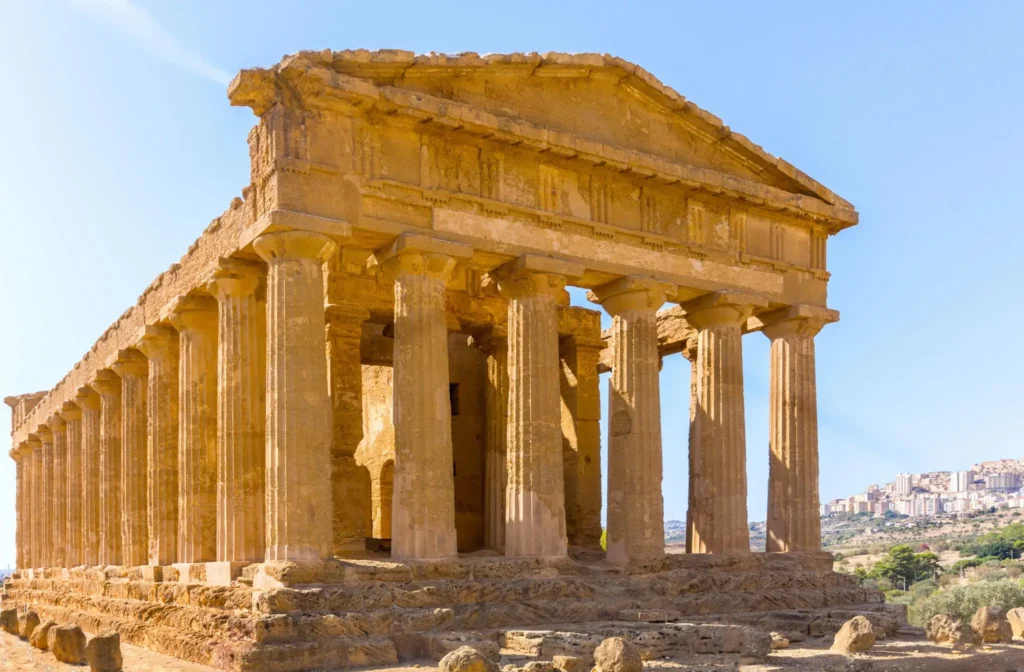
The Temple of Concordia provides the strongest visual impression. Other highlights include the Temple of Juno, the Temple of Heracles and the enormous remains associated with the Temple of Olympian Zeus.
The site rewards a planned route. Entering at one end and walking along the ridge is usually easier than repeatedly returning to the same entrance. Signed parking is available near the principal visitor entrances, and local buses and taxis connect the area with Agrigento.
The archaeological park can fill most of a day when combined with the Pietro Griffo Archaeological Museum or the Kolymbethra Garden. The route is exposed, so summer visits work better early or later in the day.
Agrigento is the best choice for travellers who want Greek temples within a broad archaeological landscape. It also suits couples and photographers who can stay nearby and avoid a rushed return journey.
Browse guided visits to the Valley of the Temples if you want historical context and help planning the long route through the site.
Selinunte, Sicily
Selinunte presents the remains of an entire Greek city rather than one concentrated group of monuments. Temples, sanctuaries, residential areas and defensive structures extend across a large coastal landscape.
The Eastern Hill contains the reconstructed Temple E and the remains of Temples F and G. Farther west, the acropolis rises above the sea with additional temples, fortifications and traces of urban streets.
Distance is the main planning issue. Visitors who treat Selinunte as a quick temple stop often see only part of it. Allow at least half a day, carry water and check whether internal transport is operating.
The park suits active travellers, archaeology enthusiasts and families prepared for a longer outdoor visit. An internal shuttle can make the site more manageable, especially in warm weather or with children.
Cave di Cusa, where stone was quarried for the city’s temples, adds valuable context. It is a separate site, so confirm its current access arrangements before including it.
Syracuse and Ortigia, Sicily
Syracuse offers a more varied Greek experience than a single temple park. Its archaeology is divided between the Neapolis area, the Paolo Orsi Archaeological Museum and the streets of Ortigia.
The Greek Theatre is the centrepiece of Neapolis. It was cut into the Temenite hill and continued to change during the Hellenistic and Roman periods. Nearby are the Latomie stone quarries, the Ear of Dionysius and the enormous base of the Altar of Hieron II.
The archaeological park also contains Roman remains, including the amphitheatre. This makes the site useful for understanding how the city evolved after the Greek period.
Ortigia holds two important architectural layers. The ruins of the Temple of Apollo stand near Piazza Pancali, while ancient columns from the Temple of Athena remain incorporated into Syracuse Cathedral.
Allow a full day for Neapolis and Ortigia. Add another half day for the Paolo Orsi Museum if Greek history is a major interest.
Syracuse is the best option for travellers who want ruins, restaurants, waterfront walks and an atmospheric evening base. It is also one of the easier Sicilian choices without a car.
Segesta, Sicily
Segesta is known for its isolated Doric temple and theatre overlooking western Sicily. It delivers strong visual impact without the scale of Selinunte or Agrigento.
The city was Elymian rather than a Greek colony. However, its temple and theatre reflect close engagement with Greek architecture and culture. This distinction makes Segesta particularly interesting rather than less relevant.
The unfinished temple stands near the lower part of the park. The theatre occupies a much higher position on Monte Barbaro, with a broad view across the surrounding hills.
An internal shuttle normally helps visitors reach the upper area. Check the latest arrangements because schedules and ticket combinations can change.
Segesta suits travellers based around Palermo, Trapani, Castellammare del Golfo or Scopello. It works well as a two- or three-hour stop combined with Erice, the Gulf of Castellammare or another western Sicily destination.
Taormina and Ancient Naxos, Sicily
Taormina’s Teatro Antico is the most scenic theatre visit on this route. Its surviving structure combines a Greek foundation with substantial Roman rebuilding, so it should not be viewed as an unchanged Greek monument.
The theatre remains impressive because of its scale, elevated position and views towards Mount Etna and the Ionian coast. Events, concerts and temporary staging can alter access or obscure parts of the monument.
Below Taormina, Giardini Naxos preserves the remains of Naxos, regarded as the first Greek colony in Sicily. Its low walls, streets and sacred areas are less dramatic than Taormina’s theatre, but they provide stronger archaeological context.
Combine both if you are staying on the eastern coast. Taormina offers views and a polished resort base, while Giardini Naxos provides easier beach access and usually simpler parking.
The historic centre of Taormina is restricted to traffic. Leave the car in an official edge-of-centre garage and continue on foot or by local transport.
Velia, Campania
Velia preserves ancient Elea, a Greek colony associated with the philosophers Parmenides and Zeno. It is less temple-focused than Paestum and better suited to travellers interested in urban history and ideas.
The route passes through the lower city before climbing towards the acropolis. Porta Rosa, defensive walls, terraces and later medieval structures reveal how the settlement adapted to its hillside position.
Velia is a natural companion to Paestum, but the two sites should not be rushed into one short visit. A Paestum and Velia ticket may cover both parks and the Paestum museum, although the current validity and access conditions should be confirmed.
The site is close to Ascea and the Cilento coast. A car is useful, particularly when combining archaeology with coastal villages and beaches.
Cuma, Campania
Cuma was one of the earliest Greek colonies on mainland Italy. Its location within the volcanic Campi Flegrei west of Naples gives the site a very different setting from Paestum.
The acropolis contains the remains of major sanctuaries traditionally identified with Apollo and Jupiter. The long rock-cut passage known as the Cave of the Sibyl connects the site with the ancient tradition of the Cumaean Sibyl.
Cuma suits travellers staying in Naples, Pozzuoli or Bacoli who want a deeper look at Greek Campania. Public transport is possible but can be less straightforward than the journey to Paestum.
Combine the site with the Archaeological Museum of the Campi Flegrei in Baia Castle. Other nearby parks are primarily Roman, so they complement rather than repeat the Greek material.
Opening areas can change because of maintenance and local conditions. Check the official Campi Flegrei information before travelling.
Metaponto and the Tavole Palatine, Basilicata
Metaponto is one of the most important mainland stops for understanding the Greek cities of the Ionian coast. The experience is divided between the urban archaeological park, the National Archaeological Museum and the Tavole Palatine.
Within the park, visitors can identify the agora, theatre, sanctuaries and traces of later Roman use. The Tavole Palatine preserve a row of Doric columns from a temple associated with Hera.
The sites are spread out, so a car makes the visit much easier. Allow several hours and include the museum, which connects the monuments with artefacts from Metaponto and its surrounding territory.
Metaponto works best within a Basilicata or Ionian coast road trip. It can be combined with Matera, Taranto or the beaches around Metaponto Lido, but not all in one rushed day.
Locri Epizefiri, Calabria
Locri Epizefiri preserves a Greek settlement along Calabria’s Ionian coast. Its remains include sanctuaries, defensive walls, a theatre, residential areas and later Roman structures.
The site is less reconstructed than Paestum or Agrigento. This means the museum and on-site explanations are important for understanding the visible foundations.
Locri is a rewarding choice for travellers who already know the headline sites and want a quieter Magna Graecia route. It also offers important context for artefacts displayed at the National Archaeological Museum of Reggio Calabria.
A car is useful for combining the park with modern Locri, Gerace and other stops along the Ionian coast. Check current museum access before visiting, as individual rooms may close for restoration.
Morgantina and Aidone, Sicily
Morgantina provides a different view of Greek Sicily. It developed from an indigenous settlement into a strongly Hellenised city with a theatre, agora, public buildings and substantial houses.
The archaeological park is spread across an inland landscape near Aidone. Its urban layout and domestic remains are more important than monumental temple façades.
Combine the site with the Archaeological Museum of Aidone, where finds from Morgantina make the ancient city easier to interpret. Allow most of a day for both.
Morgantina suits repeat visitors, archaeology enthusiasts and road-trippers travelling between eastern and central Sicily. A car is strongly recommended.
The nearby Villa Romana del Casale belongs to a later Roman period, but the two sites form a valuable archaeology-focused day when planned carefully.
Taranto and MArTA, Puglia
Taranto was ancient Taras, the only Spartan colony in Magna Graecia. It became one of the most powerful Greek cities in southern Italy, but little monumental architecture remains visible in the modern centre.
Two Doric columns survive near Piazza Castello. They provide only a brief ruins stop, so the National Archaeological Museum of Taranto, known as MArTA, should be the main priority.
Its collections include sculpture, pottery, jewellery and material from the Greek city and its cemeteries. The museum explains Taranto’s Greek importance far better than the surviving street-level remains alone.
Taranto suits museum lovers and travellers exploring Puglia, Basilicata and the Ionian coast. It combines well with Metaponto and can also serve as a practical city base.
Which Archaeological Site Should You Choose?
The three large temple destinations offer very different visits.
Choose Paestum for the most complete standing temples and the easiest mainland logistics. It is the strongest option for a first-time temple visit without a long Sicily road trip.
Choose Agrigento for an extended ridge of temples, an archaeological museum and a site that can fill most of a day. It is the strongest all-round choice in Sicily.
Choose Selinunte for the scale of an ancient city and the freedom to explore different zones. It involves more walking and more careful time management.
Choose Segesta for a shorter western Sicily stop. The temple setting is memorable, but the visit is more compact.
Choose Syracuse if the wider destination matters as much as the ruins. Neapolis, Ortigia, the cathedral and the museum create the most varied urban experience.
Choose Taormina for a theatre with exceptional views rather than a complete Greek city. Combine it with Naxos for deeper historical context.
What Visitors Often Misunderstand About These Sites
Not every monument described as Greek has survived in its original form.
Segesta was an Elymian city that adopted Greek architectural forms. Taormina’s theatre underwent major Roman changes. Paestum includes Greek, Lucanian and Roman phases, while Syracuse combines Greek, Roman, medieval and Baroque architecture.
Restoration also affects what visitors see. Some temples were partially reconstructed, while others survive mainly as foundations or fallen blocks.
This does not make the sites less authentic. It shows how southern Italian cities were reused for centuries. Museums and qualified guides help distinguish the different layers.
How Long Should You Spend?
A compact temple or theatre visit usually needs two or three hours. This works for Segesta, Taormina’s theatre, Naxos or the main areas of Cuma.
Allow at least half a day for Paestum, Velia, Metaponto or Locri. Include the associated museum whenever possible.
Agrigento, Selinunte and Syracuse deserve most of a day. Morgantina and the Aidone museum also work better as a full-day combination.
Avoid scheduling major open-air parks every day. Temple fatigue is real, especially during warm weather. Alternate archaeology with a beach, town, museum or food-focused day.
Realistic Greek Archaeology Itineraries
One Full Day
For Agrigento, start with the Valley of the Temples before the warmest part of the day. Add the archaeological museum or Kolymbethra Garden later.
In Syracuse, visit Neapolis first. Continue to the Paolo Orsi Museum or spend the afternoon and evening in Ortigia.
At Paestum, combine the temples and city remains with the National Archaeological Museum. Leave time for a meal based around local buffalo mozzarella.
Two Days or an Overnight Stay
For western Sicily, visit Segesta on the first day and Selinunte on the second. Stay around Trapani, Castellammare del Golfo, Castelvetrano or Marinella di Selinunte according to your wider route.
In Campania, use one day for Paestum and its museum. Spend the second day at Velia or along the Cilento coast.
Seven-Day Sicily Route
- Days 1–2: Base around Palermo or Trapani and visit Segesta.
- Day 3: Drive to Selinunte, then continue towards Agrigento.
- Day 4: Valley of the Temples and Agrigento.
- Day 5: Transfer to Syracuse with a light stop en route.
- Day 6: Neapolis, the Paolo Orsi Museum and Ortigia.
- Day 7: Taormina and Naxos, or a slower final day in Syracuse.
This route is easiest by car. Avoid adding Morgantina unless you have another day.
Ten- to Fourteen-Day Mainland Route
Begin in Naples or Pozzuoli for Cuma and the Campi Flegrei museum. Continue south to Paestum, then spend time around Velia and the Cilento coast.
Cross towards Basilicata for Metaponto and its museum. Add Taranto before continuing into Calabria for Locri and Reggio Calabria.
This is a genuine road trip. Public transport would require more time and reduce flexibility at the smaller archaeological parks.
Where to Stay for Greek Archaeological Sites
Agrigento and the Valley of the Temples
Stay in central Agrigento for restaurants, railway access and evening life. Choose accommodation near the archaeological park for easier early or late visits, parking and views.
This is one of the best bases for couples and travellers giving the site a full day.
Syracuse and Ortigia
Ortigia is best for atmosphere, dining and car-free evenings. It is less convenient for parking because of restricted traffic.
The modern Syracuse centre or Neapolis area offers easier access to the archaeological park, station and parking. It suits families, drivers and budget-conscious travellers.
Check stays in Agrigento or Syracuse if one major archaeological site will anchor your Sicily itinerary.
Western Sicily
Trapani and Castellammare del Golfo work well for Segesta. Palermo is possible, but the archaeological park becomes a longer day trip.
For Selinunte, Marinella di Selinunte offers the easiest access. Castelvetrano provides more everyday services and useful road connections.
Taormina and Giardini Naxos
Taormina suits couples who want views, restaurants and an elegant evening setting. Expect hills, higher seasonal prices and restricted driving.
Giardini Naxos is better for beach access, families, parking and travellers seeking better value.
Paestum, Salerno and Cilento
Stay near Paestum for temple access, local food and a slower rural base. Salerno is more practical without a car and offers stronger rail connections and evening choice.
Compare stays near Paestum if you want to combine the temples, museum and Cilento coast without returning to Naples.
Ionian Southern Italy
Taranto is the most complete urban base for MArTA and Metaponto. Metaponto or Bernalda works better for a quieter road-trip stop.
Reggio Calabria provides the strongest museum base in Calabria. Locri suits drivers continuing along the Ionian coast.
How to Get There and Travel Between the Sites
By Car
A car is most useful for Selinunte, Segesta, Morgantina, Metaponto and Calabria. These sites are spread across rural or coastal areas where public transport may not match archaeological park hours.
Sicily is larger than it appears on a simple map. Keep hotel changes limited and plan by geographic cluster rather than trying to cross the island repeatedly.
By Train and Bus
Paestum is one of the easiest mainland sites by regional train. Syracuse and Agrigento also have railway stations, although the archaeological parks require a walk, bus or taxi from the centre.
Taormina-Giardini station is on the coast below the historic town. Continue uphill by local transport rather than driving into the restricted centre.
Connections to smaller parks may be seasonal or infrequent. Confirm the return journey before relying on buses to Segesta, Selinunte or inland sites.
By Air
Palermo and Trapani airports suit western Sicily. Catania is the most useful airport for Syracuse, Taormina and eastern Sicily.
Naples serves Cuma, Paestum and Campania. Bari and Brindisi can work for Taranto and the Ionian side of Puglia, while Reggio Calabria and Lamezia Terme serve different parts of Calabria.
Parking, ZTL Zones and Site Access
Most large archaeological parks have signed visitor parking. Use designated areas and avoid roadside parking near entrances.
At Agrigento, decide which official entrance matches your walking route. At Segesta, the theatre sits well above the lower visitor area, making the internal shuttle useful.
Selinunte’s internal distances are significant. Check available shuttle options before arrival if mobility, heat or limited time is a concern.
Ortigia and Taormina have restricted traffic zones. Cameras can record unauthorised entry, so use public parking outside the historic centre. Ask your accommodation for current instructions if it can register guest vehicles.
Ancient surfaces are often uneven, with loose stone, steps and exposed slopes. Accessibility routes and equipment vary between parks, so contact the site before travelling with limited mobility.
Tickets, Reservations and Guided Visits
A guide is not normally compulsory at the main archaeological parks. Independent visits work well when the site provides maps, panels or an audio guide.
Guided tours add the most value at Agrigento, Selinunte, Syracuse and Paestum, where different construction phases are difficult to identify without context.
Ticket combinations can include associated museums or nearby sites. Paestum and Velia may share a multi-day ticket, while Sicilian parks offer changing combinations and supplements.
Classical performances and concerts at Syracuse, Taormina and Segesta use ancient theatres. Event staging can restrict normal sightseeing or obscure parts of the monument. Performance tickets are usually separate from standard archaeological admission.
Check current opening hours, last admission, closures and ticket rules on the official website shortly before visiting.
Best Time to Visit
Spring
Spring offers green landscapes, wildflowers and comfortable conditions for long archaeological walks. It is particularly good for Agrigento, Selinunte and Segesta.
School groups can be common. Preparations for classical performances may also begin at the Syracuse theatre and affect the view of some sections.
Summer
Summer brings intense sun and limited shade across most sites. Start early, use evening openings where available and carry enough water.
Parking pressure increases around Taormina, Agrigento and beach destinations. Do not plan the largest archaeological parks around midday.
Autumn
Early autumn combines warm conditions with more manageable visitor numbers. It works well for a road trip through Sicily, Campania or the Ionian coast.
Rain can make polished stone and uneven paths slippery. Check the forecast before committing to an exposed full-day route.
Winter
Winter is useful for quiet visits, museums and photography in softer light. Paestum, Syracuse and Agrigento remain strong choices when the weather is stable.
Expect shorter daylight hours, reduced services and occasional closures. Smaller sites and museums may operate limited schedules, so verify access in advance.
Museums That Add Essential Context
The National Archaeological Museum at Paestum should be treated as part of the site rather than an optional extra.
Agrigento’s Pietro Griffo Museum explains ancient Akragas through sculpture, pottery and architectural material. Syracuse’s Paolo Orsi Museum covers the wider archaeology of eastern Sicily.
MArTA in Taranto is essential because few monumental remains of Greek Taras survive above ground.
The National Archaeological Museum of Reggio Calabria contains the Riace Bronzes and collections from the Greek cities of Calabria. It is an excellent final stop after Locri or another Ionian coast park.
For Morgantina, visit the museum in Aidone. For Metaponto, include the national museum as well as the outdoor sites.
Food and Local Culture Along the Route
Paestum is closely associated with mozzarella di bufala campana. A producer visit or focused local meal fits naturally after the archaeological park.
Sicilian routes can combine temples with citrus, almond pastries, seafood, granita and regional wines. Syracuse and Ortigia provide the strongest evening food scene among the major archaeological bases.
Taranto is known for seafood and mussels from the Mar Piccolo. Calabria adds bergamot, swordfish dishes and robust regional cooking to an Ionian coast route.
Keep food experiences simple on major ruins days. A long outdoor visit followed by a relaxed local dinner is usually better than scheduling another attraction.
Nearby Places Worth Combining
From Agrigento, continue to the coast or explore the city’s historic centre. Check current access rules before planning a visit to Scala dei Turchi.
Selinunte combines well with Cave di Cusa, Mazara del Vallo or a beach stay. Segesta pairs naturally with Erice, Trapani or Castellammare del Golfo.
Syracuse works with Ortigia, Noto, Pantalica and the southeast coast. Taormina can be combined with Giardini Naxos, Castelmola or an organised Mount Etna excursion.
Paestum is the gateway to the Cilento coast. Cuma fits into a wider Campi Flegrei day with Pozzuoli or the museum in Baia Castle.
Metaponto can be included between Matera and Taranto. Locri combines well with Gerace or a longer drive towards Reggio Calabria.
Practical Tips and Mistakes to Avoid
- Do not treat every archaeological site as a quick photo stop.
- Avoid combining Agrigento and Selinunte in one rushed sightseeing day.
- Carry water, sun protection and a hat during warmer months.
- Wear stable shoes rather than sandals with smooth soles.
- Download maps or visitor information before reaching rural sites.
- Do not assume every “Greek theatre” is unchanged from the Greek period.
- Add museums to sites where the visible ruins consist mainly of foundations.
- Check for concerts, performances and temporary closures.
- Confirm the last bus or train before beginning an afternoon visit.
- Keep children’s routes short and use internal transport where available.
- Never climb on columns, walls or fallen architectural blocks.
- Check accessibility directly with the park rather than relying on general descriptions.
Frequently Asked Questions
Are there ancient Greek ruins in Italy?
Yes. Greek colonies developed across Sicily and southern mainland Italy. Major surviving sites include Paestum, Agrigento, Selinunte, Syracuse, Cuma, Metaponto and Locri.
What is the best Greek archaeological site in Italy?
Paestum is the best choice for preserved standing temples. Agrigento offers the strongest archaeological landscape, while Syracuse provides the best ruins-and-city combination.
Is Paestum or Agrigento better?
Choose Paestum for easier access, three standing temples and a focused museum visit. Choose Agrigento for a longer route, more varied temple remains and a broader Sicilian landscape.
Which is better: Segesta, Selinunte or Agrigento?
Segesta is the shortest and most compact visit. Selinunte offers the greatest sense of exploring an ancient city. Agrigento provides the strongest all-round temple experience.
Can Greek ruins in Sicily be visited without a car?
Syracuse, Taormina and Agrigento are possible without a car. Segesta, Selinunte and Morgantina require more planning and are usually easier with a car, transfer or organised tour.
How many days are needed for Sicily’s main Greek sites?
Allow at least seven days for Segesta, Selinunte, Agrigento, Syracuse and Taormina without rushing. Ten days gives more time for museums, beaches and slower transfers.
Are the theatres in Syracuse and Taormina Greek or Roman?
Both began within Greek or Hellenistic traditions but were altered during later periods. Taormina’s surviving appearance includes substantial Roman rebuilding, while Syracuse also changed over centuries.
Do archaeological parks require advance tickets?
Not always, but online booking is useful during busy periods, evening openings and special events. Check official ticket rules because combinations and entry procedures can change.
Are the sites suitable for children?
Paestum, Segesta and Syracuse are manageable with a simple route. Selinunte and Agrigento require more walking, shade planning and regular breaks.
What is the best month for visiting Greek ruins in southern Italy?
April, May, late September and October usually provide the best balance for outdoor sightseeing. Conditions vary, so check the forecast and site access before travelling.
Plan Your Greek Archaeology Trip
Choose one regional cluster instead of trying to connect every site in a single holiday. Paestum and Velia form the easiest mainland pair. Agrigento, Selinunte and Segesta create a strong western Sicily route, while Syracuse, Taormina and Naxos suit the east.
For a deeper road trip, follow the Ionian legacy through Metaponto, Taranto, Locri and Reggio Calabria. The quieter sites become far more rewarding when combined with their museums and enough time to understand what remains.
The strongest trip is not the one with the most temples. It is the one that balances archaeology with museums, local food, coastal scenery and unhurried evenings.
Disclosure: This page may contain affiliate links. This means that we get a small commission from any purchase you make, at no additional cost to you!