A first trip to Italy creates a difficult choice. Michelangelo’s David is in one Florence museum, Botticelli’s Birth of Venus in another, Bernini’s marble sculptures are in Rome, and many of Pompeii’s finest objects are displayed in Naples.
The best museums in Italy for first-time visitors are not simply the largest collections. They are the museums that add context to the cities, archaeological sites and artworks already on a typical itinerary.
For most travellers, the strongest first selection is the Uffizi Gallery in Florence, the Doge’s Palace in Venice and one major Rome collection. The Vatican Museums are usually included in that Rome plan, although they are technically in Vatican City rather than Italy.
This guide compares the main museums, explains what each does best and shows how to build a realistic cultural route without spending the entire holiday indoors.
Explore This Guide
ToggleQuick Planning Answer
- Best three for a classic first trip: Vatican Museums, Uffizi Gallery and Doge’s Palace
- Best for Michelangelo: Galleria dell’Accademia in Florence
- Best for Baroque art: Galleria Borghese in Rome
- Best for ancient Rome: Capitoline Museums or Palazzo Massimo
- Best before or after Pompeii: Naples National Archaeological Museum
- Best for modern art: Peggy Guggenheim Collection in Venice
- Best general time: spring or autumn, although major museums are open throughout most of the year
- Time to allow: two to four hours for a major museum
- Car needed: no; the main museum cities are easier by train
- Main planning issue: timed tickets, weekly closing days and temporary gallery closures
Limit most days to one large museum. A second, smaller collection can work later, but two blockbuster visits often become tiring.
How to Choose the Right Museum
The right museum depends on the rest of the trip. It should deepen an experience rather than compete with it.
Choose the Uffizi Gallery if Florence and Renaissance painting are central to your holiday. Choose the Galleria dell’Accademia if seeing Michelangelo’s David matters more than exploring a large painting collection.
In Rome, choose the Galleria Borghese for Bernini and Caravaggio. Choose the Capitoline Museums for Roman identity, archaeology and views over the Forum. Choose Palazzo Massimo for ancient sculpture, mosaics and frescoes in a more focused setting.
The Naples National Archaeological Museum is especially valuable when combined with Pompeii or Herculaneum. The archaeological sites show the buildings, while the museum holds many of the sculptures, mosaics, frescoes and domestic objects found around the Bay of Naples.
In Venice, the Doge’s Palace explains the political power of the Venetian Republic. The Peggy Guggenheim Collection provides a complete change of period and atmosphere through twentieth-century art.
For a first journey through Rome, Florence and Venice, three or four major museums across the entire trip are usually enough.
The Vatican Museums: The Essential Rome Exception
The Vatican Museums are inside Vatican City, an independent state. However, they are part of many first-time Rome itineraries and cannot sensibly be left out of this comparison.
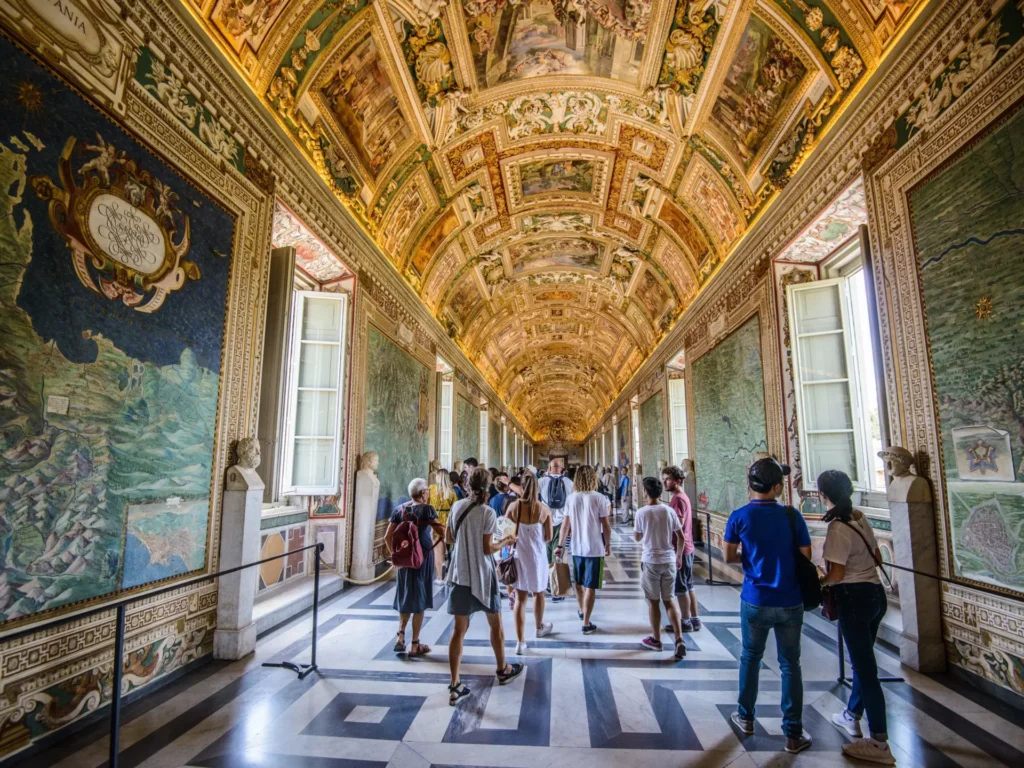
The museum complex contains classical sculpture, the Gallery of Maps, the Raphael Rooms and the Sistine Chapel. Its scale can be overwhelming, so first-time visitors benefit from choosing several priorities instead of trying to study every gallery.
Best for: Michelangelo, Raphael, papal collections and travellers making their first cultural trip to Rome
Allow: around three to four hours for a focused visit
Book through the official Vatican Museums ticket office or use a clearly identified guided tour. Entry procedures, visitor routes and access to individual rooms can change, so check the current official information before visiting.
A morning museum visit can be combined with St Peter’s Square or Prati. Avoid placing another major museum on the same day.
Uffizi Gallery, Florence
The Galleria degli Uffizi offers the clearest introduction to Italian Renaissance painting. Its collection moves from medieval religious art towards the experiments in perspective, anatomy, colour and human expression that transformed European art.
Botticelli’s Birth of Venus and Primavera are the most recognisable works. The collection also includes major paintings by Giotto, Leonardo da Vinci, Michelangelo, Raphael, Titian and Caravaggio.
Best for: first-time Florence visitors, Renaissance art and travellers who want one major Italian painting collection
Allow: around two and a half to three and a half hours
The gallery stands beside Piazza della Signoria and the Arno, so it fits naturally into a central Florence day. Visit the museum first, take a proper break, and continue outdoors around Ponte Vecchio or the historic centre.
Advance booking is sensible during busy periods. Check the official gallery map and any room notices before visiting, as temporary closures can affect the planned route.
Galleria dell’Accademia, Florence
The Galleria dell’Accademia is much smaller than the Uffizi. Its central attraction is Michelangelo’s David, displayed beneath a specially designed tribune.
The approach to David passes Michelangelo’s unfinished Prisoners. Their partially carved forms make the museum more interesting than a quick visit to one famous statue. The collection also includes Florentine paintings and historic musical instruments.
Best for: Michelangelo, shorter museum visits and travellers who consider David a priority
Allow: around one to one and a half hours
The Accademia and Uffizi are not interchangeable. Choose the Accademia for sculpture and one defining masterpiece. Choose the Uffizi for a broader journey through Renaissance painting.
Both can fit into one Florence day, but the visit feels better when separated by lunch, a walk or several hours outdoors.
Galleria Borghese, Rome
The Galleria Borghese places major works inside a richly decorated historic villa. Its relatively compact scale creates a more concentrated experience than the Vatican Museums.
Bernini’s Apollo and Daphne and The Rape of Proserpina show his extraordinary treatment of marble. The collection also includes important works by Caravaggio, Raphael, Titian and Canova.
Best for: Bernini, Caravaggio, couples and visitors who prefer a controlled two-hour experience
Allow: the museum operates timed visits, normally lasting two hours
Reservation is required for every ticket category. Arrive with enough time for entry procedures, because missing the allocated slot can disrupt the visit.
The gallery sits within Villa Borghese. Combining the museum with the park, the Pincio Terrace or nearby neighbourhoods creates a more balanced day.
Capitoline Museums, Rome
The Musei Capitolini stand on Piazza del Campidoglio, the hilltop square redesigned by Michelangelo. Their collections are closely connected with the history and public identity of Rome.
Highlights include the Capitoline She-wolf, the original bronze equestrian statue of Marcus Aurelius and major Roman sculptures. The museum route also provides memorable views across the Roman Forum.
Best for: Roman history, classical sculpture and visitors who want a museum connected directly to the ancient city
Allow: around two to three hours
The location makes the Capitoline Museums easy to combine with Piazza Venezia or an outdoor walk overlooking the Forum. Do not add the full Colosseum, Forum and Palatine route unless the day has been planned carefully.
Choose the Capitoline Museums over the Galleria Borghese when ancient Rome matters more than Baroque sculpture and painting.
Palazzo Massimo and the National Roman Museum
The Museo Nazionale Romano is divided across several sites. Palazzo Massimo alle Terme is the most accessible starting point for first-time visitors.
Its displays include Roman portrait sculpture, coins, mosaics and frescoes removed from ancient villas. These domestic interiors help visitors understand how elite Roman houses looked beyond their surviving walls.
Best for: ancient art, archaeology enthusiasts and travellers using Roma Termini
Allow: around one and a half to two and a half hours
Palazzo Massimo is particularly useful after visiting the Roman Forum, Palatine Hill or archaeological sites around Rome. It is usually easier to navigate than the Vatican Museums and more focused than the Capitoline complex.
A combined National Roman Museum ticket may cover multiple sites, but validity and access conditions should be checked before purchase.
Naples National Archaeological Museum
The Museo Archeologico Nazionale di Napoli, usually shortened to MANN, is one of the most important stops for understanding Pompeii, Herculaneum and ancient Campania.
Its core collections include objects from Vesuvian towns and the monumental Farnese sculptures. Look for mosaics, wall paintings, domestic objects, the Farnese Hercules and material connected with the Temple of Isis and Villa of the Papyri.
Best for: Pompeii visitors, archaeology, Roman daily life and ancient sculpture
Allow: around two and a half to four hours
Pompeii and MANN should usually be visited on separate days. The archaeological park involves extensive outdoor walking, while the museum needs concentration and time indoors.
Check the museum’s current schedule of open rooms. Individual sections can close temporarily, and free-admission days may use a reduced gallery route.
Doge’s Palace, Venice
The Palazzo Ducale is not a conventional painting gallery. It was the residence of the Doge and the administrative centre of the Venetian Republic.
The standard route passes ceremonial staircases, institutional chambers, council rooms, the armoury, the Bridge of Sighs and the prison complex. Paintings by Tintoretto and Veronese remain part of rooms designed to communicate political authority.
Best for: Venetian history, architecture, families with older children and first-time visitors to Piazza San Marco
Allow: around two to three hours
The palace explains how Venice governed a maritime empire. This makes it more useful for a first visit than a collection focused only on individual paintings.
Special routes, including the Secret Itineraries, have separate booking conditions and limited capacity. Check exactly what the selected ticket includes.
Pinacoteca di Brera, Milan
The Pinacoteca di Brera is Milan’s strongest traditional art museum. Its galleries focus mainly on Italian painting from the late Middle Ages to the nineteenth century.
Key works include Mantegna’s Lamentation over the Dead Christ, Raphael’s Marriage of the Virgin, Caravaggio’s Supper at Emmaus and Francesco Hayez’s The Kiss.
Best for: Italian painting, Milan city breaks and travellers who want a quieter alternative to Florence’s headline galleries
Allow: around two hours
The collection is displayed in a relatively clear chronological and geographical sequence. It works well for visitors who want to understand differences between Florentine, Venetian and northern Italian art.
Reservations are currently part of the museum’s entry system, so check the official booking channel before arrival.
Museo Egizio, Turin
The Museo Egizio in Turin provides a complete change from Italy’s Roman and Renaissance collections. It explores around four millennia of ancient Egyptian history, archaeology and material culture.
Highlights include the tomb assemblage of Kha and Merit, the Gallery of Kings and the Turin King List. Everyday objects, papyri and burial material make the collection valuable beyond its monumental statues.
Best for: ancient Egypt, families, archaeology and travellers building a northern Italy itinerary
Allow: around three hours, or longer for a detailed visit
The museum is in central Turin and can anchor a full city day. Online ticket purchase and a selected entry time are part of the current system, so plan the visit before arriving.
Turin also has the National Museum of Cinema inside the Mole Antonelliana, a strong alternative for families and visitors who want a more interactive experience.
Peggy Guggenheim Collection, Venice
The Peggy Guggenheim Collection occupies Palazzo Venier dei Leoni on the Grand Canal. Its human scale and garden setting provide a welcome contrast to Venice’s churches and grand state buildings.
The collection covers Cubism, Futurism, Surrealism, European abstraction and American Abstract Expressionism. Artists represented include Picasso, Magritte, Kandinsky, Dalí and Pollock.
Best for: modern art, couples and travellers who need a break from Renaissance and Baroque collections
Allow: around one and a half to two hours
The museum is in Dorsoduro, near the Accademia Bridge. It combines naturally with a walk around the quieter canals, Punta della Dogana or the Zattere waterfront.
Check which works are currently displayed. Not every piece in the collection is necessarily on view.
Strong Alternatives for Families and Special Interests
Traditional art museums are not always the best choice for every traveller.
The National Museum of Cinema in Turin uses the interior of the Mole Antonelliana to explore early optical devices, film production, posters and cinema history. The panoramic lift is ticketed separately or as part of a combined option.
Milan’s National Museum of Science and Technology Leonardo da Vinci suits families, technology enthusiasts and travellers who prefer machines, transport and interactive displays to painting galleries.
MUSE in Trento focuses on Alpine nature, biodiversity, geology, sustainability and science. Its six-floor layout works particularly well for families travelling through Trentino or the Dolomites.
These museums can be better choices for children than adding another major Renaissance collection.
What First-Time Visitors Often Misunderstand
The Vatican Museums are not in Italy
They are in Vatican City. Their inclusion in an Italy itinerary is logical because entry is from Rome, but ticket rules and free-opening arrangements are separate from Italian state museums.
The Uffizi and Accademia offer different experiences
The Uffizi is a large painting collection. The Accademia is a shorter visit centred on Michelangelo’s sculpture. Seeing one does not duplicate the other.
Pompeii’s finest objects are not all at Pompeii
Many mosaics, frescoes, sculptures and domestic finds are preserved at MANN in Naples. Visiting both creates a much fuller picture of life around Mount Vesuvius.
Doge’s Palace is mainly about power and government
Its value comes from the building, institutional rooms, court system and prisons. It should not be approached as another standard art gallery.
A famous museum pass is not automatically good value
Some passes require reservations for popular museums or exclude special routes. Compare the attractions you will genuinely visit before buying.
Realistic Museum Itineraries
One Museum Day
Choose one large museum for the morning. Allow time for security, the visit and a proper break afterwards.
Spend the afternoon outdoors in the surrounding district. This approach works well for the Vatican and Prati, the Uffizi and central Florence, Doge’s Palace and San Marco, or MANN and Naples’ historic centre.
A smaller evening collection can work, but only if it offers a different subject or atmosphere.
Seven-Day Rome, Florence and Venice Route
Days 1–3: Rome
Use one day for the Vatican Museums and the surrounding area. Choose either Galleria Borghese, the Capitoline Museums or Palazzo Massimo on another day. Keep the remaining time for archaeological sites, streets and piazzas.
Days 4–5: Florence
Book the Uffizi for one main museum session. Add the Accademia on the second day if David is a priority. Avoid scheduling both immediately after arriving by train.
Days 6–7: Venice
Visit Doge’s Palace on the main San Marco day. Add the Peggy Guggenheim Collection only if modern art interests you and the itinerary still has enough unstructured time.
Ten-Day Route with Naples
Start with two days in Naples. Visit MANN on the city day and Pompeii or Herculaneum on a separate day.
Continue with three days in Rome, two days in Florence and three days in Venice. This route follows a logical south-to-north railway line and connects ancient Campania, imperial Rome, Renaissance Florence and maritime Venice.
Where to Stay for a Museum-Focused Italy Trip
Rome
Stay in Prati for convenient access to the Vatican Museums and a more residential evening atmosphere. Choose the historic centre or Monti for broader sightseeing and walkable access to central Rome.
The Termini area is practical for trains and Palazzo Massimo, but street atmosphere varies. Check the immediate location carefully before booking.
Florence
The area between Santa Maria Novella, the Duomo and Piazza della Signoria is the easiest choice for first-time visitors. It provides walkable access to both the Uffizi and Accademia.
Stay closer to Santa Maria Novella for train convenience. Choose Santa Croce or Oltrarno for more evening atmosphere, accepting a longer walk to some museums.
Venice
San Marco is the most convenient base for Doge’s Palace but can feel extremely busy. Dorsoduro suits couples and modern-art visitors, while Cannaregio offers easier station access and more local evening streets.
Mestre is usually cheaper and easier for parking. However, staying on the mainland removes the pleasure of early mornings and evenings inside Venice.
Naples
The historic centre works well for MANN, churches, food and street life. Chiaia offers a calmer and more polished base but is less convenient for the archaeological museum.
Accommodation near Napoli Centrale helps with trains to Rome and the Vesuvian sites. Choose the exact street carefully, especially for late arrivals.
Milan and Turin
Stay near Brera or the central Milan districts for the Pinacoteca. In Turin, the historic centre around Piazza Castello and Via Roma places the Egyptian Museum and Mole Antonelliana within a practical city route.
Compare stays in Rome, Florence, Venice and Naples only after deciding which museums require early entry or fixed reservations.
Getting Between Italy’s Museum Cities
High-speed and intercity trains connect Naples, Rome, Florence, Milan, Turin and Venice. A rental car is unnecessary for a museum-focused route and often inconvenient inside historic centres.
Rome, Florence, Milan and Turin have useful urban public transport. Venice relies on walking and vaporetti. Naples combines walking, metro, funiculars and local rail connections.
Drivers should not assume a central hotel can be reached freely. Florence, Rome, Naples and many other cities use restricted traffic zones known as Zona a Traffico Limitato or ZTL.
If a road trip includes museum cities, choose accommodation with confirmed parking and clear arrival instructions outside restricted zones.
Tickets, Reservations and Museum Passes
Timed entry is most important for the Vatican Museums, Galleria Borghese, Uffizi, Accademia and Museo Egizio. Booking is also required or strongly recommended at several other major collections.
Use the museum’s official website whenever possible. Search advertisements and reseller pages can resemble official ticket offices while adding fees or offering a different product.
Check four details before paying:
- the correct museum and city
- the date and entry time
- whether the ticket is nominative
- which galleries, special routes or exhibitions are included
Italy’s Domenica al Museo programme provides free entry to participating state museums on the first Sunday of the month. It does not automatically cover Vatican, private or municipal museums.
Free days can also remove bookable priority access and create long queues. A free ticket is not always the best choice for a short first trip.
City cards and museum passes are useful only when their included venues match the itinerary. Some popular museums still require a separate reservation.
Are Guided Museum Tours Worth Booking?
A guided tour is most useful where the collection is large, the visitor route is complicated or the historical context is difficult to understand quickly.
The Vatican Museums benefit from a guide because of their scale. MANN becomes more meaningful when the guide connects objects with Pompeii and Herculaneum. A focused Uffizi tour can help travellers who are unfamiliar with Renaissance art.
The Galleria Borghese already has a tightly controlled visit, so a guide can provide depth without extending the day. At smaller museums, a good official audio guide may be enough.
Browse guided museum tours in Rome, Florence, Venice or Naples after securing the accommodation and intercity travel plan.
Best Time for an Italy Museum Trip
Spring
Spring combines comfortable city walking with longer daylight. Major museums still need advance booking, especially around holidays and weekends.
This is one of the best periods for combining indoor collections with archaeological sites and historic-centre walks.
Summer
Museums provide a break from outdoor heat, but they are not always cool or quiet. Security queues, crowded rooms and long city walks can make the day tiring.
Book an early entry where possible and avoid placing two major indoor attractions together.
Autumn
Early and mid-autumn work particularly well for museum routes. Temperatures are often comfortable for walking between attractions, while the cultural calendar becomes more active.
Temporary exhibitions can increase demand at individual museums, so check what is running before choosing dates.
Winter
Winter can provide a calmer experience outside Christmas, New Year and major holiday periods. Shorter daylight makes indoor attractions more useful.
Check weekly closure days carefully. Monday closures are common among state museums, but the rule is not universal.
Museum Tips for Families, Couples and Budget Travellers
Families should choose museums with a clear visual focus. The Accademia, Doge’s Palace, National Museum of Cinema, Museo Egizio and Milan’s science museum are often easier than an uninterrupted day of Renaissance painting.
Couples may prefer the compact Galleria Borghese, the Peggy Guggenheim Collection and Dorsoduro, or an early Uffizi visit followed by Oltrarno.
Budget travellers should compare individual tickets with city passes and free-admission dates. Saving money is useful, but losing several hours in a non-reservable queue can weaken a short trip.
Visitors with reduced mobility should check each museum’s accessibility page. Historic palaces can have alternative entrances, lifts or sections where the standard route changes.
Common Museum Planning Mistakes
- Booking two large collections on the same morning or afternoon
- Assuming every museum closes on Monday
- Buying from the first ticket website shown in search results
- Arriving with large luggage that may not be accepted
- Treating Pompeii and MANN as one rushed day
- Buying a city pass before checking reservation requirements
- Expecting every famous work or gallery to be open
- Allowing no time for security checks or ticket collection
- Planning a museum immediately after a long intercity journey
- Visiting only indoor attractions and missing the city around them
Frequently Asked Questions
What are the three best museums in Italy for a first trip?
The strongest classic selection is the Uffizi Gallery, Doge’s Palace and one major Rome collection. Most travellers choose the Vatican Museums, although they are in Vatican City.
Is the Vatican Museums complex actually in Italy?
No. It is inside Vatican City, an independent state surrounded by Rome. It remains a practical part of most first-time Rome itineraries.
Should I visit the Uffizi or the Accademia?
Choose the Uffizi for Renaissance painting and a longer museum visit. Choose the Accademia for Michelangelo’s David and a shorter, sculpture-focused experience.
Which museum is best for ancient Rome?
The Capitoline Museums provide the strongest connection with Rome’s civic identity and the Forum. Palazzo Massimo is better for a focused look at Roman sculpture, mosaics and frescoes.
Which museum should I visit with Pompeii?
Visit MANN in Naples. Many important objects from Pompeii, Herculaneum and other Vesuvian sites are preserved there.
What is the best modern-art museum for a first visit?
The Peggy Guggenheim Collection in Venice is the easiest addition to a classic itinerary. It is compact, centrally located and very different from Venice’s older collections.
How many museums should I visit in one day?
One major museum is usually enough. Add a second only when it is smaller, offers a different subject and is separated by a proper break.
Do Italian museums require advance tickets?
Not all of them do, but timed booking is essential or strongly advisable at several headline museums. Always check the official website for the selected date.
Are museums in Italy free on Sundays?
Participating state museums normally offer free entry through Domenica al Museo on the first Sunday of the month. Vatican, municipal and private museums follow different rules.
Are Italy’s museum cities easier by car or train?
Train is usually better. Major museums are concentrated in historic centres where parking is limited and ZTL restrictions can complicate driving.
Final Thoughts
The best museum itinerary is selective. Start with one collection that defines each city, then add a second only when it brings a different period or subject.
For a classic first trip, choose the Vatican Museums in Rome, the Uffizi in Florence and Doge’s Palace in Venice. Add the Accademia for Michelangelo, Galleria Borghese for Bernini, or MANN when Pompeii is part of the route.
This approach leaves enough time for Italy’s streets, churches, archaeological sites, food and everyday city life—the context that makes the museum collections easier to understand.
Disclosure: This page may contain affiliate links. This means that we get a small commission from any purchase you make, at no additional cost to you!