Italy’s Baroque towns are some of the best places in the country for travellers who love architecture, old streets, warm evening light, local food and slow cultural travel. The best Baroque towns in Italy are concentrated in south-eastern Sicily and Puglia, with important Baroque cities and palace stops in Turin, Rome and Caserta.
For pure Baroque scenery, Noto is the classic choice. For atmosphere, Ragusa Ibla is one of the most memorable. For a practical city base with restaurants, transport and beaches nearby, Lecce is hard to beat. For a road trip, the Val di Noto in Sicily gives you the strongest cluster: Noto, Ragusa, Modica, Scicli, Caltagirone, Catania, Palazzolo Acreide and Militello Val di Catania.
This guide helps you choose where to go, how long to spend, where to stay, and how to combine Italy Baroque towns with beaches, food, road trips, train travel and relaxed sightseeing.
Explore This Guide
ToggleQuick planning summary
Best overall Baroque town in Italy: Noto, Sicily.
Best Baroque city base: Lecce, Puglia.
Best romantic old town: Ragusa Ibla, Sicily.
Best food stop: Modica, Sicily.
Best quieter town: Scicli, Sicily.
Best ceramics town: Caltagirone, Sicily.
Best northern Baroque city: Turin, Piedmont.
Best palace day trip: Caserta, Campania.
Best area for a Baroque Italy itinerary: Val di Noto in south-eastern Sicily.
Best area for Baroque towns near beaches: Salento in Puglia or south-eastern Sicily near Noto, Scicli and Syracuse.
Best for travellers without a car: Lecce, Turin, Rome and Caserta are easier than smaller hill towns. Noto and the Val di Noto are possible by public transport, but a car gives more flexibility.
Where are Italy’s best Baroque towns?
Italy has Baroque architecture across the country, but the most useful tourist route is in the south.
South-eastern Sicily has the famous Late Baroque towns of the Val di Noto. These towns were rebuilt after the destructive 1693 earthquake and became one of Europe’s most impressive Baroque landscapes. The UNESCO-listed group includes Caltagirone, Militello Val di Catania, Catania, Modica, Noto, Palazzolo Acreide, Ragusa and Scicli.
Puglia has a different style, especially in Lecce and Salento. Lecce Baroque architecture is carved from warm local limestone, with rich façades, church portals, balconies and decorative details that glow beautifully in late afternoon light.
Northern and central Italy add a different Baroque experience. Turin is strong for royal palaces, wide squares and Savoy architecture. Rome is essential for Baroque fountains, churches and squares. Caserta is not a town in the same sense as Noto or Ragusa, but its Royal Palace is one of Italy’s grandest Baroque-style palace experiences.
Are Italy’s Baroque towns worth visiting?
Yes, especially for culture lovers, couples, road-trippers and slow travellers. These towns are not only about churches and façades. They are places for evening walks, aperitivo in historic squares, local pastries, viewpoints, craft workshops, beaches nearby and atmospheric overnight stays.
They suit travellers who enjoy:
- Historic centres and architecture
- Small-town walking routes
- Scenic road trips
- Boutique hotels, apartments and countryside stays
- Food, wine and local traditions
- Beach-and-culture combinations
- Photography and golden-hour streets
- Day trips from larger bases
They are less ideal for travellers who want only nightlife, big resort facilities or a fast checklist of major Italian monuments. Many old towns have stairs, limited parking, pedestrian zones and changing church opening times, so a slower pace works better.
How long to spend
For a quick introduction, one day in Noto or Lecce is enough to understand the appeal of Italian Baroque architecture.
For Sicily’s Val di Noto, allow at least three days. This gives you time for Noto, Ragusa Ibla, Modica and Scicli without turning the trip into a rushed driving loop.
For Puglia, allow two or three days in Lecce, then add nearby towns such as Nardò, Galatina, Gallipoli or Martina Franca.
For a full Baroque Italy itinerary, allow 10 to 14 days and combine Sicily, Puglia and one city extension such as Rome, Caserta or Turin.
A good pace looks like this:
- 2–3 hours: one compact old town, such as Scicli or Nardò
- Half day: Noto, Modica, Ragusa Ibla or Martina Franca
- One full day: Lecce or a two-town Val di Noto route
- Three days: Noto, Ragusa, Modica and Scicli
- Five days: Sicily Baroque towns with beaches or Puglia Baroque towns with Salento
- 10–14 days: southern Italy Baroque road trip
Best Baroque towns in Italy to visit
Noto, Sicily
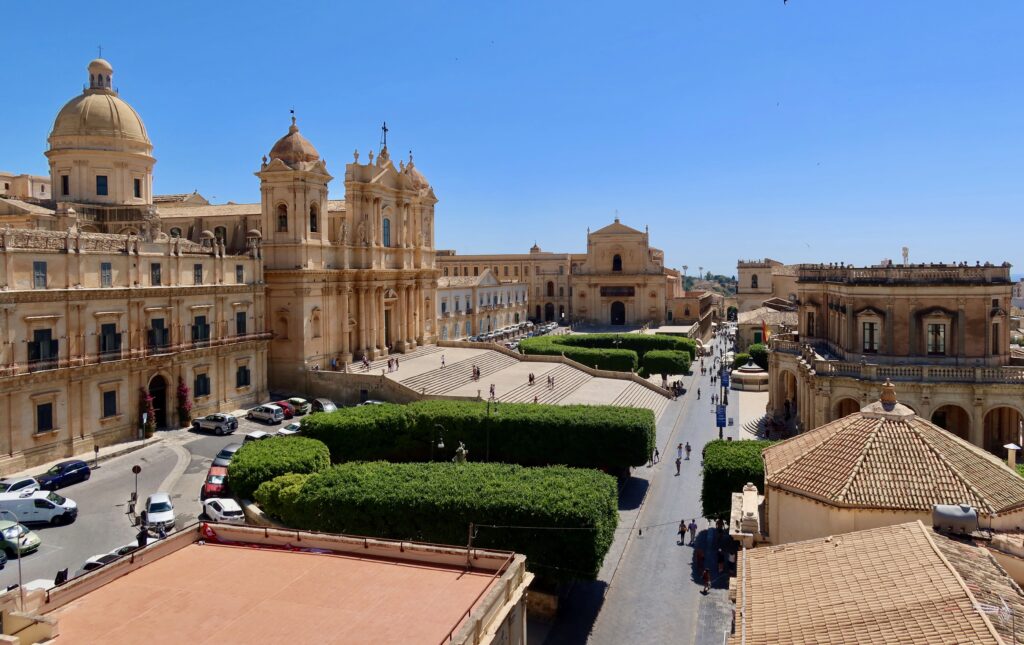
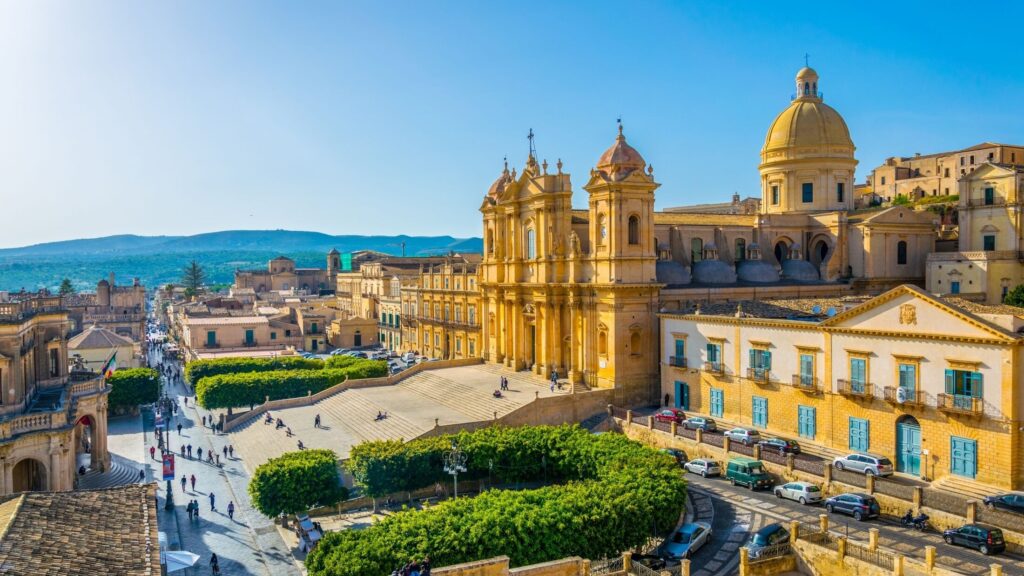
Noto is the most famous Baroque town in Sicily and the easiest answer for first-time visitors who want a beautiful, walkable historic centre. The main route follows Corso Vittorio Emanuele, where churches, palaces, balconies and golden stone façades line the heart of the town.
The key sights include the Cathedral of San Nicolò, Palazzo Ducezio, Palazzo Nicolaci, Porta Reale and the churches around the main street. Noto is especially beautiful in the late afternoon, when the limestone buildings take on a warm colour.
Noto works well as a day trip from Syracuse or Catania, but it is better overnight. After day-trippers leave, the town becomes calmer and more atmospheric.
Best for: first-time visitors, couples, photographers, architecture lovers and travellers who want the most classic Noto Baroque experience.
Stay or day trip: stay overnight if you want evening atmosphere; visit for half a day if your time is limited.
Travel note: parking and historic-centre access can be tricky in high season. Check the latest ZTL and parking rules before arrival.
Ragusa Ibla, Sicily
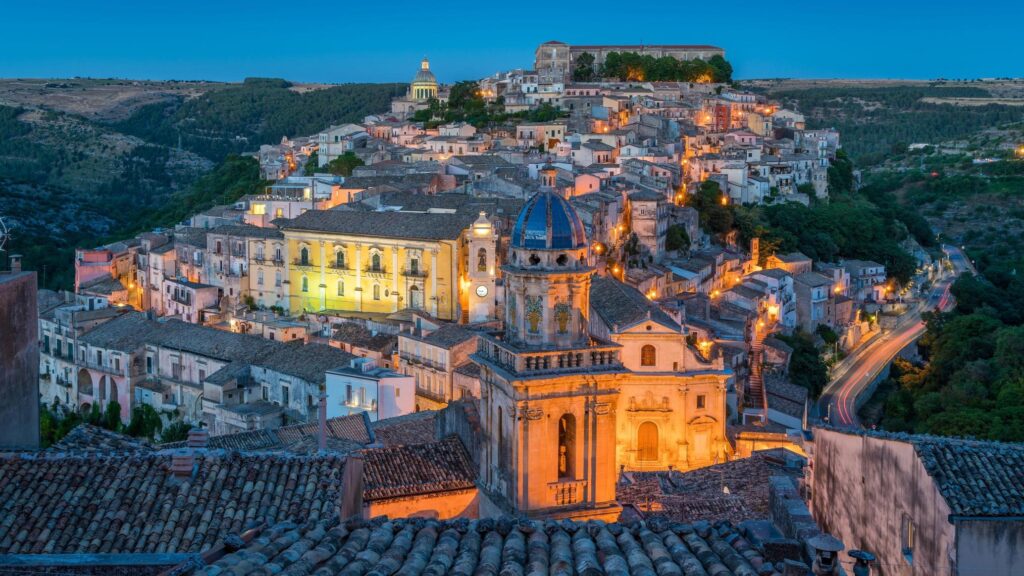
Ragusa has two main parts: the upper modern town and Ragusa Ibla, the old Baroque centre below. Ibla is one of the most atmospheric Baroque towns in Italy, with steep lanes, stone stairways, viewpoints, churches and small squares.
The main highlight is the Duomo di San Giorgio, set above a sloping piazza. Other good stops include Giardino Ibleo, the lanes around the old town and viewpoints between Ragusa Superiore and Ibla.
Ragusa Ibla feels more dramatic than Noto. It is less like a straight architectural showcase and more like a hill town made for wandering. It is also one of the best Baroque towns in Italy for couples because it has a romantic evening mood and good restaurants.
Best for: couples, slow travellers, food lovers and travellers who enjoy layered hill towns.
Stay or day trip: stay overnight if possible. A half day is enough for the main sights, but the old town is better after sunset.
Travel note: expect slopes and stairs. Choose accommodation carefully if arriving by car or travelling with small children.
Modica, Sicily
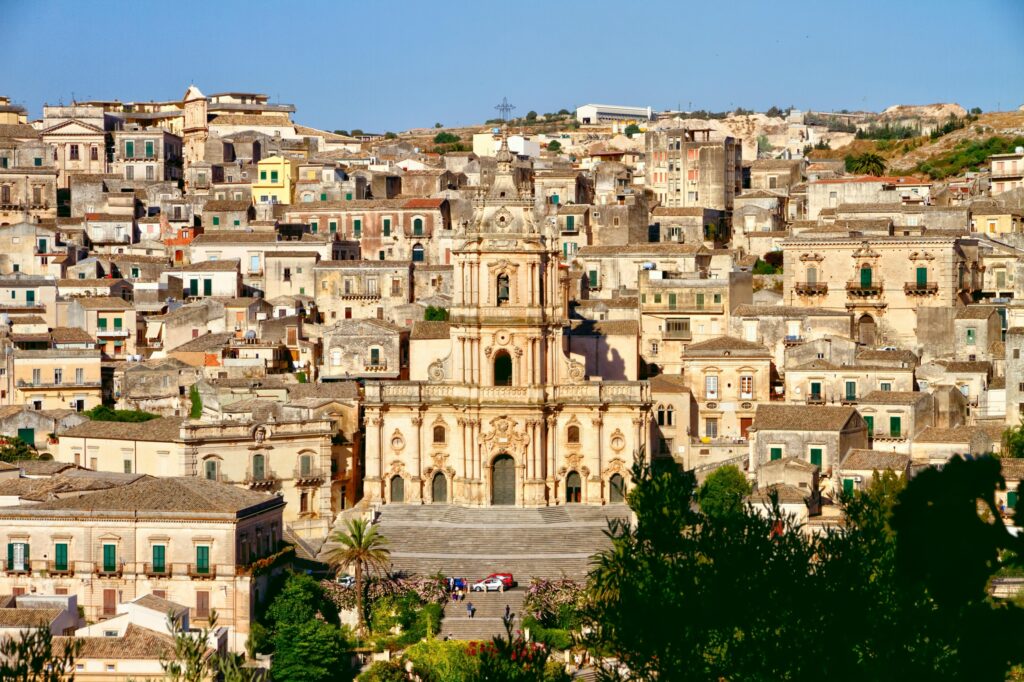
Modica is famous for both Baroque architecture and chocolate. The town stretches along a valley and up the hillsides, with Modica Bassa below and Modica Alta above. This shape gives it a dramatic feel, but it also means there are stairs and uphill walks.
The main sights include the Duomo di San Giorgio, the Church of San Pietro, Corso Umberto I and the viewpoints above town. Modica is a great stop for travellers who want culture with food rather than architecture alone.
Modica chocolate is made in a grainy, traditional style linked to older methods of processing cacao. Chocolate shops and tastings make the town especially appealing for couples, families and food-focused travellers.
Best for: food lovers, culture travellers, couples and slow travellers.
Stay or day trip: visit for half a day, or stay overnight for restaurants and a less polished atmosphere than Noto.
Travel note: Modica is not flat. Families with strollers should plan routes carefully and stay near the lower town if they want easier walking.
Scicli, Sicily
Scicli is smaller and quieter than Noto, Ragusa and Modica, but it deserves a place on any Val di Noto itinerary. Its historic centre is elegant, compact and easy to enjoy in a few hours.
The main street to know is Via Francesco Mormina Penna, lined with churches and palaces. Palazzo Beneventano is one of the town’s most important architectural landmarks. Scicli is also a good base for travellers who want Baroque streets close to the coast, with Sampieri, Donnalucata and Marina di Ragusa nearby.
Scicli is a good choice for slow travellers because it feels less staged than the more famous stops. It is also useful for beach travellers who want culture without staying far inland.
Best for: slow travellers, couples, quieter stays and beach-and-culture trips.
Stay or day trip: half a day works well, but an overnight stay is rewarding for a calmer trip.
Travel note: check parking and pedestrian-zone rules before driving close to the centre.
Caltagirone, Sicily
Caltagirone is one of the most distinctive Sicily Baroque towns because it combines architecture with ceramics. Its most famous landmark is the Scalinata di Santa Maria del Monte, a long decorated staircase with ceramic-tile details.
The town is also known for ceramic shops, workshops and the Regional Museum of Ceramics. It feels different from Noto or Ragusa because craft culture is a major part of the visit.
Caltagirone sits inland, so it works best as part of a road trip or as a deeper cultural stop from Catania or central Sicily. It is not the easiest town to combine with beaches, but it is excellent for travellers who want a more craft-focused Baroque stop.
Best for: ceramics, craft lovers, families with older children, road-trippers and culture travellers.
Stay or day trip: half a day is enough for the staircase, old town and shops. Stay overnight only if you want a slower inland stop.
Travel note: event dates, staircase access and museum opening times should be checked before visiting.
Catania, Sicily
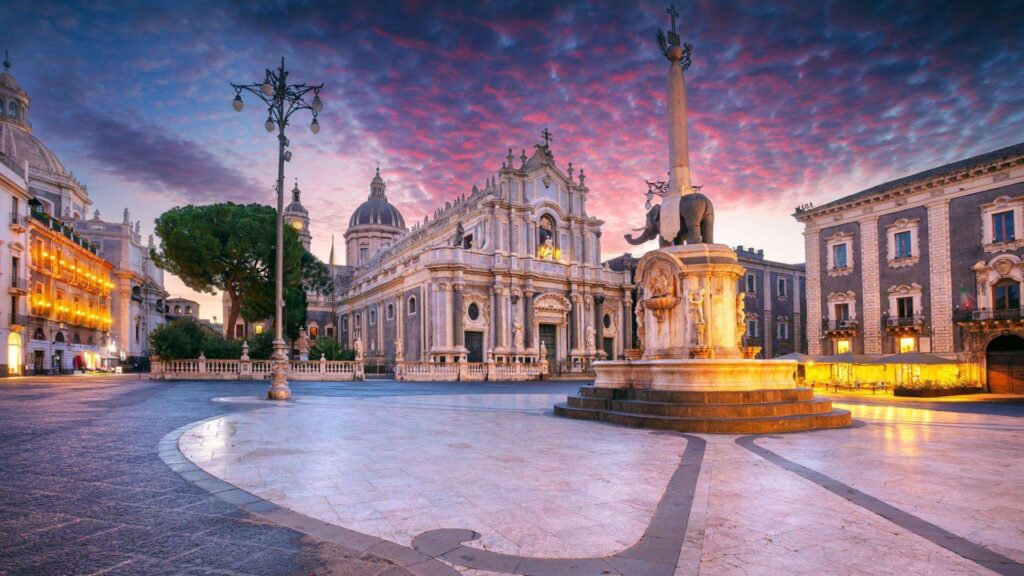
Catania is one of the UNESCO Val di Noto towns, but it feels different from the smaller towns because it is a large, active city. Its Baroque architecture uses dark volcanic stone from Mount Etna, giving the centre a stronger and more urban look.
The main sights include Piazza del Duomo, the Cathedral of Sant’Agata, Via Etnea, Via Crociferi and the area around the fish market. Catania is also a practical base because it has an airport, train station, bus connections, restaurants and a lively city atmosphere.
Catania is not the prettiest Baroque stop in Sicily, but it is one of the most useful. It works well before or after a Val di Noto road trip.
Best for: travellers arriving by air, city lovers, budget travellers and those using buses or trains.
Stay or day trip: stay one or two nights for transport, food and city life. Use it as a base only if you accept longer day trips.
Travel note: traffic and parking can be stressful. Accommodation with clear parking advice is useful.
Lecce, Puglia
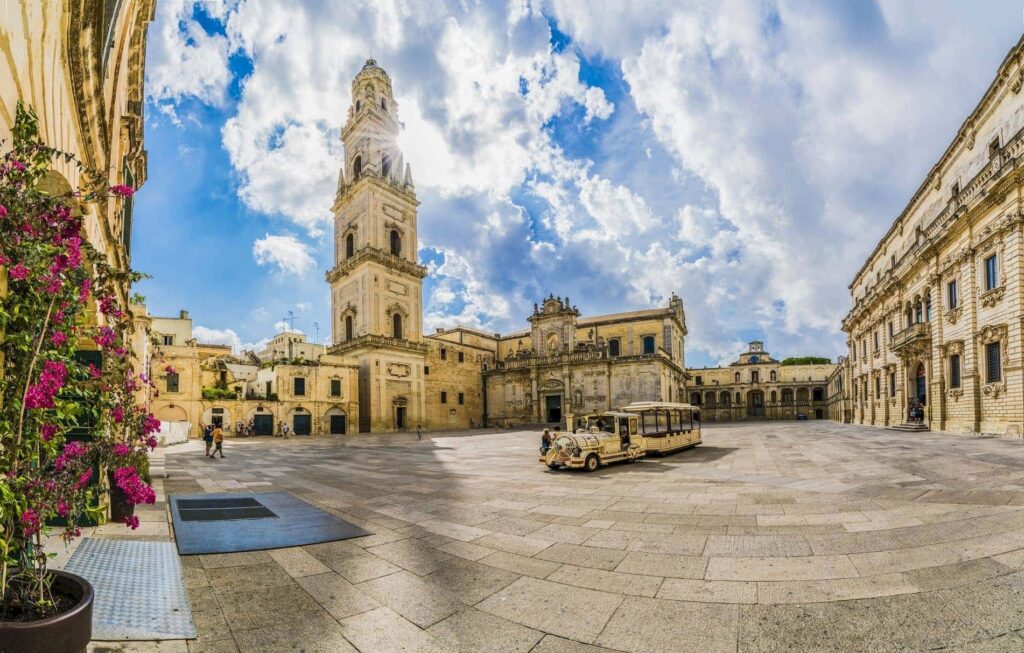
Lecce is the best Baroque city in southern Italy for travellers who want architecture, restaurants, nightlife, beaches and public transport in one place. The historic centre is full of churches, palaces, gates, squares and carved details in pale Lecce stone.
The main sights include Basilica di Santa Croce, Piazza del Duomo, the Cathedral, the Church of Santa Chiara, the Church of San Matteo, Porta Napoli and the Roman Amphitheatre in Piazza Sant’Oronzo. Lecce also has a strong local food culture, from pasticciotto and caffè leccese to orecchiette and Salento wines.
Lecce is easier than many small towns because it has a train station and a wide choice of accommodation. It is also a strong base for beaches near the Adriatic and Ionian coasts.
Best for: first-time Puglia visitors, couples, families, food lovers, beach travellers and travellers without a car.
Stay or day trip: stay at least two nights. Three nights are better if you want day trips to Nardò, Galatina, Gallipoli or the coast.
Travel note: the historic centre has ZTL rules. Stay outside the restricted zone or confirm parking access with your accommodation before arrival.
Compare hotels in Lecce old town if you want restaurants and evening walks close by.
Martina Franca, Puglia
Martina Franca is one of the best Baroque towns in Puglia for travellers exploring the Valle d’Itria. It is known for its elegant historic centre, white lanes, noble palaces and Basilica di San Martino.
The town pairs well with Alberobello, Locorotondo, Cisternino and Ostuni, although those towns are not mainly Baroque destinations. Martina Franca is a good choice for travellers who want Puglia’s interior rather than the Salento coast.
It also has a strong food identity, especially capocollo di Martina Franca. The old town is compact enough for a relaxed half-day visit, but it also works as an overnight base for road-trippers.
Best for: road-trippers, food lovers, couples and travellers combining Baroque architecture with Valle d’Itria towns.
Stay or day trip: visit for half a day or stay one night as part of a Puglia route.
Travel note: parking outside the old town is usually more practical than trying to drive into the centre.
Nardò, Puglia
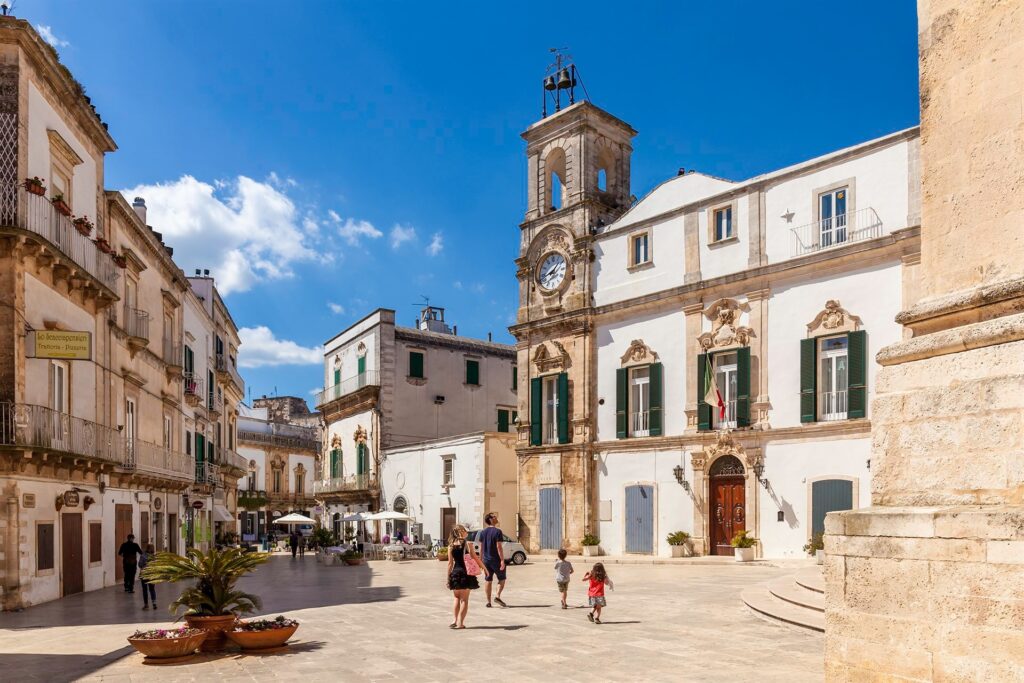
Nardò is a quieter Salento town with a beautiful Baroque centre and easy access to the Ionian coast. It is a strong choice for travellers who like Lecce’s style but want a smaller and less busy base.
Piazza Salandra is the heart of the historic centre. Nearby, Santa Maria al Bagno, Santa Caterina and Porto Selvaggio make Nardò especially useful for beach travellers.
Nardò is one of the best Baroque towns in Italy near beaches because it gives you old-town atmosphere without staying directly in a beach resort.
Best for: slow travellers, couples, beach travellers and quieter Salento stays.
Stay or day trip: half a day is enough for the centre. Stay longer if you want beaches nearby.
Travel note: a car is useful for nearby beaches and coastal spots.
Galatina, Puglia
Galatina is not always included in lists of Baroque towns in Italy, but it is a rewarding cultural stop near Lecce. Its historic centre has elegant streets and churches, and the Basilica di Santa Caterina d’Alessandria is one of the most important artistic sites in Salento.
Galatina works well as a half-day trip from Lecce, especially for travellers who want a deeper cultural route beyond the most obvious stops.
Best for: culture travellers, repeat visitors to Puglia and travellers staying in Lecce.
Stay or day trip: visit as a half-day stop from Lecce.
Travel note: check church opening times before visiting, especially outside the main season.
Gallipoli, Puglia
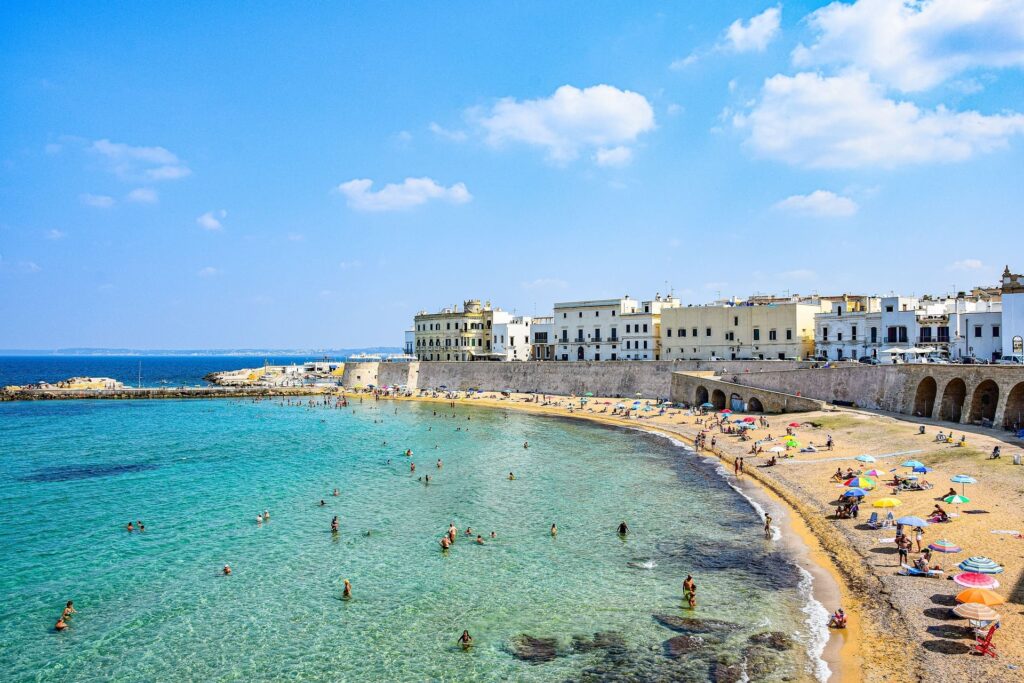
Gallipoli is better known as a seaside town than as a Baroque destination, but its island old town has churches, lanes, sea views and a very different feeling from Lecce. It is a good choice for travellers who want culture and beaches in the same day.
The historic centre sits on an island connected to the modern town by a bridge. Key experiences include walking the old lanes, visiting churches, seeing the harbour and spending time at Spiaggia della Purità or nearby beaches.
Best for: beach travellers, families, couples and Salento road trips.
Stay or day trip: stay for beaches and evening atmosphere; visit for half a day if based in Lecce.
Travel note: summer parking and traffic can be difficult. Check local access and parking before arrival.
Turin, Piedmont
Turin is one of the best Baroque cities in Italy for travellers who prefer northern Italy, museums and train travel. It is not a small town, but its royal palaces, arcaded streets and elegant squares make it an essential Baroque city.
Key sights include Palazzo Reale, Palazzo Madama, Piazza Castello and the Royal Residences of Turin and Piedmont. Turin also works well for travellers who want cafés, museums, chocolate, aperitivo culture and easy rail links.
Best for: train travellers, museum lovers, winter city breaks and travellers combining culture with food.
Stay or day trip: stay two nights if you want museums and palaces. A day trip from Milan is possible but rushed.
Travel note: museum tickets, palace opening days and combined passes should be checked before visiting.
Rome, Lazio
Rome is not a Baroque town, but it is one of the best places in Italy to understand Baroque art and urban drama. Piazza Navona, the Trevi Fountain, Sant’Ivo alla Sapienza, San Carlo alle Quattro Fontane and Sant’Andrea al Quirinale show how Baroque architecture shaped the city.
Rome works best as an extension to this article rather than the main focus. It is ideal for travellers who want big-city art, churches, fountains and museums before or after visiting smaller Baroque towns in the south.
Best for: first-time Italy visitors, art lovers and train-based itineraries.
Stay or day trip: stay at least two or three nights. Rome is too large for a quick Baroque-only visit.
Travel note: major churches, museums and galleries often require current opening checks or advance booking.
Caserta, Campania
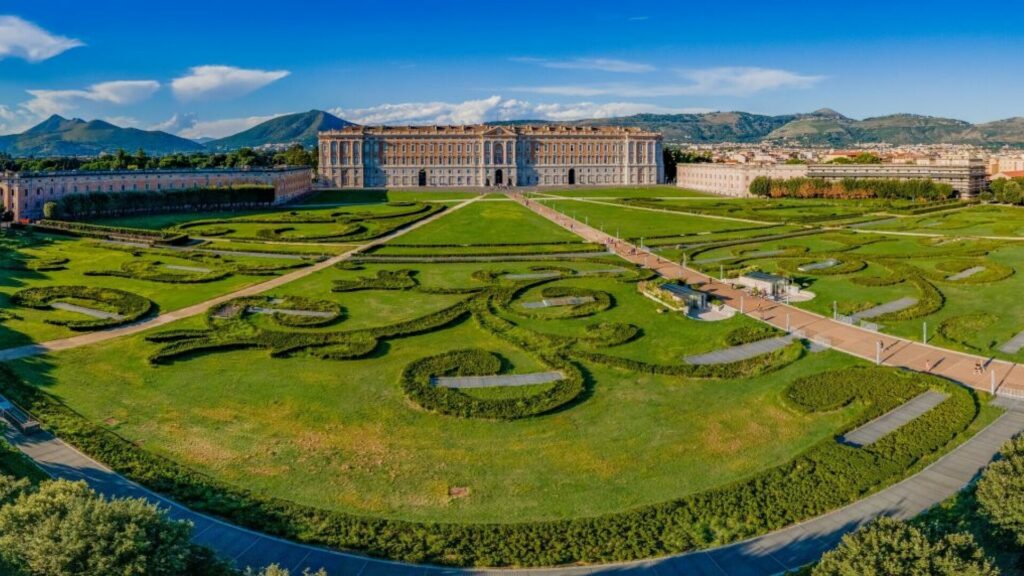
Caserta is included here because the Royal Palace of Caserta is one of Italy’s most important palace experiences. It is especially useful for travellers based in Naples who want a grand architectural day trip.
The Reggia di Caserta includes the palace, park and gardens. It works well for families, couples and culture travellers, but it needs more time than a quick photo stop.
Best for: palace lovers, families, Naples day trips and travellers interested in royal architecture.
Stay or day trip: visit as a day trip from Naples or stay nearby for a slower visit.
Travel note: tickets, access rules, garden transport and closures should be checked before visiting.
Suggested Baroque Italy itineraries
2–3 hours
Choose one compact town and focus on the main historic centre.
Good options:
- Scicli: Via Francesco Mormina Penna and Palazzo Beneventano
- Nardò: Piazza Salandra and old town lanes
- Martina Franca: Basilica di San Martino and historic centre
- Noto: Corso Vittorio Emanuele and the cathedral area
This is best for road-trippers passing through, not for travellers who want a deep cultural visit.
Half day
A half day is enough for one major town with time for coffee, churches and viewpoints.
Good half-day choices:
- Noto
- Ragusa Ibla
- Modica
- Lecce historic centre
- Caltagirone
- Martina Franca
For summer, visit early morning or late afternoon. Midday heat can make inland towns tiring.
One day
One day works well for Lecce or for a two-town Sicily route.
Good one-day routes:
- Noto in the morning, Modica in the afternoon
- Ragusa Ibla in the morning, Scicli in the afternoon
- Lecce all day with a slow evening in the old town
- Nardò and Galatina from Lecce
- Caserta Royal Palace from Naples
Avoid trying to see Noto, Ragusa, Modica and Scicli in one day. It is possible by car, but it turns the trip into a checklist and leaves little time for food, viewpoints or interiors.
Three days in Val di Noto
Day one: Noto
Arrive, walk Corso Vittorio Emanuele, visit the cathedral area and stay for sunset.
Day two: Ragusa Ibla and Modica
Start with Ragusa Ibla, then continue to Modica for chocolate, churches and dinner.
Day three: Scicli and the coast
Visit Scicli in the morning, then add Sampieri, Donnalucata, Marina di Ragusa or a relaxed afternoon near the sea.
This is the best short Sicily Baroque towns itinerary.
Five days in Sicily
Day one: Catania
Use Catania for arrival, food and the black-lava Baroque centre.
Day two: Noto
Stay in Noto or nearby countryside.
Day three: Ragusa Ibla
Spend the evening in Ibla.
Day four: Modica and Scicli
Pair food and architecture.
Day five: Vendicari, Marzamemi or Syracuse
Finish with nature, beaches or Ortigia.
This route works best by car.
Five days in Puglia
Day one: Lecce
Explore the historic centre and main churches.
Day two: Lecce and nearby coast
Add a beach day or a food tour.
Day three: Nardò and Porto Selvaggio
Combine a quieter Baroque centre with nature and sea.
Day four: Galatina and Gallipoli
Mix culture and the Ionian coast.
Day five: Martina Franca and Valle d’Itria
Add inland Puglia and local food.
This is the best Lecce and Puglia Baroque itinerary for travellers who want culture and beaches.
10–14 day southern Italy Baroque road trip
A longer route could connect Naples or Caserta, Puglia and south-eastern Sicily.
Good order:
- Naples or Caserta
- Lecce
- Nardò, Galatina and Gallipoli
- Martina Franca and Valle d’Itria
- Ferry or flight connection to Sicily
- Catania
- Noto
- Ragusa, Modica and Scicli
- Syracuse or Ortigia
This route is best for road-trippers and culture travellers with enough time to avoid rushing.
Where to stay for Italy’s Baroque towns
Best bases in Sicily
Noto is the best base for first-time visitors who want the most classic Baroque setting. It is beautiful in the evening and close to beaches and nature around Vendicari and Marzamemi.
Ragusa Ibla is best for couples and atmospheric stays. It has a romantic old-town feel, but parking and luggage access can be more complicated.
Modica is best for food lovers and slow travellers. It has more local energy and is less polished than Noto.
Scicli is best for quieter trips and beach combinations. It works well for travellers who want to be near Sampieri, Donnalucata or Marina di Ragusa.
Syracuse or Ortigia is best for travellers who want a coastal city base and day trips into the Val di Noto. It is also useful for travellers who do not want to change accommodation often.
Catania is best for arrivals, departures, transport and budget stays. It is less relaxing than the smaller towns but more practical.
Check stays in Noto or Ragusa Ibla if you want the strongest Baroque atmosphere overnight.
Best bases in Puglia
Lecce is the best overall base for Puglia Baroque towns. It has restaurants, train access, a large historic centre and good day-trip options.
Nardò is best for quieter Salento stays near the Ionian coast.
Gallipoli is best for beach travellers who still want an old-town setting.
Martina Franca is best for Valle d’Itria road trips and countryside stays.
A masseria outside Lecce or Martina Franca is best for travellers who want parking, space and a countryside atmosphere.
Best areas for couples
Couples should consider Ragusa Ibla, Noto, Scicli, Lecce old town or a countryside masseria in Puglia. These places work well for evening walks, restaurants and boutique-style stays.
Best areas for families
Families usually do better with easier parking, space and fewer stairs. Good options include Lecce, Syracuse, Noto outskirts, Ragusa Superiore, a countryside agriturismo in Val di Noto or a masseria near Lecce.
Apartments can be more practical than hotels for longer stays, especially with children.
Best areas for budget travellers
Budget travellers should compare Catania, Ragusa Superiore, Modica, Lecce outside the historic centre and smaller Salento towns. Prices can rise sharply during summer and event periods, especially in Noto, Lecce and coastal Puglia.
Best areas with parking
For road trips, avoid booking deep inside a restricted historic centre unless the accommodation clearly explains parking and ZTL access. Look for stays just outside the old town, countryside agriturismi, masserie, or hotels that mention private parking.
How to get around
By car
A car is the easiest way to visit the Sicilian Baroque towns and many smaller places in Puglia. It gives you freedom to combine Noto, Ragusa, Modica, Scicli, beaches, countryside stays and viewpoints.
A car is especially useful for:
- Val di Noto
- Scicli and nearby beaches
- Caltagirone
- Nardò and Porto Selvaggio
- Martina Franca and Valle d’Itria
- Countryside accommodation
The main challenge is not the driving between towns. It is parking and historic-centre access. Many Italian old towns have ZTL zones, pedestrian streets or narrow lanes. Check current rules before arrival.
Compare car rental options for Catania, Bari or Brindisi airports if your route includes smaller towns and countryside stays.
By train
Train travel works best for major cities and selected towns. Lecce, Turin, Rome and Caserta are good train-based destinations. Catania and Syracuse are also useful rail points in eastern Sicily.
Some smaller Baroque towns have rail connections, but services and journey times must be checked before travel. Do not assume late evening return options, especially outside large cities.
Use official rail tools to check current train times before booking accommodation around public transport.
By bus
Buses can help in south-eastern Sicily and Salento, but schedules vary by route, season and day of the week. They are useful for some airport and city connections, but they are less flexible than a car for multi-town itineraries.
For bus-based trips, choose fewer towns and stay in stronger transport bases such as Catania, Syracuse or Lecce.
Guided tours and transfers
Guided day trips are useful when public transport is limited or parking feels stressful. They work especially well for:
- Noto from Syracuse or Catania
- Ragusa, Modica and Scicli in one day
- Lecce walking tours
- Salento food and wine tours
- Caserta from Naples
- Turin Royal Residences
Browse guided tours from Lecce or Syracuse if you want a culture day without driving.
Parking, ZTL and old-town access
Parking and ZTL rules are one of the biggest practical issues in Italian Baroque towns.
ZTL means Zona a Traffico Limitato, a limited traffic zone. These zones often protect historic centres and can result in fines for unauthorised vehicles. Rules may change by street, season, time of day or resident permit system.
Before driving into any old town, check:
- Whether your accommodation is inside a ZTL
- Whether your number plate must be registered
- Where the nearest legal parking is
- Whether parking is paid, free or time-limited
- Whether blue lines, white lines or resident spaces apply
- Whether event closures affect access
In towns such as Lecce, Noto, Ragusa Ibla, Modica and Scicli, it is often easier to park outside the historic centre and walk in.
Families and travellers with luggage should think carefully before booking a room in a steep old-town lane. A beautiful stay can become stressful if parking is far away and the route includes stairs.
Tickets, opening times and passes
Many Baroque sights are churches, palaces, museums or religious buildings. Opening times can change because of services, restoration work, holidays, events or seasonal schedules.
Check current times before visiting:
- Lecce Baroque church ticket and church access
- Basilica di Santa Croce, Lecce
- Lecce Cathedral and Piazza Duomo sites
- Noto Cathedral and Palazzo Nicolaci
- Modica churches
- Scicli palaces and churches
- Caltagirone ceramics museum
- Turin Royal Museums and palaces
- Reggia di Caserta
- Rome churches and galleries
Do not build a tight itinerary around one interior without checking the latest opening information. For many travellers, the outdoor streets and squares are the main experience, but tickets matter if you want interiors, rooftops, museums or guided visits.
Best time to visit Italy’s Baroque towns
Spring
Spring is one of the best seasons for Baroque towns in Italy. Temperatures are usually more comfortable for walking, flowers add colour, and crowds are lighter than in high summer.
Spring is especially good for Noto, Ragusa, Modica, Scicli, Lecce and Martina Franca. It also suits couples, photographers, families and road-trippers.
Some events, such as flower festivals or religious celebrations, can affect prices, access and crowds. Check current dates before visiting.
Summer
Summer works well for beach-and-culture trips, especially in Salento and south-eastern Sicily. Lecce, Nardò, Gallipoli, Noto and Scicli can all be combined with beaches.
The main problem is heat. Inland towns in Sicily and Puglia can feel tiring in July and August, especially in the afternoon. Parking pressure is also higher near beaches and popular old towns.
A good summer rhythm is simple: old towns early, beach or rest at midday, then dinner and evening walks after the heat drops.
Autumn
Autumn is one of the best overall times for Baroque towns. The weather is usually better for walking than midsummer, the sea can still be pleasant early in the season, and accommodation can be better value outside peak weeks.
Autumn is excellent for couples, food travellers, slow travellers and road-trippers.
Winter
Winter suits budget travellers, museum lovers and visitors who prefer quiet streets. Lecce, Turin, Rome, Catania and Caserta can work well in winter because they have city services and indoor attractions.
Small towns can be calm and atmospheric, but some restaurants, tours or smaller attractions may have reduced hours. Beach trips are less practical, and public transport may be less convenient for multi-town routes.
Nearby beaches, nature and day trips
One reason this topic works so well for travellers is that many of the best Baroque towns in Italy are close to beaches, nature reserves or other major cultural sites.
Near Noto, add Vendicari Nature Reserve, Marzamemi, Avola, San Lorenzo or Syracuse.
Near Ragusa, Modica and Scicli, add Marina di Ragusa, Sampieri, Donnalucata and the countryside of the Hyblean area.
Near Lecce, add the Adriatic coast, Otranto, Torre dell’Orso, Gallipoli, Porto Cesareo or Porto Selvaggio.
Near Nardò, add Porto Selvaggio, Santa Caterina and Santa Maria al Bagno.
Near Martina Franca, add Locorotondo, Cisternino, Alberobello and Ostuni.
Near Turin, add Venaria Reale, Superga or the wider Royal Residences network.
Near Caserta, add Naples, Santa Maria Capua Vetere or the Amalfi Coast if you are building a longer Campania itinerary.
Tours, tickets and travel experiences
Baroque towns are easy to walk independently, but tours can add value when the architecture, history or logistics are not obvious.
Good experiences include:
- Lecce Baroque walking tour
- Noto walking tour
- Ragusa and Modica day trip
- Val di Noto private driver tour
- Modica chocolate tasting
- Caltagirone ceramics workshop
- Lecce food tour
- Salento wine tour
- Caserta Royal Palace ticket or guided visit
- Turin palace and Royal Residences tours
Choose tours when they solve a real problem: transport, context, ticket access, food discovery or limited time. Do not book a tour only because a town is famous. Some places, such as Scicli or Nardò, are also enjoyable as slow self-guided walks.
Food and local culture
Italy’s Baroque towns are also strong food destinations.
In Sicily, Modica is famous for chocolate. Ragusa and the surrounding area are good for local cheeses, scaccia ragusana and inland Sicilian cooking. Catania is strong for street food and markets. Noto has pastry shops, wine bars and elegant aperitivo settings.
In Puglia, Lecce is known for pasticciotto, caffè leccese, orecchiette, rustic pastries and Salento wines. Martina Franca is linked with capocollo. Nardò and Gallipoli work well for seafood and coastal meals.
Ceramics are especially important in Caltagirone. Papier-mâché craft is part of Lecce’s local identity. These craft traditions make the towns more than architectural stops and are useful for travellers who like workshops, small shops and local souvenirs.
Practical tips and mistakes to avoid
Do not rush too many towns into one day. Noto, Ragusa, Modica and Scicli are close enough to connect by car, but they deserve time.
Do not drive blindly into historic centres. Check ZTL signs, parking zones and accommodation access before arrival.
Do not assume churches are always open. Religious services, closures and seasonal hours can affect visits.
Do not underestimate summer heat. Inland Sicily and Puglia can be tiring in the afternoon.
Do not book accommodation only by beauty. Parking, stairs, luggage access and location matter.
Do not ignore train and bus return times. Public transport may work in one direction but be awkward later in the day.
Do not treat all Baroque towns as the same. Noto is elegant and formal, Ragusa is dramatic, Modica is food-focused, Scicli is quieter, Lecce is urban and social, while Turin is royal and museum-rich.
Do not skip overnight stays if atmosphere matters. These towns are often best after day-trippers leave.
Conclusion
The best Baroque towns in Italy are not just architecture stops. They are some of the country’s most rewarding places for slow travel, food, photography, romantic stays and cultural road trips.
Choose Noto for the classic postcard version of Sicilian Baroque. Choose Ragusa Ibla for atmosphere. Choose Modica for food and chocolate. Choose Scicli for a quieter old town near the coast. Choose Caltagirone for ceramics. Choose Lecce for the best mix of Baroque architecture, restaurants, transport and beaches.
For the strongest route, focus on Val di Noto in Sicily or Lecce and Salento in Puglia. Add Turin, Rome or Caserta when you want a bigger city or palace experience. With the right base and a realistic pace, Italy’s Baroque towns can become one of the most memorable culture trips in the country.
FAQ
What are the best Baroque towns in Italy?
The best Baroque towns in Italy include Noto, Ragusa Ibla, Modica, Scicli, Caltagirone, Lecce, Martina Franca and Nardò. Turin, Rome and Caserta are important Baroque city or palace extensions.
Which town is the best example of Baroque architecture in Italy?
Noto is the clearest choice for a classic Baroque town experience. Lecce is the best city base for Baroque architecture, food, nightlife and nearby beaches.
Is Noto worth visiting?
Yes. Noto is one of the most beautiful Sicilian Baroque towns and a strong choice for first-time visitors. It is best enjoyed in the late afternoon or with an overnight stay.
Is Ragusa Ibla worth visiting?
Yes. Ragusa Ibla is one of the most atmospheric old towns in Sicily. It suits couples, photographers, slow travellers and visitors who enjoy viewpoints, lanes and evening walks.
Is Lecce worth visiting for Baroque architecture?
Yes. Lecce is one of the best Baroque cities Italy offers, especially for travellers who want architecture, restaurants, shopping, transport and beach day trips in one base.
How many days do you need for Val di Noto?
Three days is a good minimum for Noto, Ragusa, Modica and Scicli. Add more time for Caltagirone, Catania, Palazzolo Acreide, beaches and slower stays.
Can you visit Noto, Modica and Ragusa in one day?
It is possible by car, but it is rushed. A better one-day route is Noto and Modica, or Ragusa Ibla and Scicli.
Do you need a car for Sicily’s Baroque towns?
A car is strongly useful for the Val di Noto, especially for multi-town routes and beaches. Public transport can work for selected routes, but schedules should be checked before travel.
Can you visit Baroque towns in Italy by train?
Yes, but choose the right places. Lecce, Turin, Rome and Caserta are good train-based options. Smaller towns in Sicily and Puglia need more careful timetable checks.
Where should you stay for Sicily’s Baroque towns?
Noto is best for classic Baroque scenery, Ragusa Ibla for atmosphere, Modica for food, Scicli for quiet stays, Syracuse for a coastal base and Catania for transport.
Where should you stay for Puglia’s Baroque towns?
Lecce is the best overall base. Nardò suits quieter beach-and-culture trips, Martina Franca works for Valle d’Itria, and countryside masserie are good for parking and space.
Are Italy’s Baroque towns good for families?
Yes, but choose bases carefully. Lecce, Syracuse, Noto outskirts and countryside stays are easier than steep old-town lanes. Summer visits are best early or late in the day.
Disclosure: This page may contain affiliate links. This means that we get a small commission from any purchase you make, at no additional cost to you!