Caramanico Terme is a useful base for exploring the western side of Majella National Park, where the Orfento River cuts through limestone walls below the town. Its main appeal is the combination of a historic centre, woodland trails and access to a protected mountain valley.
Exploring the village requires little preparation, while a walk into the Orfento gorge needs suitable footwear, free access registration and confirmation that your chosen route is open.
Quick Planning Answer
- Best for: independent walkers, nature trips and road trips through inland Abruzzo.
- How long: one full day for the village and a permitted short hike; two nights for a more flexible walking break.
- When to go: May–June or September–October generally offer the most practical conditions for lower-valley walks.
- Getting around: a car helps with surrounding villages and trailheads, although Caramanico has bus connections.
- First step: establish which trails are open before choosing your walking itinerary.
Valle dell’Orfento access: check the route before you travel
Le Scalelle is currently subject to a temporary closure. Confirm reopening and the status of your complete itinerary with the Valle dell’Orfento Visitor Centre before planning a walk. Other itineraries may share affected sections, so choosing a different route name does not necessarily avoid a closure.
The starting point for advice is the Valle dell’Orfento Visitor Centre, also known as the Centro Visita Paolo Barrasso, at Via del Vivaio 1 in the Santa Croce area. Ask about the complete route, including its exit and return to town.
Independent access to the valley’s trails requires free registration, available through the designated online system or the visitor centre. Registration records your visit; it does not override closures.
When the route is open, the lower Scalelle route runs in one direction from the visitor-centre side towards Ponte di Caramanico. Ordinary visitors cannot enter the valley from that road bridge. Follow current notices rather than older descriptions suggesting the reverse approach. Le Scalelle must not be walked in rain.
Within the protected valley, remain on marked trails and cross the river using bridges. Swimming, paddling and entering the water are prohibited. Dogs are excluded from the reserve’s strict-protection areas, so do not assume that a dog-friendly accommodation means your planned hike allows dogs.
Which Orfento walk should you choose?
The valley contains substantially different outings, from a short descent into the gorge to demanding mountain walks. Distance alone is a poor way to judge them: steps, elevation changes and exposed passages matter.
Le Scalelle: the shorter gorge walk, when open
Le Scalelle is the most manageable introduction for visitors who want to see the lower gorge without devoting the whole day to hiking. Its stone steps, rock-cut passages and wooden bridges bring you close to the river beneath steep limestone walls.
The visitor-centre operator describes the complete outing as approximately 4 km, with around 220 m of ascent and descent, and gives a walking time of about 1½ hours. Allow extra time for pauses and your own pace.
The route descends from the visitor-centre area on B6, joins trail S and continues towards Ponte di Caramanico. The return follows the paved road uphill towards town. That road section is part of the outing, so include it when judging whether the walk suits your group.
Despite its short length, this is a mountain trail with uneven steps and slippery surfaces. It is unsuitable for pushchairs, and trekking or trail-running shoes with good grip are required.
Ponte del Vallone: a longer walk with more variety
The Ponte del Vallone itinerary adds a hillside approach, a descent towards the river and a longer section through woodland. It suits walkers who want a substantial morning outdoors rather than a brief introduction to the gorge.
The visitor-centre operator lists approximately 8.5 km, 340 m of ascent and descent, and 3½ hours of walking. Its published route includes a paved-road return after leaving the valley.
Importantly, the described itinerary also uses the lower route towards Ponte di Caramanico. Have the entire circuit confirmed before setting out; it should not be treated as an automatically available alternative when Le Scalelle is closed.
Decontra and the upper valley: allow a separate hiking day
Decontra is a hamlet above the Orfento Valley, reached by routes that involve a sustained climb out of the gorge. The published Decontra circuit is approximately 11 km, with around 380 m of elevation change and a walking estimate of five hours.
That makes it a separate day’s activity rather than a small extension to a village visit. Check the precise version being recommended, because published routes and trail connections differ.
The rock-cut Eremo di San Giovanni all’Orfento, associated with Pietro da Morrone, the future Pope Celestine V, is more demanding again. Its approaches include exposed mountain terrain, and some access sections have been subject to closure. The visitor-centre operator strongly discourages entering the hermitage itself because of the narrow, unprotected passage.
For a first visit, choose a walk that matches your experience rather than trying to reach the most dramatic photograph.
What to see in Caramanico Terme
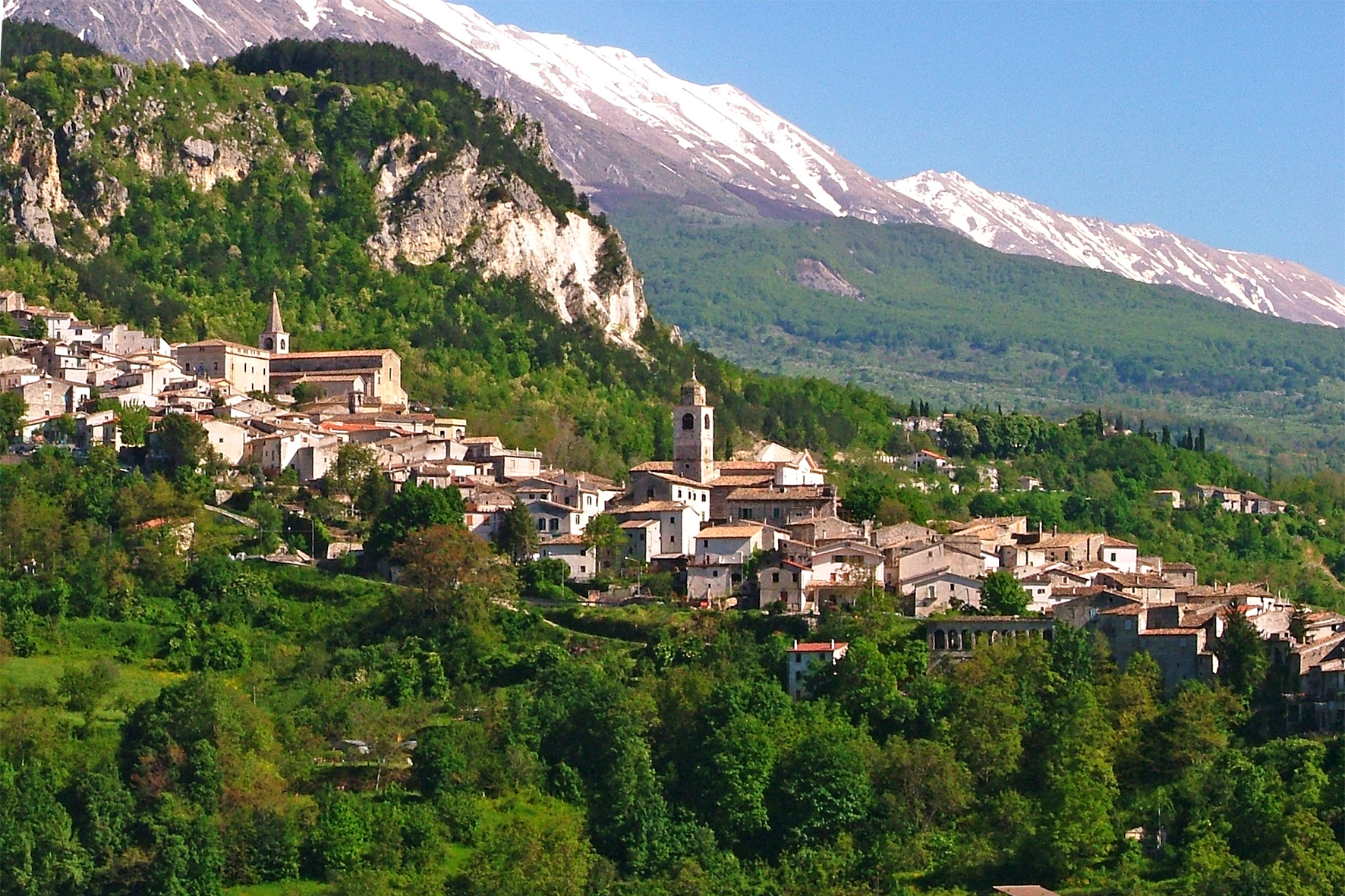
Caramanico’s historic centre follows a ridge, with narrow lanes branching away from it. Explore it on foot, leaving time for slopes and steps rather than expecting a level circuit.
Santa Maria Maggiore is the principal architectural stop. Its Gothic entrance and carved lunette reward a closer look even if you only have time for the exterior. Continue through the San Maurizio quarter and Piazza Garibaldi, then explore the older lower streets around Via Duca degli Abruzzi and the church of San Nicola di Bari.
For an additional cultural visit, the Romanesque Abbey of San Tommaso Becket stands about 5 km outside the centre. Its carved central portal and surviving medieval decoration make it a worthwhile separate stop. Confirm opening arrangements before making a special journey to see the interior.
The Paolo Barrasso Natural History and Archaeology Museum, inside the visitor centre, explains the mountain’s geology, archaeology and habitats. Its fossils and displays give useful context to the limestone landscape, particularly for visitors who want to understand more than the walking route.
Can you visit the thermal baths?
The word Terme reflects Caramanico’s longstanding association with mineral waters and thermal treatments. However, the official destination website currently states that the historic thermal centre is temporarily closed.
Plan your visit around the village and the national park unless the operator confirms a reopening. Older descriptions of treatments and wellness facilities should not be read as evidence that those services are available.
A hotel’s own spa or swimming pool is a separate facility. If wellness matters to your booking, ask the property exactly what operates during your dates and whether access is included.
A realistic one-day visit
For a day combining the village and valley, begin with a confirmed walking plan. In suitable conditions, and once access is authorised, the shorter Scalelle outing leaves more room for the historic centre than a longer circuit.
Walk first, allowing for the road return and breaks, then have lunch in Caramanico. Local products worth looking for include Majella honey, sheep’s-milk cheeses and bread or pasta made with Solina, a traditional Abruzzo wheat.
Spend the afternoon around Santa Maria Maggiore, Piazza Garibaldi and the lower historic streets. Drivers can add San Tommaso Becket if its opening arrangements fit.
During a trail closure, make the village, museum and abbey the focus instead. This is a reasonable cultural stop within a wider Abruzzo trip, although travellers coming mainly for the gorge may prefer to postpone until a suitable route reopens.
Avoid combining the full Decontra circuit, several church visits and a rushed return journey in the same day.
Where to Stay
Central Caramanico and the Santa Croce side
For a first visit, accommodation within walking reach of the centre makes meals and village sightseeing easier to organise. Staying towards Santa Croce can also be convenient for the visitor centre and the starting points of established valley itineraries.
Check the actual walking route from the property rather than relying on the address alone. Caramanico occupies sloping ground, and a short distance on the map may involve steps or an uphill return.
Drivers should ask where they can unload luggage and whether parking is on site or in a public area. Travellers arriving by bus should confirm the nearest suitable stop with their accommodation.
Compare stays in central Caramanico and towards Santa Croce for village sightseeing and access to valley walks.
Decontra and rural accommodation
Decontra is worth considering for a stay focused on walking and the landscape above the valley. Its separation from central Caramanico means checking meal arrangements and transport before booking, especially without a car.
Rural accommodation elsewhere in the municipality can suit a road trip, but an address listed under “Caramanico Terme” does not necessarily mean you can walk into town. The options below distinguish properties in Decontra from those in other countryside locations.
For a short break, prioritise the location that supports your planned outings. If a particular hike is the main reason for travelling, check the cancellation conditions of the rate you choose.
Browse stays in Decontra and the surrounding countryside for self-catering breaks and days exploring the Majella landscape.
How to get there and where to park
By car
From the A25 motorway, the usual approach is via Scafa–Alanno, continuing towards Caramanico on the SS487. A car is particularly useful for combining the town with San Tommaso, Decontra or other parts of Majella.
Choose your parking according to the visit. The visitor-centre area is the relevant starting point for established Orfento itineraries, while town parking serves the historic centre.
The destination website identifies La Vallocchia, on Via Dietro le Mura, as a public parking area below the village, with stairs and a lift connecting towards the centre. Check current signs and lift operation on arrival.
Corso G. Bernardi is pedestrianised. Follow local access signs rather than driving towards an accommodation’s map pin through the old streets.
By train and bus
Caramanico has no railway station. A practical rail approach is Scafa, on the Rome–Pescara line, followed by a bus connection.
TUA also publishes services linking the Caramanico area with Pescara and Scafa. Check the timetable for your exact travel day: weekday services, changes and shortened journeys can affect the connection.
For a car-free day trip, identify the return bus before choosing a hike. Leave a comfortable margin between the expected finish and departure, including the walk back from the trail exit.
Staying overnight can make a car-free visit less rushed, but it does not provide automatic access to outlying trailheads.
Best time to visit
For lower-valley hiking, May–June and September–October are generally the most useful periods to consider. Trail condition and rainfall still determine what is possible on the day.
Summer requires more care than photographs of the wooded gorge might suggest. Approaches and paved-road returns can be exposed to the sun, so carry water and account for the whole outing rather than only the riverside section.
From November into early spring, the visitor-centre operator advises strongly against casual valley access because of the risk of high water and flooding. Winter visits should be planned around the town and activities appropriate to current conditions.
The valley’s lower trails are not a wet-weather alternative to higher mountain walking. Established Scalelle rules prohibit passage in rain, and temporary closures take precedence over any general seasonal recommendation.
Caramanico or Sulmona as a base?
Choose Caramanico when the Orfento Valley and this side of Majella are central to your trip. Its advantage is the relationship between the village, visitor centre and local walks.
Choose Sulmona when you want a larger historic town, railway access and a broader mix of urban sightseeing and excursions. A stay there still requires separate transport planning for Caramanico’s trailheads.
For a wider journey through Abruzzo, it makes sense to choose a base for each main landscape rather than repeatedly crossing the region. Caramanico works best when you give its village and valley enough time to be the purpose of the stay.