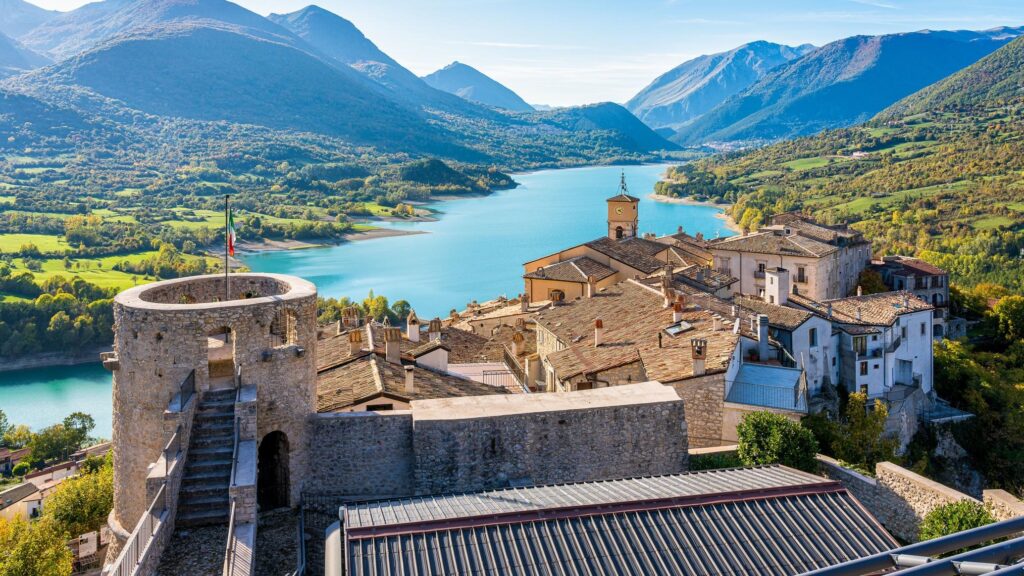
Puglia, Italy
Explore Puglia’s white towns, trulli villages and Adriatic and Ionian coasts. Choose a practical base, then plan time for local food, cultural sights and days by the sea.
Quick planning answer
How long to stay: Allow 5–7 days for one or two areas, including arrival and departure. Around 10 days can cover more ground, but Gargano, Valle d’Itria and Salento together involve substantial transfers; leave out an area if you want more time in each place.
Who it suits: Puglia suits town-and-food breaks, family beach holidays, couples and travellers interested in heritage and nature. Match your base to the outings you value most.
Which area to choose: Gargano offers forest and cliff scenery in the north; Valle d’Itria concentrates trulli and hill towns; Salento combines Lecce with distinct Adriatic and Ionian coasts. These are separate planning areas, not interchangeable day-trip bases.
With or without a car: Bari, Trani, Polignano a Mare, Monopoli and Lecce work as rail-linked town bases. Rural masserie, scattered beaches and Gargano trailheads need closer transport planning. Inland and Salento journeys can involve changes or buses.
Where to base yourself: Choose Bari for city life and rail outings, Valle d’Itria for a driving holiday among hill towns, Lecce for culture, or a specific coastal town for beach time. For a week, two carefully chosen bases can reduce backtracking.
Explore this guide
Choose your area
Bari and the central Adriatic coast
Bari brings a working city, old-town lanes and food; Trani, Polignano a Mare and Monopoli add different harbour and coastal settings. Suits town-based trips with rail outings. Check the walk from your station to the old town and onward transport to beaches.
Valle d’Itria
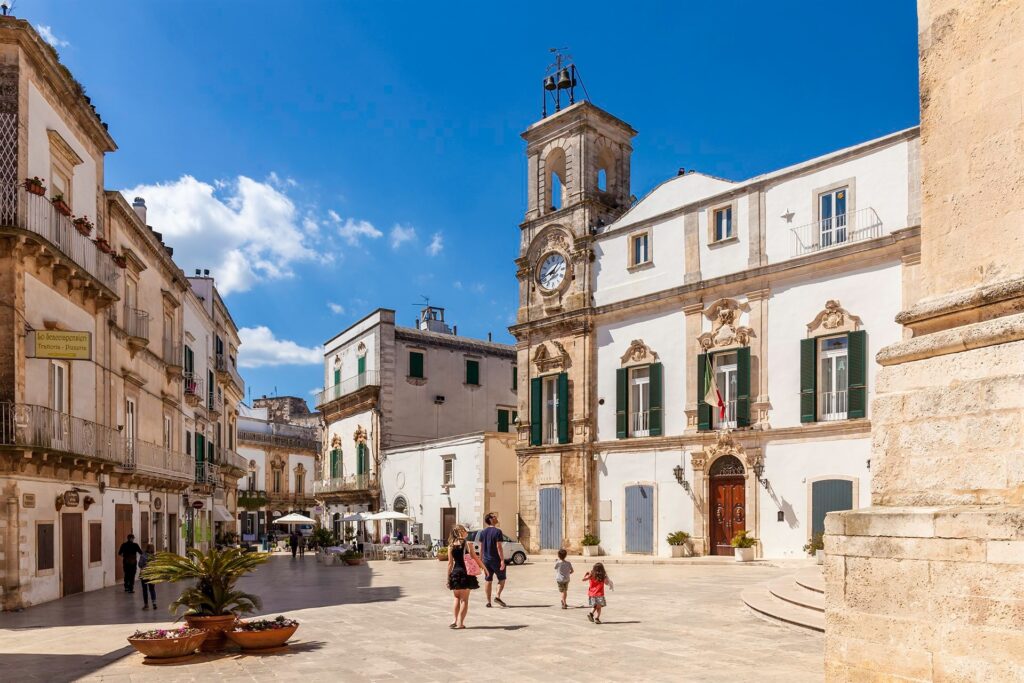
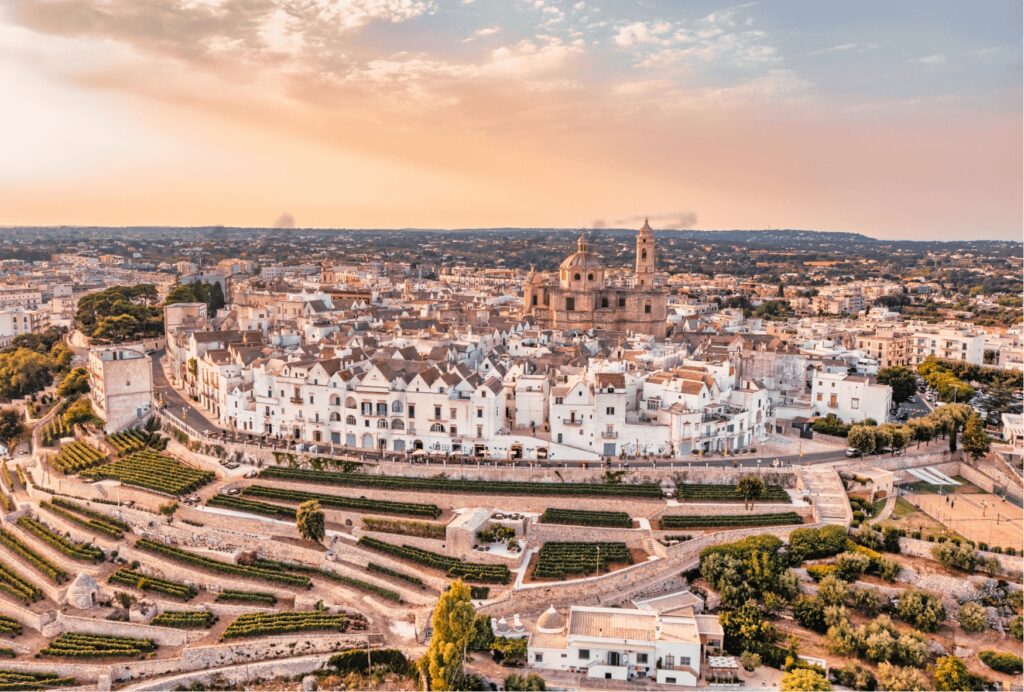
Trulli, white hill towns, olive groves and rural masserie suit slow touring, couples and countryside stays. Alberobello, Locorotondo, Martina Franca and Cisternino offer distinct centres. A car is useful for rural addresses; local public transport can require changes or buses.
Lecce and the Adriatic Salento
Choose Lecce for Baroque streets, museums and evening dining, or Otranto for a seaside old town. They serve different holiday priorities. Inland Lecce is not a beach base; check each coastal connection, including buses and the final walk.
Gallipoli and the Ionian Salento
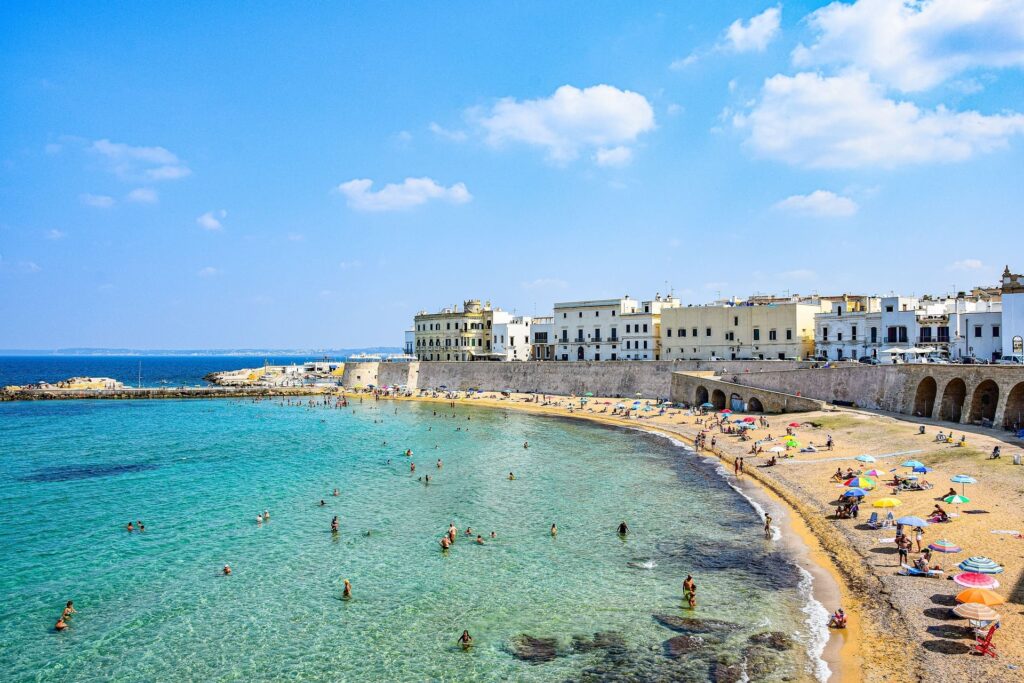
Gallipoli combines an island old town with access to sandy coastal stretches; smaller resorts suit holidays centred on the beach. Check whether your property is in town or beside your chosen beach. Public transport and resort services vary by season.
Gargano
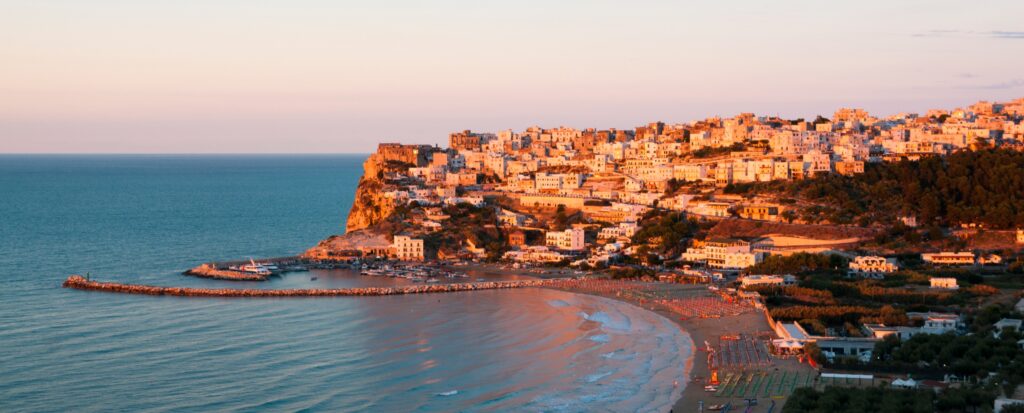
Vieste and Peschici offer cliff-top towns and sandy bays, with Foresta Umbra inland and Tremiti trips offshore. Suits nature, walking and longer stays. Curving roads and limited trailhead links make it a separate base choice; confirm boats and bus routes before relying on them.
Taranto and the Ionian coast
Taranto suits archaeology, maritime history and a city stay, while the coast towards Manduria offers a different beach-and-vineyard holiday. Taranto has mainline rail access; scattered coastal properties and wineries are more practical with a car or arranged transfers.
Places to visit in Puglia
Choose a few destinations near your overnight base, then use the individual guides for local detail.

Bari
Explore Bari Vecchia, the Basilica of San Nicola and the seafront. A useful starting point for food, history and trips along the central Adriatic coast.

Polignano a Mare
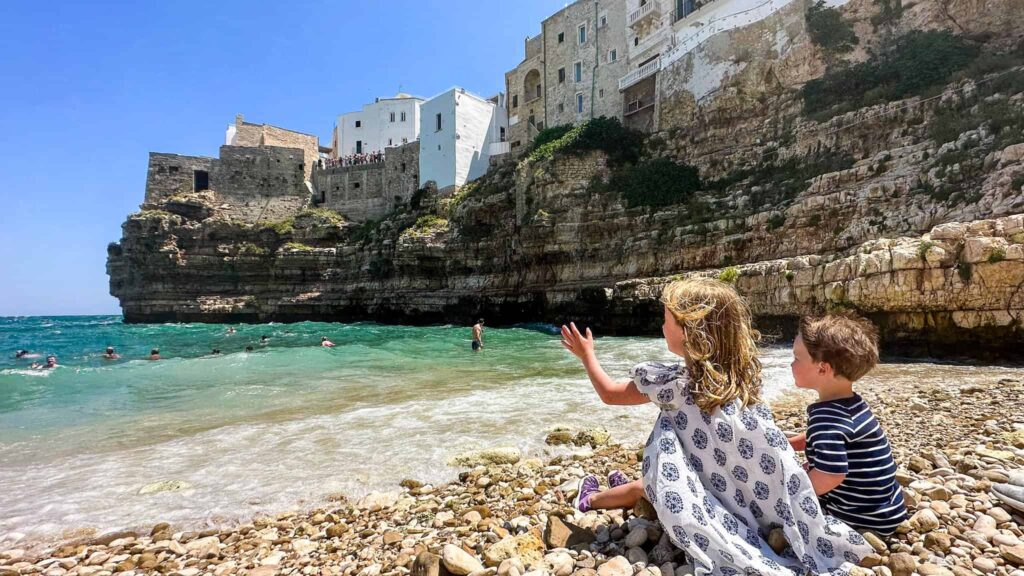
Look out over Lama Monachile and walk the lanes above limestone cliffs. Treat sea-cave trips as an optional outing that depends on conditions.
Monopoli
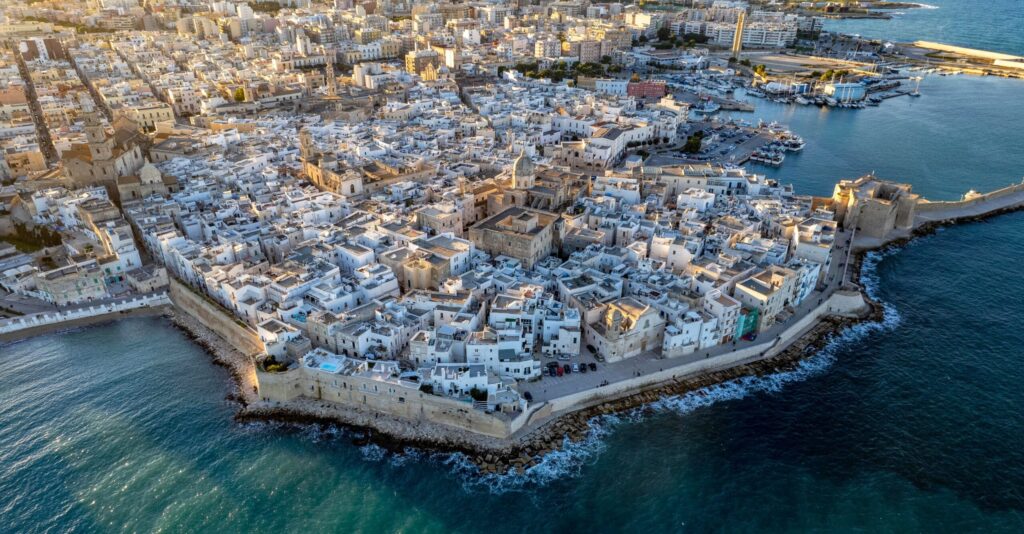
A lived-in harbour, old-town streets and small nearby coves make Monopoli a useful coastal stop. Check the exact beach location when planning a longer stay.
Alberobello
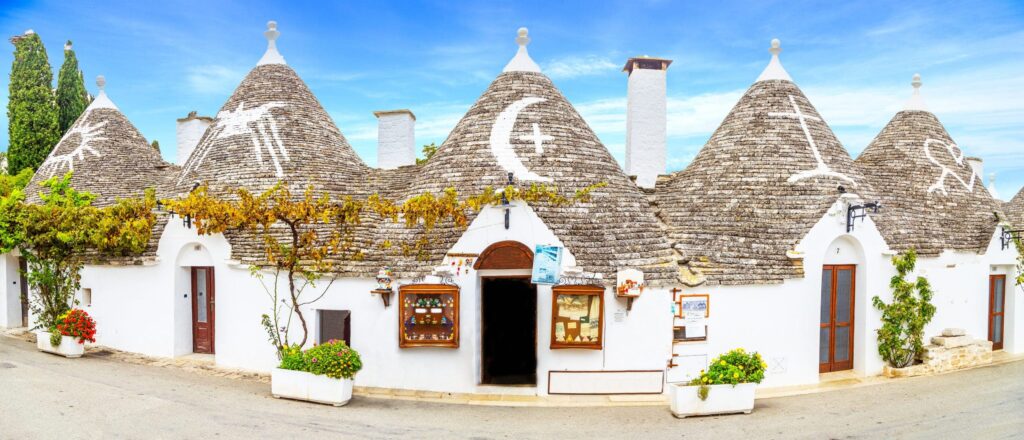
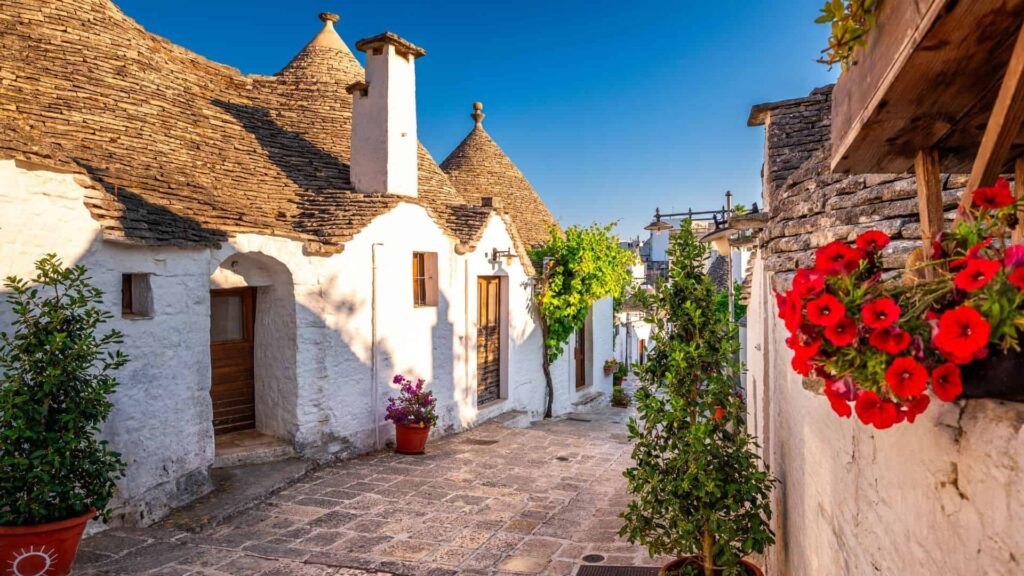
Walk through the trulli districts and learn about their dry-stone construction. Allow time for smaller lanes and nearby Valle d’Itria towns.

Ostuni
Explore the white hill-town streets and cathedral area above an olive-growing plain. The historic centre and coast are separate locations, so plan onward transport.
Lecce
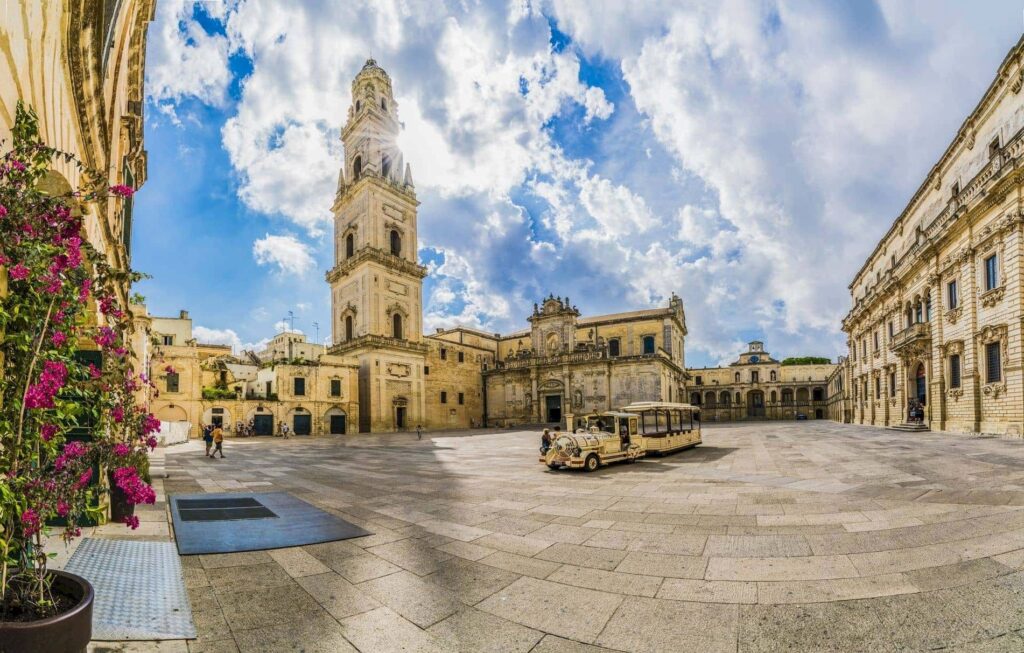
Discover sculpted Baroque façades, courtyards and piazzas, with time for pasticciotto and an evening walk. Lecce is inland; coastal outings need a separate journey.
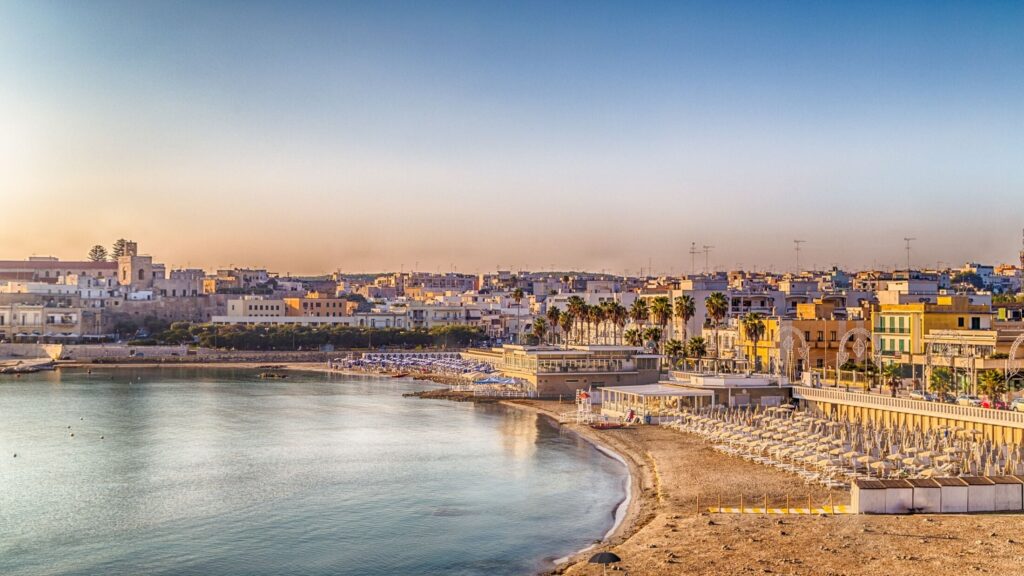
Otranto
Visit the waterfront old town and cathedral mosaic, then choose a nearby coastal outing. Beach access and the route from your accommodation vary.

Vieste
Explore the old town above the sea and use nearby bays for coastal time. It is a useful Gargano base, with forest and boat outings to plan separately.
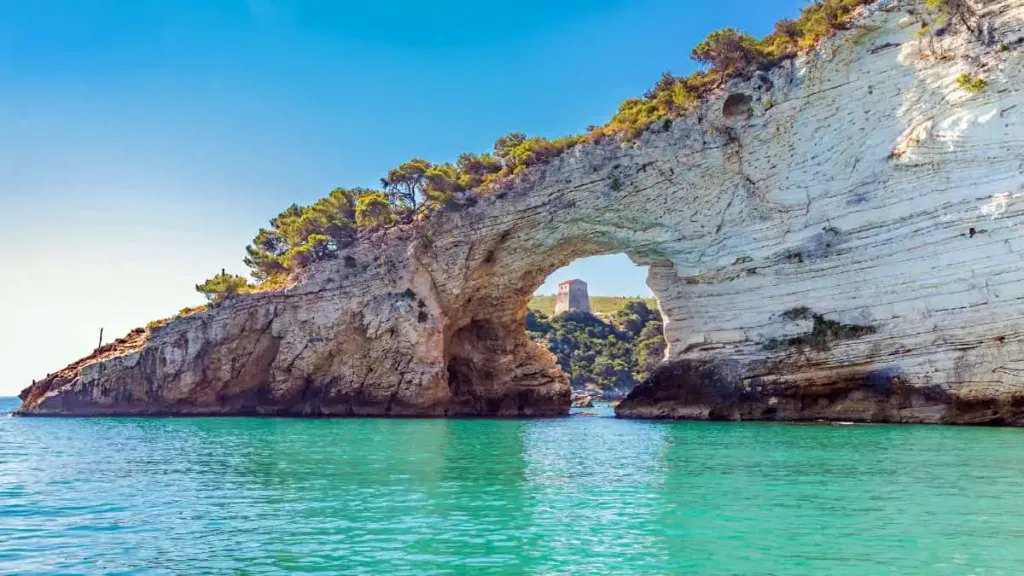
Gargano National Park
Combine marked forest walks, limestone headlands and protected coastal landscapes. Choose routes suited to the conditions and check visitor rules before setting out.
Where to stay in Puglia
Match the property location to your transport and main outings. A town name on a booking site can cover a wide area, and a countryside address may be inconvenient without a car.
Some links below are affiliate links. We may earn a commission from qualifying bookings, at no extra cost to you.
Bari
For city breaks and rail day trips. Choose between the atmosphere of Bari Vecchia and an address with a practical luggage route to Bari Centrale. Drivers should confirm parking and the permitted approach to the property.
Monopoli and Polignano a Mare
Monopoli suits harbour life and access to small town beaches; Polignano offers cliff-top views around a smaller centre. Both have rail stations. Compare station walks, steps, evening noise and the distance to your preferred beach.
Valle d’Itria
For trulli, masserie and touring hill towns. A central-town stay can offer restaurants on foot; a rural property may need a car for every outing. Check access lanes, parking, air-conditioning, pool opening and any heating rather than assuming facilities.
Lecce
For Baroque sights, dining and a town-based Salento trip. Stay near the historic centre for evenings on foot or check the luggage route to the station. Lecce is inland; assess the actual bus, rail or driving journey to your chosen beach.
Otranto
For a coastal old town and an Adriatic-focused holiday. Town beaches and beaches farther along the coast are different accommodation choices. Check walking routes, seasonal transport, parking and steps if staying near the historic centre.
Gallipoli
For old-town atmosphere, coastal evenings and Ionian beach time. An island-centre room differs from an apartment near Baia Verde or another resort stretch. Check parking, nightlife noise and beach transport, especially outside the main season.
Vieste and Peschici
Vieste offers a larger town and several beach areas; Peschici has a compact hilltop centre above the sea. Check whether accommodation is uphill, by a bay or outside town, and plan the forest journey separately. The search below covers the wider Gargano region.
Trani
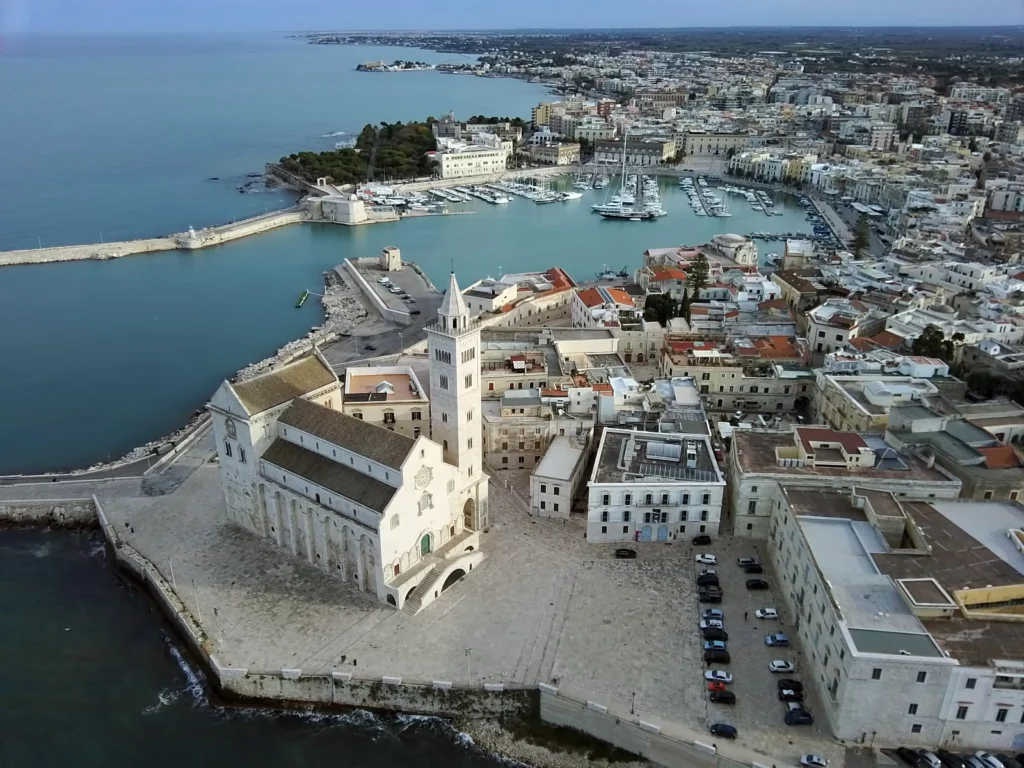
For a harbour setting, cathedral views and rail-based visits north of Bari. Check the walk between the station, waterfront and your property; some beach options lie farther from the centre. Drivers should agree an authorised approach and parking plan.
Compare the complete price and cancellation terms. Confirm room arrangements, air-conditioning, step-free access and parking directly with the property. Accommodation does not automatically authorise entry into a restricted traffic zone.
Things to do in Puglia
Build each day around one main outing and a nearby second stop. Use beach time as a flexible option, with museums, churches, caves or a slower town day when the weather changes.
Towns, heritage and underground landscapes
Explore trulli in Alberobello, the white lanes of Ostuni or the Baroque streets of Lecce. For a different landscape, consider Grotte di Castellana; guided routes vary, and the White Cave is part of the complete route rather than every visit. Check the official cave visitor information for current tours, language, footwear and access requirements.
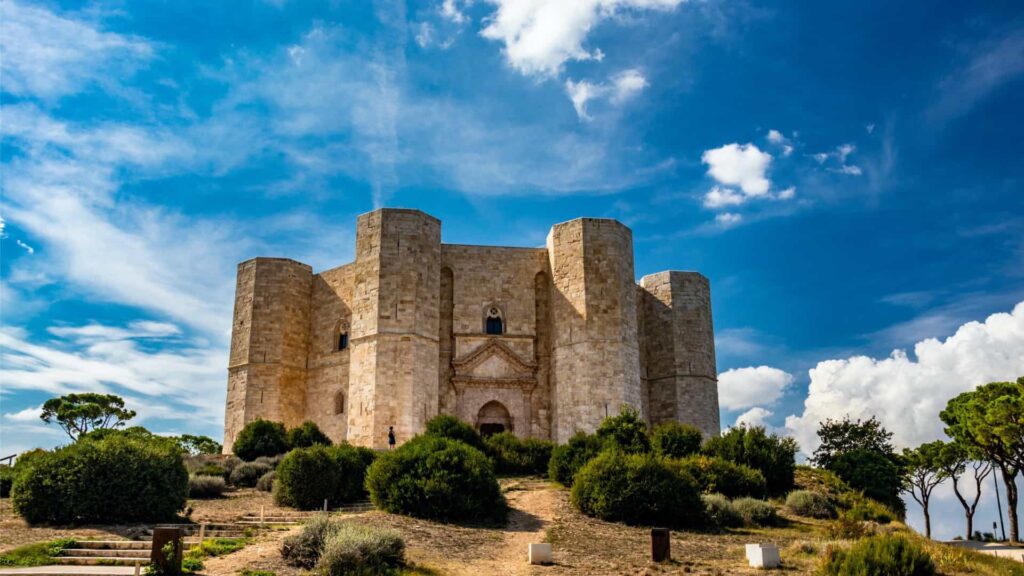
Castel del Monte and Trani make sense from a northern or central base. Egnazia’s archaeological area and museum are closer to the Fasano coast; check current opening arrangements before planning an outing.
Coastal outings and time outdoors
Choose a coastal walk, an operating sea-cave trip near Polignano a Mare or a marked forest route in Gargano National Park. Boat trips, cave access and swimming depend on local restrictions and the conditions that day.
Local producers and slower days
Arrange an olive-mill visit, a masseria lunch, a cooking class or a winery tasting near your base. Confirm the meeting point and return transport before booking; rural locations often need a car or organised transfer.
Beyond Puglia: Matera is in Basilicata. If its Sassi are a priority, treat the journey and stepped walking routes as a separate full-day plan or an overnight extension, rather than adding it to an already full coastal day.
Beaches and coastal experiences
Puglia’s coasts vary considerably. Polignano a Mare has cliff scenery and a small central pebble cove; Monopoli combines town beaches with coves farther along the coast. In Salento, Baia dei Turchi and Torre dell’Orso offer sandy bays on the Adriatic side, while Gallipoli’s surrounding coast and Pescoluse offer sandy stretches on the Ionian side.
Porto Selvaggio has rocky entries and paths through woodland; it is a different outing from a serviced sandy beach. Gargano combines long bays with headlands and sea caves. Check the exact access route, parking or bus stop and the return journey for each location.
Choose access and facilities carefully
A lido usually offers paid beach services; a spiaggia libera may have limited shade, toilets or supervision. Families should check the water entry, shade, lifeguard provision and distance from accommodation rather than relying on a general description of the coast. Reserve services ahead for busy dates where offered.
At Torre Guaceto, swimming is restricted by the protected-area zoning: do not enter zone A. Follow current signs, designated paths and the reserve’s visitor rules. Check seasonal parking and shuttle arrangements with the reserve; do not cross dunes.
Sea conditions, boats and island trips
Choose a beach using the local forecast, swell, flags and advice on the day. A named wind does not guarantee that an entire coast is sheltered. Do not enter rough water or jump from cliffs; beach and sea-cave activities may be cancelled or restricted.
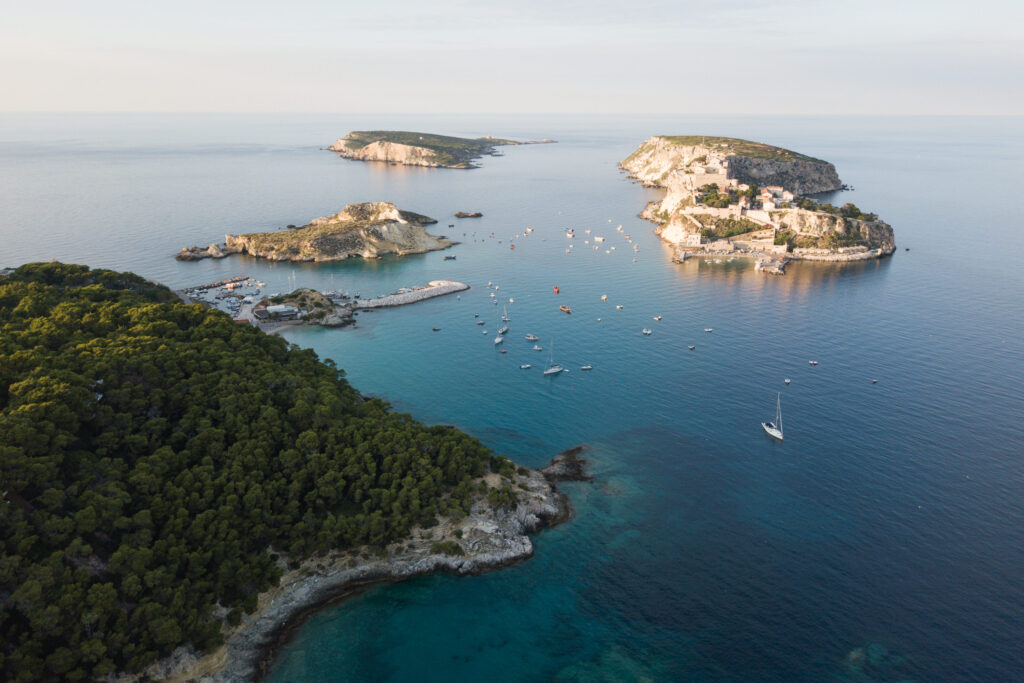
The Tremiti Islands require a planned boat journey. Confirm the departure port, operating dates, return sailing and cancellation terms with an operator such as NLG. Sailings and smaller boat trips depend on conditions; keep a mainland alternative and follow marine-reserve rules.
Nature and walking
Foresta Umbra offers woodland routes within Gargano National Park. Choose a marked walk that fits your ability and daylight, and check the park’s current notices. Forest shade does not remove heat, storm or navigation risks; trailheads may need a car or arranged transfer.
Selected ancient beech-forest components in Gargano belong to UNESCO’s Ancient and Primeval Beech Forests property. This designation does not cover the whole national park. Respect protected boundaries and use authorised visitor routes.
The limestone uplands of the Murgia offer open landscapes, dry-stone walls and rural tracks. Around Valle d’Itria, plan short walks on public paths or with a local guide; olive groves and farm lanes may be private. Exposed routes can be demanding in summer.
Carry water, a hat, sun protection, shoes with grip, offline mapping and a charged phone. Take layers for the forest and a weather change. Stay on marked routes, avoid fires, keep away from unstable cliff edges and take litter home.
Culture, food and wine
Heritage with a sense of place
Bari Vecchia and the Basilica of San Nicola, Trani’s seafront cathedral, Lecce’s sculpted churches and Otranto’s cathedral mosaic offer different cultural days. Check current entry arrangements for active places of worship and museums, and dress respectfully.
UNESCO’s Trulli of Alberobello property covers specified districts and locations; Castel del Monte is a separate World Heritage property. The Sanctuary of San Michele Arcangelo at Monte Sant’Angelo is a component of Longobards in Italy: Places of the Power, rather than a designation for the whole town.
What to try
Bari and the north: try focaccia barese, panzerotti, sgagliozze and tiella with rice, potatoes and mussels. Andria is associated with burrata, while Gargano adds caciocavallo podolico and other local cheeses.
Valle d’Itria and the countryside: look for orecchiette, fave e cicorie, grilled bombette, friselle and seasonal vegetables. Visit an olive producer to learn about local oils; keep purchased oil cool and protected from light.
Salento: try pasticciotto, rustico leccese and a filled puccia. Coastal menus may include grilled fish and octopus. Taralli make a portable snack; cartellate appear particularly around festive periods.
Wine, markets and tastings
Compare Primitivo from Manduria or Gioia del Colle, Negroamaro and Salice Salentino reds and rosés, Locorotondo whites, Nero di Troia around Castel del Monte and Moscato di Trani. Styles vary by producer; ask for a tasting that matches your interests.
Book producer visits in advance and arrange a driver or transfer for tastings. Market days and restaurant hours vary by town and season. Browse local produce for a picnic, confirm dietary needs, and check menus and booking terms for busy weekends and holiday periods.
Local experiences to consider
Use these selections to complement your own plans. Before booking, check the meeting point, transport, duration, language, inclusions and cancellation terms; a tour advertised for Puglia may start far from your base.
These offers contain affiliate links. We may earn a commission at no extra cost to you.
Town, culture and coastal experiences
Food and wine experiences
Suggested itineraries
These options include arrival on day 1 and departure on the final day. Arrival and departure days are kept light; only add sightseeing after checking your actual connection. The driving versions assume a car and accommodation with a confirmed parking plan.
5 days: Valle d’Itria and the central coast
Overnight base: four nights near Locorotondo or Martina Franca, with a car and no base change. A rail-focused alternative is four nights in Monopoli, replacing rural outings with journeys confirmed for your dates.
Days 1–2: arrive and settle in; spend the next day in Alberobello and one nearby hill town. Avoid turning arrival day into a full sightseeing circuit.
Days 3–4: choose Ostuni with countryside time, then Polignano a Mare or Monopoli. Add a beach or operating boat trip only when conditions suit. In cooler or unsettled weather, use a town museum, Egnazia or a suitable cave tour.
Day 5: depart. A short local walk is optional only if it fits the checked airport or rail journey.
7 days: Valle d’Itria and Salento
Overnight bases: three nights in Valle d’Itria and three in Lecce; a car is assumed. Change base on day 4. Without a car, consider Monopoli and Lecce instead, reducing outings to the services running on your dates.
Days 1–3: arrive, then divide two days between trulli and hill towns and the central Adriatic coast. Keep one afternoon flexible.
Days 4–6: transfer to Lecce and settle in. Use one full day for Lecce and another for either Otranto and the Adriatic coast or Gallipoli and the Ionian coast. Choose one coastal direction rather than trying to cover both in a day; replace swimming with town sights or a food visit when needed.
Day 7: depart from the airport or station that fits your booking. Do not assume a final beach visit will fit before a flight.
10 days: Gargano, Valle d’Itria and Salento
Overnight bases: three nights in Vieste or Peschici, three in Valle d’Itria and three in Lecce or Otranto. A car is assumed, with base changes on days 4 and 7. This covers three distinct areas and involves longer transfer days; choosing two areas creates more breathing space.
Days 1–3: arrive in Gargano, then choose a coastal day and a forest or Monte Sant’Angelo visit. Substitute a town-and-heritage day if boats or outdoor routes are unsuitable. A Tremiti outing needs its own full day and a checked return.
Days 4–6: transfer to Valle d’Itria with time for arrival logistics. Use the next two days for trulli and hill towns, plus one central-coast outing if desired.
Days 7–9: move to your Salento base. Explore Lecce, then choose coastal time on the side nearest your accommodation. Museums, cathedral visits or a cooking experience are seasonal alternatives to beach activities.
Day 10: depart, allowing for the full drive, rental return or rail connection. Add a night near your departure point if the booked journey makes that more practical.
Getting there and around
Arriving by air or rail
Compare Bari and Brindisi airports against your chosen base, then check the complete onward journey. Ferrotramviaria links Bari Airport with Bari Centrale; this is a separate operator from Trenitalia. Check its actual service and ticket conditions rather than assuming a late arrival is covered.
At Brindisi Airport, STP’s airport bus serves Brindisi’s railway station and centre. An onward train or other transfer is a separate stage. Compare current airport bus services for Lecce with the airport or operator and check the final stop and last departure before booking.
Mainline trains, local services and final journeys
Trenitalia services connect towns on the Adriatic corridor, including Bari, Polignano a Mare, Monopoli, Brindisi and Lecce; Trani lies north of Bari. Stopping patterns vary, and a journey may need a change. Taranto is on a different route: search your actual origin and destination rather than assuming a direct coastal service.
For Valle d’Itria and Salento, check FS Sud Est and the journey planner for rail, bus and replacement services. Lecce–Otranto is not a universal direct-train journey: Otranto Link combines rail access to Lecce with an FS Sud Est bus. Gallipoli and inland routes also need a date-specific check. Allow for changes, Sunday service and a separate trip to beaches or rural properties.
Without a car, choose a walkable base and plan fewer outings around confirmed services. A beach advertised near a town can still require a bus, taxi or substantial walk. Arrange your return before heading to a remote location.
Driving, parking and restricted centres
A car helps with rural stays, scattered beaches and Gargano trailheads. Country lanes can be narrow and Gargano roads winding; journey times depend on the route, traffic and parking. Treat mapping estimates as approximate and keep transfer days realistic.
Many historic centres have ZTL restrictions. Check the municipality’s current rules and the property’s authorised approach before arrival. A hotel booking does not itself grant permission to enter; any eligible permit or plate registration must be explicitly confirmed. Use a legal parking area outside the restricted centre when uncertain.
Boats and ferry connections
International ferry routes from Bari or Brindisi are different services from coastal excursions and Tremiti trips. Check the operator, port, vehicle conditions, seasonal operation and return arrangements for the journey you intend. Do not rely on an unconfirmed final sailing.
Orientation map
Use the map to distinguish Gargano in the north, Bari and the central Adriatic coast, Valle d’Itria inland and Salento in the south. It is an orientation aid; check the actual route and connections for each journey.
Practical information
When to visit
Spring suits hill towns, food visits and walking when conditions allow. May and June bring longer days, but sea temperatures and weather vary. July and August can be hot and busy, particularly along popular coasts; plan shade, water and bookings around your needs.
Autumn can suit town visits, harvest interests and coastal walks, with rain and rough seas still possible. Winter works for a city-and-food break, while some resorts, beach services and boat activities operate less or close. No season guarantees warm swimming, low prices or quiet streets. See the Puglia in Spring guide for more seasonal ideas.
Families and accessibility
For a family holiday, check sandy access, shade, toilets, room arrangements and the distance to shops. Old towns can have steps, cobbles and limited vehicle access. Confirm the full entrance-to-room route, lifts, bathrooms and beach access directly; ask transport operators about station assistance where needed.
Budget, bookings and daily rhythms
Costs depend on dates, property location and demand. Compare the whole stay, including transport, parking, meals and cancellation terms. Keep some cash for smaller businesses and check local market days and restaurant opening hours. A morning town visit and a longer midday pause may suit hot days better than a packed circuit.
What to bring and considerate travel
Pack shoes with grip, sun protection, a refillable bottle, a hat and layers for wind or rain. Water shoes may help on rocky entries; keep luggage manageable for old-town steps. Use designated paths, protect dunes and dry-stone walls, respect quiet hours and support local producers.
Follow local swimming, fire and protected-area notices. Do not launch drones without checking applicable permissions, and keep away from nesting areas and private land. Refill water only where it is marked safe to drink; take litter away.
More Puglia guides
Explore smaller towns, islands, cultural sights and guides for different holiday styles. This selection updates automatically from published posts tagged Puglia, excluding the featured destinations above.



Puglia FAQs
+How many days should I spend in Puglia?
Allow 5–7 days for one or two areas, including arrival and departure. Around 10 days offers more choice, but covering Gargano, Valle d’Itria and Salento adds substantial transfers. Choose fewer bases for a slower holiday.
+Where should I stay for a first visit?
Bari suits city life and rail outings; Monopoli combines a coastal town with rail access. Valle d’Itria suits hill towns with a car. Choose Lecce for culture, Otranto for the Adriatic Salento or Gallipoli for an Ionian-focused stay.
+Can I explore Puglia without a car?
Yes, with a focused route and rail-linked bases. Check every journey: inland and Salento services may involve changes or buses, while beaches and rural stays can need taxis or arranged transfers. Gargano trailheads need particular planning.
+When is the best time to visit?
Spring and autumn often suit towns and walking, subject to the forecast. Summer suits a beach-focused holiday but brings heat and demand. Winter is useful for city breaks, with fewer seasonal services. Swimming conditions are never guaranteed.
+Which areas suit a family holiday?
Monopoli, parts of Salento and Gargano offer different beach options; Valle d’Itria adds countryside stays. Check the exact beach entry, shade, facilities, property layout and travel distances rather than assuming every resort is equally convenient.
+Can I combine Gargano, Valle d’Itria and Salento?
Yes, with enough time and a realistic transfer plan, usually with a car. A 10-day route can include all three, but it is a touring trip with base changes. For a week, concentrating on one or two areas usually leaves more time at each stop.
Plan your Puglia holiday
Choose the base that fits your interests and transport, then leave space between outings. A few well-chosen towns, time for local food and a flexible coastal day make a more practical trip than crossing the region every morning.